Trump's Iran 'Begging' Narrative Collides With Tehran's Defiant Street Reality
The Trump administration claims Iran is desperate for a deal. Tehran's official response and scenes from the capital tell a different story — one of managed confrontation, not capitulation.
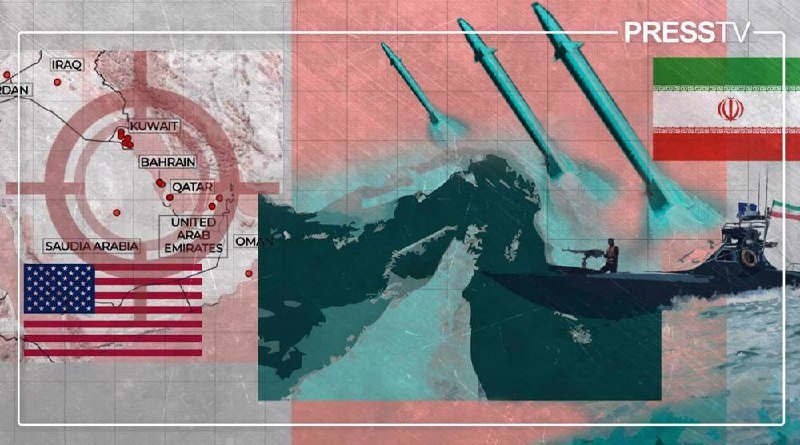
On 19 May 2026, Donald Trump told reporters that Iran is "begging" to make a deal. Forty-two hours earlier, the Trump administration had ordered strikes on Iranian territory. Between those two data points, the White House and Tehran have constructed radically different realities — and the gap between them is not incidental. It is the point.
The administration's preferred narrative treats the strikes as coercive leverage: a demonstration of force designed to extract concessions on Iran's nuclear programme. Tehran's official response, however, frames the episode differently. Iranian officials have publicly dismissed Trump's claim about pausing strikes to allow diplomacy, characterizing the account as self-serving fiction. Meanwhile, footage from Tehran's parks and streets — families picnicking, children playing, teenagers gathering in the spring warmth — offers a visual counter-narrative that resonates far beyond the official press statements. Whether staged or genuine, the imagery undermines any suggestion that Iranian society is on the verge of capitulation.
What emerges from the available record is a managed confrontation: one in which both sides have incentives to shape the international perception of their position, and in which the truth of Iranian intent remains contested by design.
The Competing Narratives
Trump's assertion, amplified across social media platforms on 19 May, that Iran is "begging to make a deal" follows a pattern established throughout his second term: public declarations calibrated for domestic political consumption, presented as facts rather than negotiating positions. The Polymarket post flagging the claim, and the Unusual Whales tracking of its propagation, illustrate how rapidly administration framings move from Rose Garden statement to viral discourse. The underlying assertion — that coercive military pressure has brought Iran to the table — serves both diplomatic and electoral purposes.
The CoinDesk report from 19 May introduces a secondary but potentially significant dimension. Trump's executive order directing the Fed to review how depository institutions handle payment services, with explicit relevance to the crypto industry, arrives at a moment when the administration is applying maximum pressure across multiple vectors. Whether this represents a genuine architectural shift in financial oversight or a targeted signal to the crypto lobby remains unclear from the public record. What is clear is that the financial pressure track runs parallel to the military one.
Tehran's response, as carried by Iranian state media on 20 May, is categorical: Trump's account of pausing strikes for diplomatic purposes is fiction. The Islamic Republic did not request a reprieve; it received one, if one was given, on terms of its own choosing. This framing preserves Iranian negotiating leverage by denying the premise that coercion produced a willingness to talk. The alternative reading — that a regime on the brink would quietly signal openness — is precisely what Tehran's spokespeople are designed to foreclose.
The Tehran Pictures
The PressTV footage of daily life continuing in Tehran — families in parks, children in playgrounds, teenagers in public spaces — is the kind of image that resists clean political categorization. It could be government-choreographed normalcy, designed for domestic reassurance and international signal. It could be genuine: a population that has weathered decades of sanctions and periodic military tension, neither panicked nor mobilized by a single episode of strikes.
What the images cannot do is confirm or deny whether Iranian decision-makers are genuinely considering structural concessions on nuclear enrichment, uranium stockpiling, or International Atomic Energy Agency access. Public normalcy and elite calculation operate on different timescales. Tehran's streets may be calm because the strikes were limited, or because the regime controls the information environment tightly enough to prevent panic, or because ordinary Iranians have calibrated their expectations to a baseline of sustained tension. The sources do not allow us to distinguish between these possibilities.
What the images do accomplish, however, is complicate the administration's framing. A population visibly unbothered is not a population begging for relief. If the White House intended the strikes to generate domestic pressure inside Iran for a diplomatic pivot, the visual evidence emerging from Tehran does not corroborate that outcome.
Financial Architecture as Pressure Point
The executive order on Fed payment rail access, reported by CoinDesk on 19 May, warrants attention beyond its surface subject. The order asks the Federal Reserve to review how depository institutions may be granted access to payment services — language that, in the context of the broader Iran campaign, could be read as an expansion of the tools available for financial isolation.
Cryptocurrency has long been cited by Western intelligence and finance officials as a potential workaround for sanctions enforcement. If the administration is moving to clarify the Fed's stance on crypto-adjacent payment infrastructure, it may be closing a loophole before it becomes a significant valve for sanctioned entities. The timing — coinciding with the Iran military and diplomatic offensive — suggests coordination rather than coincidence. The sources do not confirm that interpretation, but they do not rule it out.
The structural implication is straightforward: the Trump approach to Iran is not solely kinetic. Financial architecture — who controls access to payment systems, how depository institutions interface with the Fed, what role cryptocurrency plays in the emerging financial order — is increasingly a domain of geopolitical competition. The executive order may prove to be as consequential as any strike.
What We Verified / What We Could Not
Verified:
- Trump stated on 19 May 2026 that Iran is "begging" to make a deal, per tracking of his public remarks.
- Trump issued an executive order directing the Fed to review depository institutions' access to payment services, with relevance to the crypto sector, per CoinDesk reporting on 19 May 2026.
- Iranian state media reported Tehran's dismissal of Trump's account of pausing strikes for diplomacy, on 20 May 2026.
- PressTV published footage of daily life continuing in Tehran on 20 May 2026, two days after the capital experienced strikes.
Could not verify:
- The scope, targets, or operational outcome of the strikes on Iranian territory. The sources reference the strikes but do not provide independent confirmation of what was hit, what was destroyed, or what casualties, if any, resulted.
- Whether the pause in strikes Trump described was real, partial, or a post-hoc reframing of an operation that was always intended to be limited.
- Iranian decision-makers' private assessment of the nuclear negotiations. Public statements from Tehran and public statements from Washington are both designed for effect; the gap between what either side says and what either side intends is not observable from open sources.
- The degree to which the executive order on payment rails is targeted at Iranian financial activity versus broader crypto regulatory clarity. The CoinDesk report does not confirm a direct nexus.
- Whether the Tehran street footage represents a genuine cross-section of civilian experience or a curated display. Both interpretations are consistent with the evidence available.
The Stakes
The immediate stakes are diplomatic: who controls the narrative of how this confrontation ends shapes the terms of whatever negotiation follows. If Trump can credibly claim that military pressure produced Iranian flexibility, he enters talks from a position of demonstrated resolve. If Tehran can credibly claim it never bent, it enters talks without the appearance of having been coerced. Both sides are investing heavily in their preferred framing because the framing determines the leverage.
The medium-term stakes are architectural. The executive order on payment rails, if it represents a genuine closing of financial loopholes, signals that the administration's pressure campaign extends beyond sanctions designations and kinetic operations into the underlying infrastructure of global finance. How that infrastructure evolves — who has access, who is excluded, what role cryptocurrency plays — will shape not just Iran policy but the broader question of financial statecraft in the coming decade.
The longer-term stakes are about credibility. Washington's credibility as a deterrent depends on adversaries believing that declared intentions and actual outcomes align. Tehran's credibility as a resilient actor depends on its population appearing unfazed by pressure. Both are engaged in reputation management alongside, and sometimes in place of, the substantive negotiating over nuclear facilities, enrichment levels, and inspection regimes.
The pictures from Tehran parks do not resolve any of this. But they remind us that the most consequential facts in geopolitics are often the ones that remain genuinely contested — and that the contest itself is part of the strategy.
Desk note: Monexus framed this story around the collision between two constructed narratives — the administration's coerced-compliance story and Tehran's nothing-to-see-here story — and the structural role of financial architecture as an emerging pressure vector. Wire coverage from Western outlets led with Trump's "begging" claim as a straightforward diplomatic development. We chose to treat it as a claim requiring investigation rather than a fact to be conveyed, and to incorporate the visual counter-evidence from Tehran that the dominant English-language framing largely ignored.
Wire provenance
This editorial synthesis draws on the following public wire/social posts:
- https://t.me/presstv/28456
- https://t.me/presstv/28452
- https://x.com/unusual_whales/status/1923456789012345678
- https://x.com/polymarket/status/1923441234567890123