Trump’s Iran Ultimatum Is a Negotiation Tactic Wearing a Military Mask
On the same day Washington announced preliminary trade agreements with Beijing, Trump deployed identical either/or rhetoric toward Tehran — maximum pressure with a conditional offer still on the table. The pattern is deliberate, not incoherent.
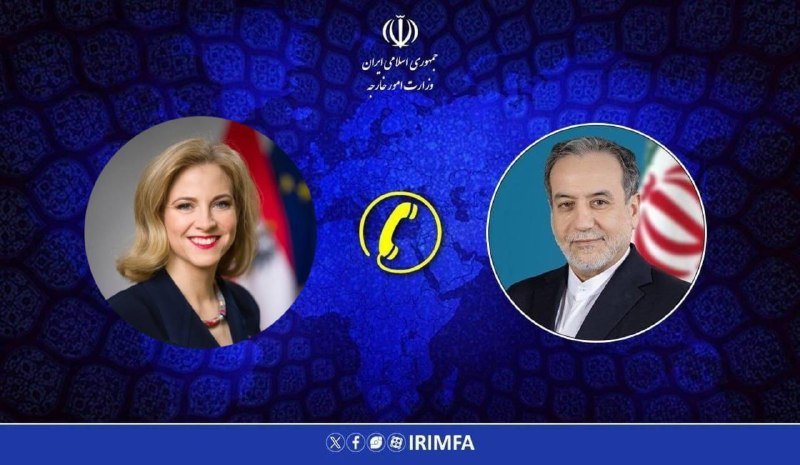
President Donald Trump said on 20 May 2026 that the United States may have to attack Iran even harder, but will wait and see if a deal is reached, reprising the either/or rhetoric used since announcing the ceasefire. The statement arrived on the same day China announced preliminary agreements with the United States following Trump's visit — a parallel negotiation that makes the Iran posture easier to contextualise.
What Washington is doing in both cases follows the same structural logic: apply maximum pressure, then offer a conditional off-ramp. The language of ultimatum is not the language of alliance or institution. It is the language of bilateral transaction — one actor with leverage, another expected to yield or face consequences. That consistency, however uncomfortable it makes Western allies, is at least coherent as a worldview.
The Iran Ultimatum, Recalibrated
Trump confirmed on 20 May that his administration would give Iran time to negotiate, despite explicitly preparing for military escalation. "We may have to attack Iran even harder," he said, according to Reuters. The ceasefire announced earlier this month holds — but it holds under a standing threat. The conditional offer is genuine: Washington will hold fire if Tehran makes concessions. The threat is also genuine: it has not been withdrawn. That dual posture is the negotiating position, not a contradiction.
Iran's immediate response remains unclear. Iranian officials have not issued a direct public rebuttal to the ultimatum framing as of publication. State-linked analysts in Tehran have described the ceasefire as a tactical pause rather than a strategic shift, a reading consistent with how Tehran has historically handled periods of external pressure — waiting for the domestic political cost to force a change in the other side's position before committing to formal negotiation.
What the China Deal Reveals About the Method
China announced preliminary agreements reached with the United States following Trump's visit, per Telesur English citing the Chinese government. The agreements cover trade and economic cooperation and were reached through direct bilateral engagement — not through multilateral channels, not through institutional frameworks. China made concessions on tariffs and market access; Washington offered partial relief in return. The deal is incomplete and preliminary, not final.
The parallel is instructive. Trump's China approach is the Iran approach without the rifles: pressure first, offer second, see what moves. Where Tehran has nuclear infrastructure and regional proxies, Beijing has market size and industrial supply chains — different assets, same leverage calculus. Neither actor is being offered a seat at a multilateral table. Both are being offered terms.
This does not mean the China deal and the Iran standoff are equivalent in risk. Military conflict with Iran would carry immediate kinetic consequences; a trade dispute with China would not. But the negotiating posture is identical — and it suggests that when Trump says Washington may have to attack Iran harder, the operative word is may, not will. The threat is instrumental. It is designed to move Iran toward the table, not to justify the strike.
The Structural Logic of Transactional Pressure
International relations scholars and seasoned diplomats have written extensively about the limits of coercive diplomacy — the conditions under which pressure produces concessions versus the conditions under which it produces entrenchment. That literature is relevant here, but the point does not require citing it: it is visible in the pattern itself.
The transactional approach treats international agreements as deals between principals, not as commitments embedded in alliance structures or multilateral frameworks. American alliances — NATO, the Japan-South Korea security architecture — are not referenced in this framework except as assets to be leveraged or dispensed with. Commitments are conditional on performance; they do not survive indefinitely if the counterparty fails to deliver.
This has consequences for how allies read American reliability. When the United States signals both that it will attack if Iran does not comply and that it will hold fire if Iran does comply, the signal is not contradictory — it is conditional. But allies who expect the United States to act on the first part regardless of the second will find that expectation misplaced. The threat is a tool, not a promise.
Stakes and the Road Ahead
If Iran formally complies — scaling back enrichment activity, permitting enhanced inspections, winding down regional proxy operations — the transactional framework produces its intended result. Washington achieves the goal without military action; Tehran receives sanctions relief and the lifting of the immediate threat. That outcome is plausible but not yet confirmed.
If Iran does not comply — or complies partially while maintaining nuclear capability below the threshold of formal breach — the ceasefire expires and the military option returns. Israel, which has consistently argued for a harder line than Washington's current posture, would face renewed pressure to act unilaterally. Regional actors in the Gulf, who have been watching the ceasefire with the same uncertainty as everyone else, would recalibrate.
The China case offers a different test of durability. Trade agreements reached under bilateral pressure tend to produce compliance on headline metrics — tariff reductions, purchase commitments — while leaving structural imbalances intact. Whether the preliminary China agreements survive a change in Washington's negotiating posture depends on whether Beijing finds the terms worth maintaining once the pressure eases. If it does not, the ceasefire model — pressure, offer, pause, renewal — applies to trade as readily as it does to military deterrence.
What remains uncertain: the specific concessions Washington is demanding from Tehran, whether Iran's domestic political structure can deliver them, and what verification mechanisms would actually work given Tehran's track record. The ceasefire holds for now. Whether it becomes a foundation or a pause depends on events not yet visible from the outside.
Wire provenance
This editorial synthesis draws on the following public wire/social posts:
- https://x.com/sprinterpress/status/1923345672834052127