Trump's Iran Obsession: Deal, Dominate, or Disaster?
Trump claims to have 'basically taken control of Iran' — but three years into his second term, the reality on the ground tells a very different story about an escalating confrontation with no clear exit ramp.
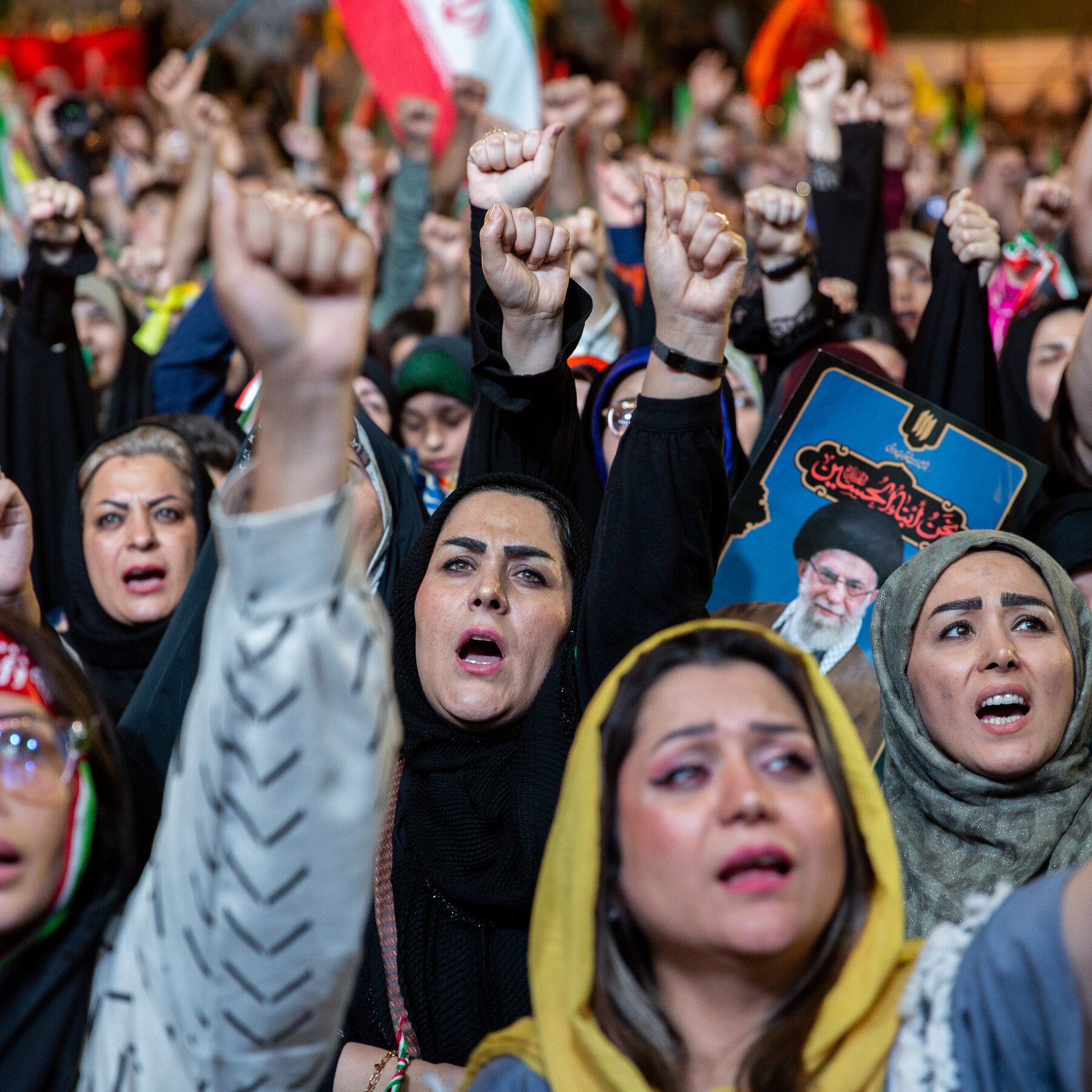
On the campaign trail and in the Oval Office alike, Donald Trump has returned to his most durable rhetorical pattern: the triumphant claim wrapped in a vague threat. "We took control of Venezuela," he told supporters in May 2026, before pivoting to the Middle East. "We basically took control of Iran too! We have defeated them." The crowd reportedly cheered. The State Department, the Pentagon, and three years of on-the-ground reality quietly disagreed.
The disconnect between Trump's public posture and the functional state of US-Iran relations is not new. It is, however, reaching a critical juncture. With naval assets permanently stationed in the Persian Gulf, sanctions tightened beyond the JCPOA-era baseline, and Iran's uranium enrichment program advancing to levels not seen before the 2015 deal, Washington is engaged in a slow-pressure campaign whose endpoint its own architects cannot clearly define. Trump frames this as strength. Critics — including figures from across the US foreign-policy spectrum — argue it is strategic incoherence wearing the costume of strength.
"The only way to end the war is an agreement," said one prominent international relations scholar in comments circulating on regional Telegram channels on 20 May 2026. "But Trump is not willing to accept Iran's victory." Whether framed as an outright rejection of Iranian nuclear capability or as acceptance of a regional sphere of influence, the structural problem remains the same: neither side appears willing to absorb the cost of the outcome they claim to seek.
The Gap Between Rhetoric and Leverage
Trump's language on Iran — "we have defeated them" — is a repetition of the maximum-pressure framing that defined his first term. In 2019, his administration withdrew from the Joint Comprehensive Plan of Action, reimposed sweeping sanctions, and declared an "unofficial boycott" of Iran's oil sector. The theory was that suffocating the economy would force Tehran to the negotiating table on American terms — that economic deprivation would translate into diplomatic capitulation.
That theory has been tested for seven years and, by most rigorous measures, has failed. Iran's GDP contracted sharply in 2019-2020, and the rial lost significant value. But the regime did not collapse, did not negotiate away its nuclear program, and did not abandon its regional posture. Instead, it accelerated uranium enrichment, deepened ties with Russia and China, and developed increasingly sophisticated drone and missile capabilities that would reshape the calculations of US military planners throughout the Middle East.
The Biden administration maintained — and in some cases expanded — the sanctions architecture while quietly allowing limited talks on a nuclear deal that never materialised. The Trump administration that returned to power in January 2025 approached the problem with more aggressive rhetoric and fewer institutional guardrails. Where Biden sought a return to the JCPOA with supplements, Trump's team signalled interest in a wholly new agreement that would address Iran's regional behaviour, its missile program, and its nuclear capacity in a single comprehensive framework.
Iran's response has been consistent and, from Tehran's perspective, rational: why negotiate when the evidence suggests the US cannot enforce its preferred outcome? Each round of sanctions has been absorbed rather than capitulated to. Each military provocation — the killing of Qasem Soleimani in 2020, the assassination of Hamas leader Ismail Haniyeh on Iranian soil in 2024 — has been answered not with surrender but with calculated retaliation and diplomatic repositioning.
A Regional War by Default
The escalation is not purely bilateral. Iran's regional architecture — its so-called Axis of Resistance — spans Lebanon, Iraq, Syria, Yemen, and the Palestinian territories. US forces in Iraq and Syria have been targeted repeatedly by pro-Iranian militias since October 2023, with the pace of incidents increasing through 2025 and into 2026. US Central Command has logged more than 170 attacks on American personnel in the region since the start of the current administration, according to figures cited in regional reporting.
Yemen's Houthi movement, which Iran has supported with weapons, intelligence, and strategic guidance, has maintained a campaign of Red Sea interdiction that has forced major shipping companies to reroute around the Cape of Good Hope, adding weeks to transit times and hundreds of dollars to container costs. The economic disruption is real and has been felt in consumer prices across the Atlantic world. Trump has responded with strikes; the strikes have not ended the interdiction.
In Lebanon, Hezbollah — while weakened by the 2024 Gaza war — remains a formidable military force with capabilities that, in the assessment of multiple regional intelligence services, exceed those of most standing armies in the Middle East. The organization's integrated air-defence network, precision-missile arsenal, and tunnel infrastructure represent a challenge that even the Israel Defense Forces, with full US support, found difficult to resolve through military means alone.
Iran's capacity to direct, fund, and equip these actors is real but also frequently overstated by Western analysts. The relationship between Tehran and its proxy networks is more transactional than many headlines suggest; Iranian Revolutionary Guard Corps commanders have at times disagreed with proxies about timing, scope, and acceptable risk levels. But the structural reality remains: any US military confrontation with Iran directly would immediately involve assets and actors across six countries and two maritime chokepoints.
The Internal Politics of Escalation
Trump has offered two competing framings of his Iran posture to different audiences. At rallies, he has described the conflict as popular — "Everyone tells me it's an unpopular war but I think it's very popular," he said in comments picked up by political trackers on 19 May 2026. In more formal settings, he has described a different posture: patience. "I'm in no hurry," he said on 20 May. "Everyone is saying, 'The midterms.' I'm in no hurry."
The tension between these frames is not incidental. It reflects a president who understands that his political base rewards strength rhetoric and punishes the appearance of indecision, but who also understands — perhaps more clearly than his public statements suggest — that a direct military confrontation with Iran carries costs that his administration is not prepared to pay. The midterms, roughly eighteen months away, represent a political horizon that has shaped the pacing of every major foreign-policy decision in this administration.
That horizon is not lost on Tehran. Iranian strategists — in the Islamic Revolutionary Guard Corps, in the foreign ministry, and in the office of the president — have studied the rhythms of American political time. They know that a president facing electoral pressure has incentives to either achieve a dramatic breakthrough or manufacture a casus belli that transforms the political narrative. They have reason to be cautious, to avoid provocations that create the latter, and to wait out the former.
The result is a standoff that both sides can describe in terms of success. Trump points to sanctions, to strikes, to naval deployments, and calls it pressure. Tehran points to the survival of its regime, the advancement of its nuclear program, the persistence of its regional alliances, and calls that its own success. Neither side is losing clearly enough to force a concession. Neither is winning clearly enough to declare victory.
The Diplomatic Vacuum and Its Costs
What is conspicuously absent from the current US posture is a credible diplomatic off-ramp. The JCPOA — the 2015 agreement that capped Iran's enrichment at 3.67 percent and placed the most robust verification regime in history over its nuclear program — is dead. The Europeans, who were its most consistent backers, have watched it erode with varying degrees of resignation. China and Russia have shown no interest in re-imposing the nuclear-related sanctions that the deal lifted. And Trump, who killed the agreement in 2019, has shown no interest in resurrecting it.
The alternatives being discussed in Washington are, by the accounts of officials familiar with the internal deliberations, limited. A "big deal" that addresses nuclear, missiles, and regional behaviour simultaneously has been proposed and, according to multiple regional and international sources, has been rejected by Iran as a non-starter. Incremental sanctions relief tied to incremental nuclear concessions — the model that briefly animated talks in late 2023 — has been dismissed by the current administration as insufficient.
This leaves a framework that some analysts describe as "maximum pressure without a theory of victory." The goal is presumably regime change, though the administration has avoided stating this explicitly. The path to that goal is presumably economic and diplomatic strangulation, though Iran's economy — while struggling — has survived worse. The timeline is presumably the next election cycle, though neither side's incentives align with that calendar.
Iran's nuclear program, meanwhile, advances. The International Atomic Energy Agency reported in 2025 that Iran had accumulated enough 60-percent enriched uranium — the threshold closest to weapons-grade — to produce multiple devices within weeks if it chose to do so. The agency has limited access to Iranian sites. The verification architecture is degraded. The diplomatic mechanism for restoring it is absent.
What Comes Next
The pattern that has defined US-Iran relations for seven years — escalating sanctions, military posturing, proxy confrontation, diplomatic vacuum — shows no sign of breaking. Each cycle reinforces the next. Sanctions produce no capitulation; the absence of capitulation produces more sanctions. Military pressure produces no surrender; the absence of surrender produces more pressure. Diplomatic off-ramps are rejected by both sides; the rejection of diplomacy produces more confrontation.
Trump's claim that he has "basically taken control of Iran" is, in this context, either a deliberate falsehood told for political effect or a genuine misunderstanding of the strategic situation. Either possibility carries consequences. A president who believes he controls a situation he demonstrably does not will make decisions calibrated to an imagined reality. A president who knowingly misrepresents that reality to his base is building a political account that will eventually come due.
The more plausible scenario is that Trump understands the limits of his leverage and is managing a confrontation he cannot resolve on terms he can publicly characterise as success. That is not a stable equilibrium. Standoffs that appear permanent eventually break — usually in the direction that no side planned for.
What the sources consistently do not clarify is whether the administration has a theory for what happens next. Officials speak of "diplomatic space" and "strategic patience." Iran speaks of "resistance" and "patience." Both are waiting. One side may be waiting for a mistake the other has not yet made. The possibility that neither is waiting for anything — that the situation is drifting — is the one that observers of the region find most alarming.
The gap between the rhetoric of control and the reality of entanglement is, at this moment, the defining fact of American Middle East policy. It is not a new gap. But it has rarely been wider, or more consequential, than it is today.
This publication approached the Iran story through the lens of strategic incoherence — a US posture that combines maximum-pressure rhetoric with the absence of a defined endgame. The wire framing, by contrast, focused on Trump's personal framing of his own record. We believe the structural tension between declared policy and operational reality deserves equal weight.
Wire provenance
This editorial synthesis draws on the following public wire/social posts:
- https://t.me/farsna/5824
- https://t.me/farsna/5822
- https://t.me/ClashReport/51829
- https://x.com/unusual_whales/status/1921984235279389191