Trump's Iran Ultimatum Exposes the Limits of Maximum Pressure
Trump's demand for a 100% satisfactory response from Iran within days exposes the contradictions at the heart of his negotiating posture — and may be giving Tehran exactly the leverage it needs.
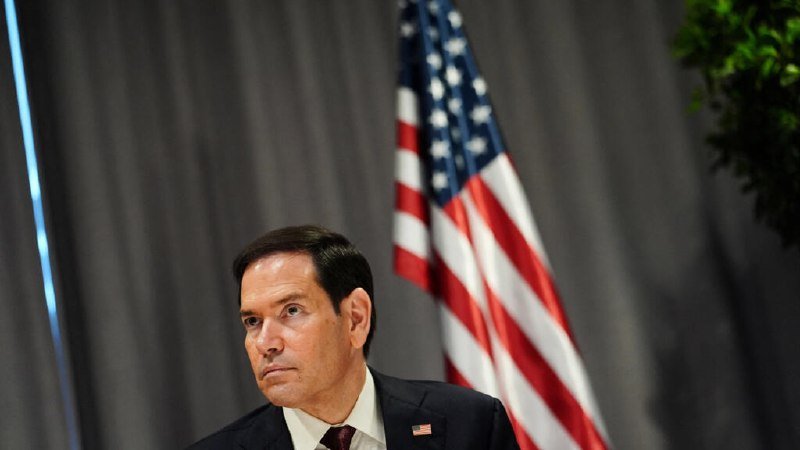
On 20 May 2026, President Donald Trump delivered an ultimatum to Tehran that landed with the familiar weight of American categorical language — but beneath the declarative surface, the signal was more complicated than the headline suggested. "If we don't get the right answers, it goes very quickly. We're all ready to go," Trump said, framing the moment as a binary choice between total compliance with a US proposal and rapid escalation to military contingency. He added that Iran must provide a "complete, 100% good answer" — language that would, in any negotiation, be as destabilising as the threat it accompanied. The president then claimed his administration would not lift any sanctions until a final agreement was reached, a condition that Tehran has consistently identified as the core obstacle to talks. Whether the ultimatum puts pressure on Iran or simply hardens the positions it was already hardening depends on which side of the negotiating table one sits — and on the structural constraints that neither side fully controls.
The immediate context matters. For weeks, the administration's public posture has oscillated between expressions of confidence that a deal was close and warnings that military action remained on the table. That oscillation is not accidental. It is the maximum-pressure playbook — the same architecture the Trump administration deployed in its first term and has now refined with a thinner patience and a thicker public-relations component. The problem is that maximum pressure requires the target to feel the pressure acutely enough to make concessions, and Iran has spent the intervening years building exactly the economic and institutional resilience that sanctions architecture is supposed to erode. Whether that resilience is the product of genuine adaptation or a managed fiction that allows Iranian officials to avoid appearing capitulated-to is itself a contested question. What is clear is that Trump's demand for a 100% satisfactory response — with an implied clock — may be playing into the hands of those in Tehran who want to stall without appearing to stall.
The Iranian Counter-Response
The reaction from Iranian state media was swift and predictable in its tone, if instructive in its substance. Tasnim News, an outlet close to the Islamic Revolutionary Guard Corps, described Trump as "the head of the US terrorist state" and reported his claims about sanctions and oil exemptions without editorial challenge to the underlying premise — that the US remains the primary threat vector. That framing matters because it determines what domestic audience Tehran is speaking to. Iranian hardliners do not need Trump to confirm their worldview; they need him to behave in ways that can be presented as confirmation to a domestic audience that is not uniformly committed to confrontation. Trump's combination of military signalling and apparent openness to negotiation — he described his counterparts as "very good people, people with talent and brain power" — gives both sides of the Iranian political spectrum something to work with, which is not the same as giving either side what it needs.
Fars News, another Iranian state-adjacent outlet, quoted Trump calling Iran a "failed country" — language that will resonate in Tehran precisely because it is the language of someone who believes he holds all the leverage and therefore has no incentive to disguise his contempt. That contempt, however, cuts both ways. A negotiating partner who believes he has already won does not need to make concessions, and a negotiating partner who believes he has already been dismissed has no reason to make the concessions being demanded of him. The structural problem with the Trump ultimatum is not that it threatens military action — that is a legitimate negotiating tool — but that it combines the threat with language that forecloses the face-saving modifications that have historically made nuclear negotiations possible. The 2015 Joint Comprehensive Plan of Action survived not because either side trusted the other, but because the architecture allowed each side to present compliance as serving its own security interests. The current framing, by contrast, seems designed to make that presentation impossible.
Structural Constraints and the Diplomatic Architecture
Behind the presidential rhetoric sits an architecture of sanctions, oil markets, and Gulf-state calculations that neither Washington nor Tehran fully controls. The odds of Trump making concessions on oil sanctions and the unfreezing of frozen Iranian funds have, according to one tracking metric, "skyrocketed" in the six hours following Trump's statements, a movement that suggests financial markets are reading the ultimatum as more likely to produce a diplomatic face-saving compromise than a military flashpoint. That reading may be correct. But it also reveals the nature of the pressure that is actually operating on both sides: Trump needs a deal that can be presented as a victory, not because the economic logic demands it, but because the domestic political logic of his second term does. A war with Iran would be, in the near term, a Republican war, and the electoral calculus around military adventures has proven reliably punishing in recent electoral cycles. Tehran understands this calculus as well as anyone in Washington does, and the understanding shapes its negotiating posture in ways that are not easily legible in the public statements on either side.
The sanctions architecture itself is also operating in ways that complicate the ultimatum's logic. Broad sanctions regimes require international compliance to function as designed. The US can designate entities and freeze assets unilaterally; it cannot, without substantial multilateral cooperation, enforce a complete economic blockade of a country the size of Iran. China, which has maintained its own commercial relationship with Tehran throughout the sanctions period, has not signalled any willingness to subordinate that relationship to American requests. The Belt and Road infrastructure that connects Iranian oil to Chinese refineries represents a structural channel that US sanctions cannot easily close without a level of diplomatic coercion that would impose its own costs on the broader US-China relationship. These constraints are not new, but they are not trivial, and they shape what "maximum pressure" can actually achieve in the current environment.
What Comes Next
The coming days will test whether Trump's ultimatum is a negotiating opening dressed as a threat or a threat that will actually be executed if the deadline passes unsatisfactorily. Iranian officials have said they will respond within days, a timeline that itself represents a form of engagement rather than a flat refusal. The question is whether the response will be substantive — a proposal that moves toward US demands on uranium enrichment levels, monitoring access, and sanctions relief sequencing — or performative, a statement designed to buy time while the internal Iranian debate continues. Hardliners in Tehran will resist any appearance of capitulation; moderates will argue that the economic cost of continued confrontation outweighs the political cost of appearing flexible. The outcome of that internal debate will be shaped by signals from Washington — not just the presidential statements, but the quieter communications through intermediaries that typically accompany this kind of diplomatic process.
The stakes are asymmetric in ways that are often underweighted in Western coverage. Trump needs a deal to avoid the political costs of military escalation and to be able to claim a diplomatic win for an administration that has struggled to produce signature foreign-policy achievements. Iran needs a deal to relieve economic pressure that has genuinely damaged living standards, but it does not need one urgently enough to accept terms that would leave it significantly weaker than before negotiations began. That asymmetry gives Tehran more ability to wait than the ultimatum's framing suggests. Whether it chooses to use that ability depends on calculations that are not yet visible from the outside, but the conditions for a prolonged and potentially destabilising standoff are clearly present.
This publication framed the ultimatum story with both the presidential hard-line language and the Iranian state-media counter-framing, in contrast to wire coverage that led primarily with the US-side threat. The structural analysis — dollar sanctions architecture, multilateral compliance limits, domestic electoral calculus on both sides — reflects the geopolitical reading this desk prioritises over tactical event-coverage.
Wire provenance
This editorial synthesis draws on the following public wire/social posts:
- https://t.me/ClashReport
- https://t.me/Middle_East_Spectator
- https://x.com/sprinterpress/status/1921872345678274560
- https://t.me/tasnimnews_en
- https://t.me/wfwitness
- https://t.me/rnintel
- https://t.me/FarsNewsInt
- https://t.me/Middle_East_Spectator