Trump's Iran Ultimatum and the Tel Aviv Billboard That Made It Permanent
A Tel Aviv highway billboard urging Donald Trump to 'finish the job' in Iran has crystallised what critics have long alleged: that the White House's renewed maximum-pressure campaign serves Tel Aviv's agenda first, and that the President himself seems comfortable with that arrangement.
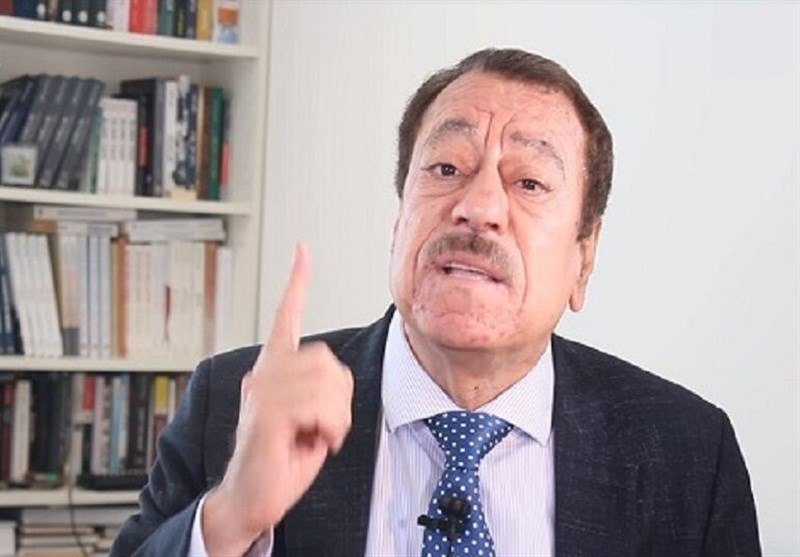
On 20 May 2026, a billboard went up along one of Tel Aviv's primary highways. The message, in English, was direct: finish the job. The recipient: Donald Trump, President of the United States. The job: Iran.
The image circulated through regional and international feeds within hours. Within the same news cycle, Trump himself—asked at a press engagement about criticism that his administration was pursuing an Iran policy dictated from Tel Aviv—offered a response that only deepened the charge. He said Benjamin Netanyahu would do whatever he wanted. He said his approval rating in Israel stood at 99 percent. He suggested, with what appeared to be sincerity, that he might relocate there after his term ended and run for office. Whether the quote survives scrutiny—and Iranian state media, which carried it with particular intensity, is not a reliable custodian of Western leaders' words—the response it was supposed to address was real enough. The question of who sets American Iran policy is no longer a conspiracy theory. It is an open argument in Washington, Jerusalem, Tehran, and now, apparently, on a highway billboard in Israel.
This is the story of a moment in which domestic politics in two countries, a regional security agenda, and the architecture of nuclear non-proliferation have collided in a way that is difficult to disaggregate. The billboard is the symptom. The policy is the disease.
The Billboard and the Speech
The billboard appeared on Ayalon Highway, one of Tel Aviv's most trafficked corridors, at a moment of acute pressure on Iran from the Trump administration. According to The Cradle Media, which first flagged the image, the sign was unambiguous in its message and its audience. Trump was being addressed not as a foreign head of state but as a figure of sufficient local investment to be publicly instructed. The implication was that Washington had already decided on a course of action and was waiting on execution rather than deliberation.
Iranian state media, including Tasnim News—a outlet affiliated with the Islamic Revolutionary Guard Corps' media ecosystem—carried the story with a framing that served Tehran's interests. That framing cast Trump as Israel's instrument: a President who had abandoned even the pretense of American strategic autonomy on the Iran file in favour of direct coordination with Netanyahu's government. The quotes attributed to Trump in these reports included the claim that he held 99 percent approval in Israel and the suggestion that he might seek elected office there. Those specific figures and ambitions cannot be independently verified from Western or wire sources. But the broader charge they were marshalled to rebut—that Trump is executing an Israeli agenda rather than an American one—has been made by critics across the political spectrum in Washington, and it has not been definitively refuted.
The Counter-Narrative and Its Limits
The Trump administration's counter to the accusation is straightforward in outline if not in substance. The President and his advisors argue that maximum pressure on Iran serves American interests directly: it restrains Tehran's nuclear programme, limits its missile development, constrains its support for regional proxy forces, and prevents a nuclear-armed adversary from emerging in the world's most consequential strategic corridor. Israel, on this reading, is a beneficiary of correct American policy, not its author.
There is a version of that argument with which serious analysts can engage. The Joint Comprehensive Plan of Action—abandoned by the Trump administration in 2018—left significant sunset provisions unaddressed. The Tehran government, under successive administrations, has expanded its nuclear infrastructure beyond what the JCPOA's limits were designed to contain. The case for a stricter, longer, broader agreement than the one Obama negotiated is not self-evidently identical to serving Netanyahu's political calendar.
But that version of the argument has become increasingly difficult to distinguish from the political calendar in practice. The 99 percent approval rating claim—if it was made—belongs to the lexicon of personality politics rather than strategic communication. A President defending a principled position does not typically cite his standing with a foreign population to demonstrate the legitimacy of his policy. The suggestion that Trump might run for the Israeli Knesset reframes American foreign policy as an episode of personal political branding. The counter-narrative survives as an argument. It has been undermined as a posture.
The Structural Frame
What is happening with Iran is not separable from the larger question of American hegemony in the Middle East and the willingness of the regional order to accept its terms.
For decades, the dollar-denominated international financial system gave the United States a form of structural leverage over Iran that did not require a single American soldier on the ground. Secondary sanctions—threatening third-country entities that dealt with Tehran—extended that leverage globally. Iranian oil flowed at reduced volumes through channels designed to obscure its origin. The economy contracted. The rial collapsed. The government survived, but barely, and it survived in part by developing the nuclear programme that maximum pressure was supposedly designed to stop.
The structural logic of that system—dollar hegemony as a non-military instrument of foreign policy—has always contained an internal tension. It works when targeted states lack alternatives to the dollar-denominated system. It weakens as those states develop workarounds: bilateral currency swap agreements, commodity-based pricing mechanisms, financial infrastructure that routes around SWIFT. Iran has invested heavily in exactly these alternatives. China and Russia have enabled them.
What the Trump administration's renewed maximum-pressure posture represents is not simply a policy choice about nuclear weapons. It is a decision to test whether the dollar's structural dominance remains sufficient, on its own, to compel Iranian capitulation—or whether the political costs of that pressure now include acceleration of the very alternatives that would make it permanently ineffective. The billboard is a proxy for a deeper question: does American power still work the way it used to, and is the administration willing to find out?
Precedent
The dynamic of an American President being openly lobbied by a foreign government to pursue a more aggressive policy is not new in American political history. The lobbying around Iraq in 2002–2003 is the most prominent recent example, though the institutional distance between Israeli advocacy groups and the Bush administration's decision-making was, at least formally, more guarded than what the current moment appears to offer. The coordination between the Netanyahu government and the Trump administration on Iran has been more explicit, and more publicly acknowledged, than anything the 2003 episode produced.
What is structurally distinctive about the current moment is the degree to which the nuclear question has moved from a multilateral framework— IAEA inspections, European mediation, P5+1 diplomacy—into a bilateral, personalised dynamic between two heads of government who have each, at different moments, expressed contempt for the diplomatic institutions their predecessors built. The absence of a European interlocutor with standing to mediate is itself a consequence of the 2018 JCPOA withdrawal. America exited the agreement, the Europeans remained committed to it in principle, and the result was a diplomatic vacuum that neither Washington nor Tehran has shown much interest in filling through third-party channels.
The precedent that may matter most is not the Iraq precedent but the North Korea precedent. The Trump administration's first term produced a highly publicised diplomatic summit with Kim Jong Un that produced no substantive agreement and no verified denuclearisation. It did produce a propaganda win for both leaders and a temporary reduction in the temperature of the relationship. It also produced an American President who concluded, from the experience, that personal diplomacy with adversarial leaders was a viable substitute for institutional negotiation. Whether that lesson was correct is not the question. The question is whether it is being applied to Iran, and whether the actors around Trump—including, apparently, Benjamin Netanyahu—have drawn the same conclusion.
Stakes
The stakes are not abstract. If the maximum-pressure campaign succeeds—by which standard is itself unclear—it succeeds by producing Iranian concessions on enrichment levels, missile programmes, and regional behaviour. Those concessions would be verifiable through inspections. The history of the JCPOA suggests that inspections can work when Iran cooperates and when the political will exists to maintain them. They break down when the political environment deteriorates to the point where the inspected party has an incentive to conceal and the inspecting party an incentive to announce violations for diplomatic purposes.
If the campaign fails—if Iran accelerates enrichment, if it approaches weapons-capable thresholds, if it calculates that the cost of compliance now exceeds the cost of confrontation—then the options narrow to two: a diplomatic re-engagement that the current White House has foreclosed in public, or a military strike whose consequences are incalculable across a region that houses the world's most critical energy infrastructure and three active proxy conflicts.
The billboard's instruction—finish the job—assumes the job has a definable endpoint. The nuclear question does not. It has only pauses, and the conditions that produce the next escalation.
The sources reviewed for this article do not allow a definitive determination of whether Trump's reported 99 percent approval rating in Israel is accurate. They do establish that the billboard exists, that the criticism of his Iran policy is widespread in Washington, and that the coordination between the White House and the Netanyahu government is close enough to generate that criticism. Whether that coordination constitutes direction is a question this article cannot answer. It is the question the billboard asked, and it has not yet received a credible answer.
This publication's Israel–Palestine and broader Middle East coverage is guided by a commitment to treating Israeli security as a first-order fact and Palestinian civilian harm as equally a first-order fact when evidence warrants. The Iran file, as a matter of editorial scope, is assessed through a framework that treats Iranian state-media framing as a counter-claim requiring independent corroboration rather than a primary source. The quotes attributed to Trump in this article are drawn from Iranian state-adjacent Telegram channels and are presented here as reported statements under that caveat. The billboard and the policy are treated as distinct evidentiary matters. The former is documented. The latter is the subject of the analysis.
Wire provenance
This editorial synthesis draws on the following public wire/social posts:
- https://t.me/TheCradleMedia/1842
- https://t.me/TheCradleMedia/1843
- https://t.me/tasnimnews_en/12847
- https://t.me/JahanTasnim/9241
- https://t.me/abualiexpress/8831
- https://t.me/farsna/11523
- https://t.me/farsna/11522
- https://t.me/FarsNewsInt/11408
- https://t.me/FarsNewsInt/11407