Trump's maximum pressure, Iran's fractured consensus, and the Tel Aviv billboard spelling out what Tel Aviv wants
As Trump predicts imminent Iranian implosion and a Tel Aviv highway billboard urges him to 'finish the job,' the structural logic of economic strangulation campaigns — and their long record of failing to topple intact states — demands scrutiny.
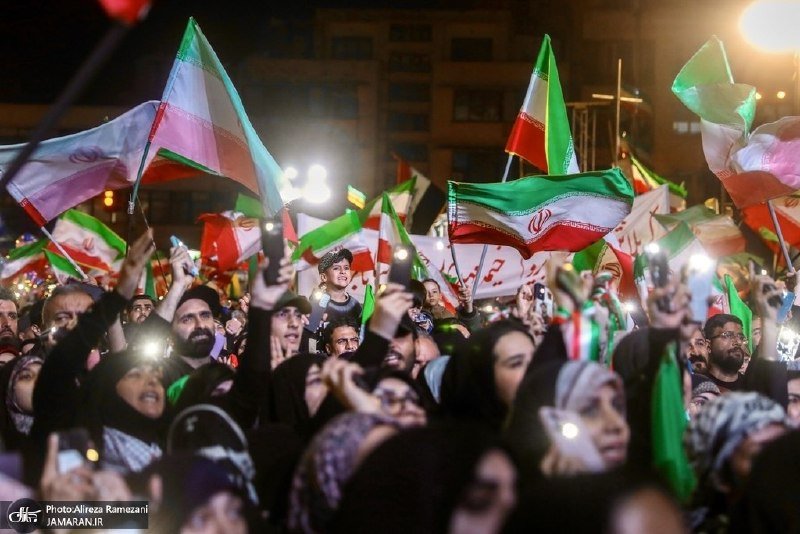
On 28 April 2026, US President Donald Trump told assembled reporters that Iran's oil fields and infrastructure were days away from — in his phrasing — "exploding." The crediting cause, in the administration's framing, was a US naval blockade constricting Iranian port access. The prediction carried a specific epistemic claim: that the economic pressure was not merely punitive but structurally decisive, that a state under sufficient financial duress simply breaks.
The prediction was not an isolated aside. It was consistent with a rhetorical arc the administration has maintained since the outset of its second term — that maximum pressure, properly sustained, produces capitulation. What the intervening weeks have produced instead is a more complicated picture: visible internal strain in Iran, unambiguous external pressure from Israel, and a body of historical evidence that confound the administration's working assumptions about how isolated states respond to economic siege.
The Iranian domestic picture: stress without collapse
Trump's own formulation, captured in a social media post by a geopolitical analyst citing administration contacts, offered a candid read of what the White House believes it is observing. "There's a lot of anger now in Iran because people are living so badly," Trump stated. "There's a lot of foment that we haven't seen before so much."
The characterisation of internal friction is not disputed by regional analysts. Iran has weathered years of sweeping sanctions across two distinct maximum-pressure campaigns — the first under Trump in 2018–2021, the second now under his second administration. The cumulative effect on ordinary Iranians is real: currency depreciation, inflation, reduced access to imported goods and medicine, and a private sector hollowed out by correspondent banking restrictions that make legitimate international transactions functionally impossible for most Iranian businesses.
What the administration's framing elides is the political mechanics of how isolated states absorb economic pain. Autarkic regimes — or states with sufficient structural resilience through energy self-sufficiency, a large domestic market, and established smuggling networks — do not follow linear pressure-to-collapse curves. Iran possesses all three characteristics. The Islamic Republic has survived four decades of US sanctions, a grinding regional conflict in the 1980s, and successive rounds of international isolation. The resentments Trump describes are genuine; the translation of those resentments into regime fracture is a different empirical proposition, and one the historical record does not support without qualification.
The administration appears to be treating Iranian public anger as a near-term strategic asset. The available evidence suggests a more ambiguous relationship between domestic suffering and political change under conditions of external threat. When a population perceives pressure as existential and externally imposed, the political dynamics often trend toward consolidation rather than rebellion — particularly when no credible alternative governance structure exists to channel discontent into coordinated action.
The Tel Aviv billboard and its implications
In the week preceding the 20 May 2026 reporting date, a billboard appeared along a principal Tel Aviv highway bearing a blunt instruction to the visiting US president: "Finish the job" in Iran. The message was reported by The Cradle Media, which obtained and published a photograph of the advertisement.
The billboard is a data point, not a policy document. But it surfaces something real: Israeli governmental and affiliated actors are actively lobbying the Trump administration toward direct military engagement with Iran, and they are doing so in the visual language of public pressure campaigns. This is not new. Israeli officials have made no secret of their assessment that a nuclear-capable Iran — or even a near-nuclear Iran — represents an unacceptable strategic condition. What is notable is the explicitness of the public ask at this particular moment.
The ask carries domestic political weight in Israel. Benjamin Netanyahu's coalition has survived in part on security credentials; an Iran campaign, even a limited one, would redirect political attention from domestic governance failures. But the billboard also reflects a genuine strategic conviction at the senior levels of Israeli security establishment: that containment has failed, that economic pressure is insufficient, and that the only durable solution is a military one.
This is a coherent position within its own logic. It is also a logic that has historically proven easier to enter than to exit. US and allied military planners understand, with operational specificity, the difference between degrading a nuclear programme and eliminating one — particularly one distributed across hardened, dispersed, and in some cases mobile facilities. The intelligence community's assessments on Iranian nuclear infrastructure have been consistent for years: it is deeper and more resilient than its critics often acknowledge in public discourse.
The structural logic of economic strangulation
The Trump administration's theory of the case is coherent as a piece of first-order logic: deny a target the financial resources and technical inputs necessary to sustain key capabilities, and those capabilities degrade. The theory works well for targets that depend on external supply chains they cannot replicate domestically and that possess limited political resilience.
Iran is not that target. It is the opposite case in almost every relevant dimension. It is a major hydrocarbon exporter with the capacity to sustain domestic energy needs without imports. It has developed domestic production capability across a range of dual-use and military-industrial sectors precisely because decades of sanctions made import substitution a survival imperative. Its governance structure, for all its internal tensions, is designed to absorb external shock; the Islamic Republic was founded on the premise of adversarial international relations.
This does not mean sanctions are ineffective as instruments of economic punishment or diplomatic leverage. They demonstrably constrict Iran's fiscal flexibility, limit its ability to project conventional military power at scale, and impose real costs on ordinary citizens. But the translation of those costs into political capitulation — the delivery of concessions, the abandonment of strategic programmes, the internal restructuring the administration appears to expect — requires a mechanism beyond economic pain alone. It requires either a credible domestic alternative to the incumbent regime, or a perception that accommodation is more survivable than resistance.
Neither condition currently obtains. The Iranian government shows no signs of internal fracture sufficient to produce the kind of rapid political transition the administration appears to anticipate. And the US withdrawal from the Joint Comprehensive Plan of Action in 2018 — followed by the reimposition and expansion of sanctions — provided Tehran with a visceral, concrete demonstration that accommodation with Washington is reversible and therefore unreliable.
What comes next
The available evidence does not support the proposition that Iran is days from systemic collapse, as the administration predicted in late April. It does support the proposition that Iran is under significant and growing economic stress, that Israeli pressure for a military solution is real and intensifying, and that the gap between those two assessments — stress versus collapse — is where policy errors are most likely to be made.
The most probable near-term trajectory is continued economic pressure producing continued internal hardship without the political outcomes the administration has publicly predicted. This would leave the White House with a choice: escalate to military action, accept a prolonged and embarrassing failure of stated policy objectives, or find an off-ramp that allows both sides to adjust stated positions without either formally conceding.
The Tel Aviv billboard makes clear what one set of actors in this configuration wants. The history of sanctions campaigns — against Iran, against Iraq through the 1990s, against Cuba for over six decades — makes clear what maximum pressure typically produces when the target state does not fragment. The administration is working from a theory of change that the evidence does not reliably support. The next several months will test whether that theory adjusts to the evidence, or whether the pressure escalates to the point where the alternative is no longer a choice.
This publication covered the Iranian situation from a geopolitical desk perspective, prioritising structural analysis of sanctions efficacy over the prevailing Washington framing that economic pressure is a near-term substitute for strategic engagement.