Trump's Subterranean Ambition: The New White House Bunker and the Architecture of Executive Security
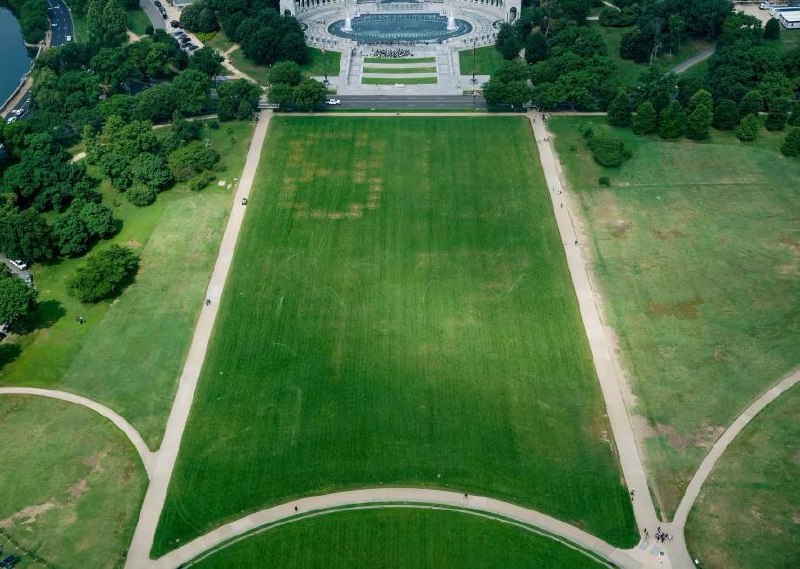
On 19 May 2026, President Trump unveiled plans for what his administration calls a new White House ballroom — a six-story underground complex beneath the existing Executive Residence, equipped with a drone base on the roof, a military hospital, research facilities, and secure meeting rooms for senior military officials. The announcement, made in two posts that same day and confirmed by Reuters the following morning, drew immediate attention for its scope and its timing: the new bunker facility is being built as the United States is actively engaged in military operations against Iran.
The structure, as described by Trump, represents one of the most consequential physical changes to the White House complex in decades. Security upgrades to the executive mansion are not unusual — the White House has undergone periodic hardening since the 1940s, when a secret underground bunker was constructed for Franklin Roosevelt during the Second World War. What is unusual is the scale now being proposed, and the manner in which it was announced: without congressional hearings, without a formal budget disclosure, and with no public architectural or security assessment made available for independent review.
The Drone Threat and the Case for Upgraded Air Defense
The stated rationale is specific and modern: a rooftop drone base, Trump explained, would protect Washington D.C. from potential attacks. The framing reflects a security consensus that has hardened since the 2019 drone attack on Saudi Arabia's Abqaiq oil facility, and more recently since Ukrainian forces demonstrated at scale how inexpensive unmanned systems can penetrate sophisticated air defenses. Washington's airspace is already defended by National Guard units and Secret Service counter-drone technology, but the concept of a dedicated, purpose-built aerial defense platform integrated into the White House itself marks a departure from existing architecture.
A military hospital beneath the ballroom is a more direct response to the realities of conflict. If U.S. forces are engaged in operations abroad, and if the continental United States faces elevated threat levels, a hardened medical facility at the seat of government provides a redundancy that standard civilian hospitals cannot offer. The presence of dedicated research facilities and military briefing rooms suggests the administration envisions this space not merely as refuge but as a forward command node — a place where decision-making on ongoing operations can continue uninterrupted.
The security logic is coherent. Whether it justifies the expenditure and the secrecy is a different question.
Military Operations Against Iran: The Geopolitical Backdrop
The timing of the announcement is not incidental. As Trump detailed the bunker expansion, his administration was simultaneously prosecuting a military campaign against Iran — one that Vice President JD Vance, speaking at a White House briefing on 20 May 2026, defended as unlikely to become a "forever war." Vance told reporters that Trump had been clear about objectives and timelines, and that the administration's approach was calibrated and finite.
Those reassurances notwithstanding, the infrastructure being built beneath the White House tells a different story about perceived risk. A six-story underground complex with its own medical and research capacity signals that whoever designed or approved this plan is working from a threat model that assumes sustained hostility — not a short, sharp campaign. The discrepancy between the administration's public framing of a limited, time-bound conflict and the architectural response being constructed beneath the executive mansion is significant. It raises the question of which assessment the administration considers more reliable: the optimistic public statements, or the decision to spend months and likely considerable sums hardening the presidency against the consequences of miscalculation.
Reports that the administration underestimated Iranian resolve have surfaced in regional coverage. According to a Telegram channel tracking the conflict, Vance himself acknowledged in private remarks that Iran was "a very complex country" that proved harder to manage than anticipated. That framing — if accurate — suggests the administration's risk model has been updated in ways that make the bunker announcement less a precautionary measure and more a direct response to lessons learned in the opening phase of the Iran campaign.
Transparency, Oversight, and the Question of Precedent
The bunker has received limited coverage in the Western wire press, despite its scope. Reuters confirmed the basic details of the six-story structure, the rooftop drone base, and the military hospital on 20 May 2026, and the announcement was noted in the context of Trump's broader executive orders. What has not been reported is who approved the construction plan, what its estimated cost is, whether Congress has been consulted, or what the chain of command looks like for decision-making about access to a subterranean military facility beneath the executive mansion.
The White House has offered no public architectural plan, no environmental assessment, and no budget breakdown. The absence of disclosure is notable given that any major alteration to the White House grounds — historically reviewed by the Commission of Fine Arts, subject to oversight by the Secret Service, and in some cases requiring congressional appropriation — would normally involve multiple layers of external review. Whether those processes are being followed in this instance remains unclear from publicly available sources.
The precedent question is genuine. A president who constructs a purpose-built, underground military command-and-control facility beneath the White House, complete with its own air defense and medical infrastructure, is not merely upgrading existing security — he is creating a new category of executive asset. Future administrations will inherit that infrastructure. The question of who controls it, who can access it, and what its purpose is when the constructing administration leaves office is not speculative: it is the same question that arises every time executive power is expanded and institutionalized. History suggests those questions are easiest to answer before the fact, and most contested after it.
The Broader Executive Security Architecture
The United States has a long, largely unexamined history of hardening the executive branch against external threat. The White House bunker system dates to the Second World War. The Pentagon's security protocols are classified. The continuity-of-government infrastructure that would allow executive functions to persist through a national emergency — including underground facilities at Mount Weather and Raven Rock — has been discussed in open sources but never subjected to meaningful public oversight.
What is new is the combination: an active shooting war on the cusp of the capital, a president announcing the construction publicly without legislative approval, and a domestic banking order targeting non-citizens in the same news cycle. Each item individually is defensible within existing frameworks. Together, they describe a presidency that is simultaneously projecting power abroad and fortifying itself at home — and doing so with a level of executive initiative that bypasses the normal checks that would apply to any other branch of government.
The bunker may be necessary. The drone base may be prudent. The military hospital may simply reflect the world as it is. But the absence of scrutiny — the fact that this announcement landed in a news cycle consumed by Iran and immigration enforcement and went largely unexamined — is itself the story. Architecture reveals intent. The question is whether anyone is paying attention to what the president is building under our feet.
This publication covered the White House bunker announcement as a security and governance story; most Western wire coverage contextualised it within Trump's broader executive orders. The Iran war framing and the domestic banking directive received more prominent placement in the general news cycle.
Wire provenance
This editorial synthesis draws on the following public wire/social posts:
- https://x.com/polymarket/status/2056883648146579456
- https://x.com/polymarket/status/2056951066210795521
- https://t.me/intelslava/12847