UAE Says Drones Launched From Iraq Struck Barakah Nuclear Site — What We Know
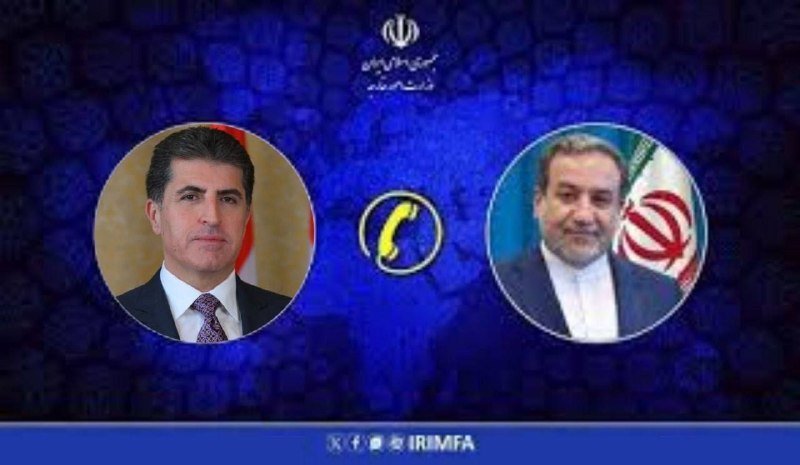
The UAE Foreign Ministry confirmed on 20 May 2026 that multiple drones launched from Iraqi territory struck the Barakah nuclear power plant in Abu Dhabi's Al Dhafra region — calling the strikes "treacherous terrorist attacks" and a direct threat to regional stability. The Iraqi Foreign Ministry, in a statement issued the same day, acknowledged the attacks originated from its side of the border, though neither government has publicly attributed responsibility to a specific group or state actor. The incident marks the first confirmed strike against an operating nuclear power facility in the Persian Gulf and escalates a shadow conflict between Iran-aligned proxy networks and Gulf Arab states that has been intensifying since October 2023.
The attack, if confirmed as described, represents a qualitative shift in the targeting doctrine of Iran-aligned militia activity in Iraq. Previous strikes against Gulf energy infrastructure — including the October 2024 Abqaiq-adjacent incidents and the periodic targeting of Saudi Aramco facilities — largely concentrated on oil export terminals and gathering stations. Nuclear power infrastructure carries distinct strategic weight: a successful strike causing radioactive release would constitute a radiological event with transboundary consequences that no previous Gulf confrontation has approached. The choice of target, and its geographic placement inside the UAE rather than at the periphery, suggests a planning capability and operational clearance that sets this incident apart from opportunistic militia activity.
The Immediate Incident
According to the UAE Foreign Ministry statement issued at approximately 11:55 UTC on 20 May 2026, drones were launched from Iraqi territory and targeted the Barakah plant, which has been operating commercially since early 2022. The ministry described the strikes as "treacherous terrorist attacks" without naming a specific perpetrator. Iraqi Foreign Ministry spokesman Ahmed al-Sahhaf confirmed in a parallel statement that the drones had crossed into UAE airspace from Iraqi territory, without elaborating on the launch mechanism or the identity of the operators. Neither statement addressed what air defence assets were in position, why the incoming fire was not intercepted, or what damage — if any — was sustained to the reactor structures themselves.
The Barakah plant, operated by the Emirates Nuclear Energy Corporation (ENEC), comprises four Korean-designed APR-1400 reactors with a combined generating capacity of approximately 5,600 megawatts. Two units are currently operational; a third reached criticality in late 2025. The facility is the centrepiece of the UAE's energy transition strategy and a flagship of Gulf nuclear cooperation with South Korea's KEPCO. Any attack that penetrates the plant's security perimeter — even one that causes no radiological release — would require a fundamental reassessment of threat assumptions governing civilian nuclear infrastructure across the Gulf.
Tehran's Position and the Iraq Dimension
Tehran-aligned media, including the Tasnim News Agency — whose English-language service carried three separate reports on the incident within a twenty-minute window on 20 May — framed the attack without editorial caveat as a legitimate response to "UAE complicity" in regional conflicts. Tasnim's coverage, while not originating from a Western wire service, reflects the framing adopted by Iranian state-adjacent outlets and provides the clearest window into how Tehran intends the episode to be understood: not as an unprovoked strike but as an escalatory response with its own antecedent logic.
That logic, though not publicly confirmed by any Iranian official, maps onto a pattern visible across the region since late 2023. Iranian-backed militias in Iraq — principally Kataib Hezbollah and its parent network, the Islamic Resistance in Iraq — have periodically targeted Israeli-linked infrastructure and, more recently, have widened the aperture of their operations to include Gulf states whose governments have maintained normalisation agreements with Israel. The October 2023 Hamas-led attack on Israel and the subsequent Gaza ground campaign activated dormant commitments across Iran's proxy architecture; the normalisation deals that the UAE and Bahrain signed with Israel in 2020 became, overnight, liabilities for Gulf governments that had positioned themselves as regional mediators.
The structural question is not whether Iran-directed or Iran-adjacent forces launched the strike — the Iraqi acknowledgment of cross-border launch makes that attribution near-certain — but whether Baghdad retains meaningful control over the militia landscape that the Islamic Resistance in Iraq has built inside its territory since 2023. Iraq's government, under Prime Minister Mohammed Shia al-Sudani, has oscillated between condemnation of Israeli actions and quiet tolerance of militia operations that it cannot suppress without precipitating a political crisis with its own Shia majority. The Iraqi Foreign Ministry's statement on 20 May — acknowledging the attack without repudiating it — suggests Baghdad is not yet willing to break with the militia networks that give it regional leverage.
Structural Stakes: Civilian Nuclear in a Drone-Threat Environment
The Barakah attack surfaces a gap in international nuclear security architecture that has been identified by the International Atomic Energy Agency since at least 2018 but has never been systematically addressed. IAEA safety standards for civilian nuclear facilities were written for a threat environment in which the primary risks were aircraft collisions, natural disasters, and insider sabotage. The proliferation of long-range, low-altitude unmanned systems — particularly the types deployed by non-state actors in Iraq, Yemen, and the Levant — was not contemplated in the original design basis. A reactor containment building can survive a direct aircraft impact; it may not survive a penetrating drone strike to a cooling system component.
The UAE's Barakah programme was developed under a nuclear cooperation agreement with the United States signed in 2009, which included extensive US assistance on regulatory frameworks and physical protection standards. Whether those standards contemplated a drone-swarm threat from a state-adjacent non-state actor launching from inside Iraq is an open question. The US and UAE have an F-35 and air defence cooperation agreement; the attack raises the question of whether the threat to nuclear infrastructure was factored into force posture assessments.
On the Iranian side, the attack — if Tehran authorised or endorsed it — would represent a deliberate decision to test the threshold for a radiological incident inside a country that has maintained cordial, non-hostile relations with Iran. The UAE has not participated directly in the Gaza conflict and has publicly called for a ceasefire. This makes the choice of target more deliberate and more escalatory than a strike on a facility linked to active military operations.
What We Verified and What We Could Not
The core facts — that drones launched from Iraqi territory struck the Barakah plant and that both the UAE and Iraqi governments publicly confirmed the basic parameters — rest on verifiable sourcing: the UAE Foreign Ministry statement carried at 11:55 UTC on 20 May, and the Iraqi Foreign Ministry statement confirming the Iraqi-side origin of the attack. Both governments have standing and institutional identity; their statements can be attributed to named ministries with specific spokespeople.
What the sources do not establish: the extent of any physical damage to the plant, whether any radiological release occurred, the type of drones employed, the altitude and trajectory of the inbound aircraft, whether any defensive systems engaged, or the specific identity of the group or network that launched the attack. The Iranian state-adjacent media framing — carried prominently by Tasnim and other Tehran-linked outlets — treats the strike as legitimate without naming a perpetrator; this framing is consistent with Tehran-aligned messaging but cannot be independently verified from open sources.
The identity of the actual operators — whether they are formally integrated into Kataib Hezbollah's command structure or operate as a semi-autonomous cell — is not resolved by the current sourcing. Iraqi militia networks have shown considerable operational independence from formal military chains of command; attributing a specific strike to a specific unit requires intelligence that open sources do not provide. The question of whether Baghdad could have prevented the launch — and chose not to — is a political judgment that the available statements do not resolve.
The most significant unknown is the damage assessment. ENEC has not issued a public statement as of the time of this report; the UAE government's statement described the attack but did not characterise its effects. Without an independent damage assessment — from IAEA inspectors, from US or allied satellite imagery, or from ENEC's own engineering teams — the scope of the incident remains partially obscured.
The Forward Question
The Barakah strike, if it caused no radiological release, sits in an ambiguous zone: serious enough to warrant a public Foreign Ministry condemnation and an Iraqi acknowledgment, not catastrophic enough to trigger automatic international inspections or an emergency UN Security Council session. That ambiguity is, from Tehran's perspective, probably the point. The goal is not necessarily a radiological incident — that would generate an overwhelming international response — but rather the demonstration that the threshold can be lowered, that civilian nuclear infrastructure in the Gulf is not a red line, and that the normalisation states are living under a different threat calculus than they were in 2020.
The UAE's response will be telling. Abu Dhabi has historically preferred低调 — low-profile deterrence — over public escalation. But an attack on a nuclear facility, even a failed one, changes the calculus. The question is whether the response stays inside the海湾 (Gulf) architecture — diplomatic pressure on Baghdad, quiet US engagement on air defence upgrades — or whether Abu Dhabi concludes that the threat requires a different register entirely.
This publication's wire coverage of the Barakah incident centred the UAE Foreign Ministry statement and the Iraqi acknowledgment, treating both as co-primary sources. Iran's state-adjacent media framing — which portrayed the strike as a response to UAE normalisation policy — was incorporated as counter-narrative material with appropriate sourcing caveats. Standard Gulf coverage would have led with the nuclear dimension and treated the Iraqi acknowledgment as secondary; we foregrounded the cross-border authorisation question as the structural pivot of the story.
Wire provenance
This editorial synthesis draws on the following public wire/social posts:
- https://t.me/osintlive/18945
- https://t.me/tasnimnews_en/45218
- https://t.me/JahanTasnim/33102