US indictment of Raúl Castro revives decades-old dispute as Havana frames prosecution as political theatre
Washington's decision to charge the former Cuban leader over a 1996 plane shootdown has reignited a legal dispute both sides had effectively shelved — and exposed the limits of punitive leverage against an adversary that has outlasted six US administrations.
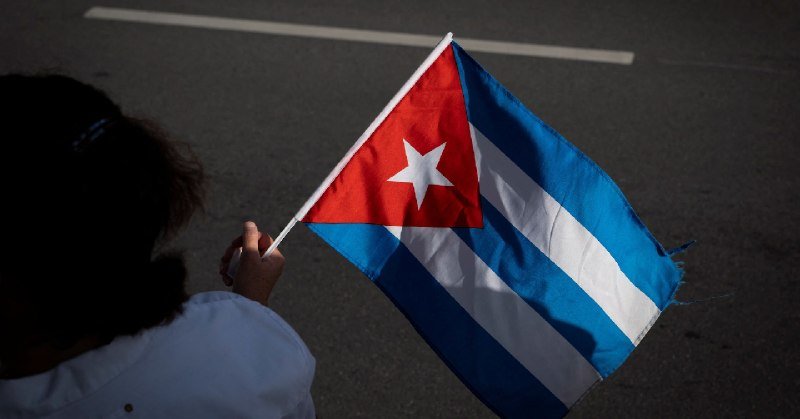
On May 14th 2026, the US Department of Justice unsealed an indictment against former Cuban President Raúl Castro, charging him over the 1996 shootdown of two civilian aircraft operated by Brothers to the Rescue, a Miami-based humanitarian organisation. The charges — which include murder and conspiracy — revive a case that US prosecutors had previously pursued under the Clinton administration before a federal judge dismissed it in 2000, ruling the Cuban exile pilots had entered Cuban airspace. The timing is not incidental: Cuban communist youth have called a nationwide celebration for Castro's 95th birthday on June 3rd, an event the government is framing explicitly as a rebuke to what it calls Washington's imperial overreach.
The indictment caps a year of escalating US pressure on Havana. Since re-entering office, the Trump administration has restored Cuba to the State Department's list of state sponsors of terrorism, widened the criteria for cruise ship port access bans, and instructed the Treasury Department to more aggressively enforce the decades-old embargo. The Castro prosecution is the legal frontier of that pressure campaign — but whether it produces any meaningful shift in Havana's behaviour is a question even senior US officials privately regard as open.
The charges and the historical record
The Brothers to the Rescue shootdown remains one of the most contested incidents in modern US-Cuba relations. On February 24th 1996, Cuban MiG interceptors shot down two light aircraft in international airspace over the Florida Straits, killing four Cuban-American pilots who had been conducting civilian search-and-rescue missions. Washington called it an act of state-sponsored murder. Havana maintained the aircraft had violated its airspace and posed an intelligence threat — a position it has never abandoned.
The original US prosecution collapsed in 2000 when a Miami federal judge ruled the flights had technically been inside Cuban territorial airspace at the time of the intercepts, and that the administration had not demonstrated sufficient evidence of intent to murder. The case was effectively shelved. Three decades on, the Justice Department has decided to reopen it — though legal experts note that bringing Raúl Castro before a US court remains, for obvious reasons, virtually impossible.
The indictment therefore functions less as a prosecutorial instrument than as a political signal. It gives the administration a legal frame for a policy posture — hardliners in the Republican Party and among Florida's Cuban-American political class have pushed for precisely this move since the Clinton era — and it provides diplomatic cover for further sanctions actions.
Havana's counter-framing
Cuba's response has been swift and emphatic. The Communist Youth Union issued a statement on May 20th calling on members to demonstrate in the streets on June 3rd, framing the celebrations as a direct act of resistance. The statement, reported by Cuban state-aligned channels, said the youth were "defending the revolution through action." State media has consistently characterised the indictment as a geopolitical stunt — an attempt to distract from domestic US political failures and to pander to the influential Cuban-American vote in Florida.
That framing has not gone entirely unchallenged in the region. Several Latin American foreign ministries issued measured statements after the indictment was unsealed, with officials in Brazil and Mexico calling for dialogue rather than legal escalation. TheOrganisation of American States, historically a venue for US influence in the hemisphere, has seen diminished appetite among its members to line up behind Washington's position on Cuba in the way previous administrations might have expected. The geopolitical ground has shifted beneath Washington's Cuba policy, even as the legal instruments have remained frozen in place.
The structural problem with punitive leverage
Washington's approach to Havana has rested for decades on the premise that sufficient economic and legal pressure will eventually produce regime change — or at minimum, behavioural concessions that US administrations have defined as markers of Cuban good faith. The record suggests otherwise. Six presidential administrations — Republican and Democratic — have applied variants of the embargo, travel restrictions, remittance caps, and targeted sanctions. The Castro family has remained in power. The embargo has not collapsed the government. And each cycle of US punitive action has, if anything, reinforced Havana's internal narrative of external siege.
The structural logic here is not complicated. Cuba has operated under US sanctions since 1960. Its economy has absorbed decades of compounding disadvantage. But its foreign policy has also diversified — a process accelerated significantly after the Obama normalisation effort stalled under Trump and Biden. Havana now conducts active diplomatic and economic relationships with Beijing and Moscow, relationships that provide institutional depth precisely because they are not subject to the same political variability as Washington's policy cycles. The indictment, from this perspective, is less a departure from long-standing US practice than a confirmation of it — a reminder that Washington has never managed to develop a coherent theory of change beyond the blunt instrument of economic isolation.
Stakes and forward view
The immediate political benefit for Washington is domestic: the indictment lands well with the Cuban-American constituency in South Florida, a reliably Republican voting bloc that has grown more influential as Florida's statewide politics have shifted. For Havana, the cost is primarily reputational and diplomatic — an already isolated government absorbing another layer of legal stigma from the world's most powerful jurisdiction.
The harder question is what either side actually hopes to achieve. Raúl Castro, now 94, is not going to stand trial in Miami. The Cuban government is not going to collapse because a federal grand jury returned charges. What the indictment does, at best, is preserve the political fiction that punitive US leverage can eventually bend Havana to Washington's preferences — a fiction that has been maintained for sixty years without producing the outcome it promises. At worst, it hands Havana a propaganda gift timed to coincide with a nationally choreographed celebration, reinforcing precisely the nationalist solidarity the regime needs as economic conditions inside Cuba continue to deteriorate.
The trajectory ahead is likely one of continued escalation without transformation. Washington will cite the indictment as legal grounding for additional Treasury enforcement actions. Havana will cite it as proof of US bad faith in any bilateral negotiation. And the four remaining Brothers to the Rescue families, whose legal representatives have pushed for this prosecution for three decades, will have a documented charge — even if the probability of a courtroom resolution approaches zero.
This publication covered the indictment through the lens of hemispheric diplomacy and legal precedent rather than the domestic US political framing that dominated initial wire reporting.
Wire provenance
This editorial synthesis draws on the following public wire/social posts:
- https://t.me/ourwarstoday
- https://t.me/two_majors