The Deal That Isn't: Inside the US-Iran Nuclear Negotiations That Keep Not Happening
President Trump says a nuclear deal with Iran is imminent. Tehran says the terms are a non-starter. Six weeks of on-off negotiations have produced a gap neither side seems willing to bridge — and the price of failure is getting higher by the day.
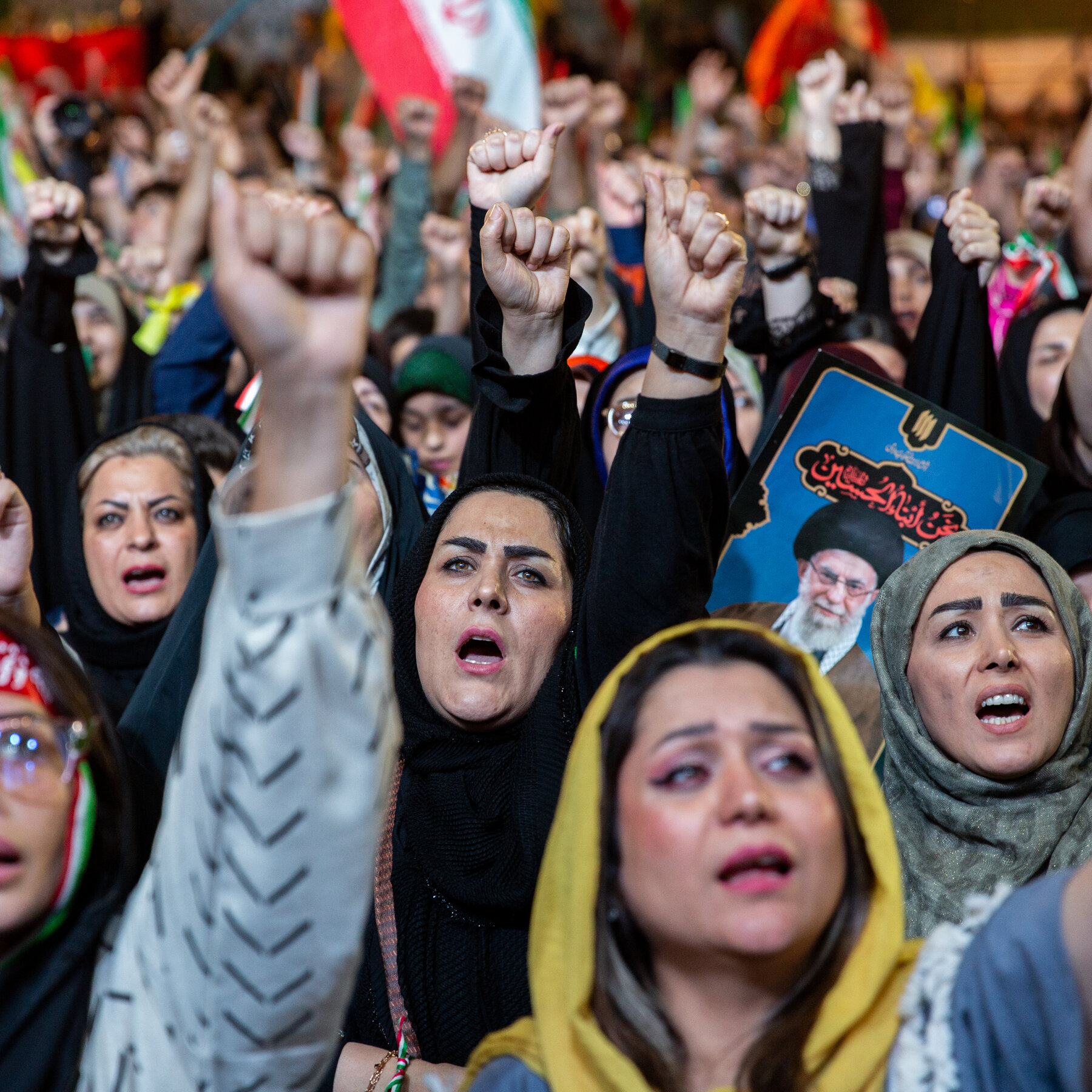
On the morning of 20 May 2026, President Donald Trump told reporters aboard Air Force One that the United States was in the "final stages" of negotiating an agreement to prevent Iran from obtaining a nuclear weapon. By that afternoon, Iranian officials had issued their own statement: no deal was possible, they said, until the United States ended what Tehran called its "piracy" — the web of sanctions, asset seizures, and secondary-pressure campaigns that have progressively strangled Iran's economy since 2018. The statements, separated by hours, described the same negotiating table as though it were two entirely different rooms.
That contradiction has defined the US-Iran nuclear track for six weeks, and it shows no signs of resolving. What began in April as a White House effort to land a signature diplomatic achievement — a revival and expansion of the 2015 Joint Comprehensive Plan of Action — has instead produced a sustained public standoff between two positions that are structurally incompatible on the question of sequencing. Washington wants verifiable Iranian nuclear concessions before it removes sanctions. Tehran wants sanctions removed before it makes irreversible concessions on enrichment capacity. Neither side has shown willingness to move first, and the gap between them has, if anything, widened as the talks have dragged.
What the Talks Are Actually About
The substance of the current negotiations, as reported by wire services and regional outlets, centres on a US proposal presented in mid-May that demanded Iran drastically reduce its enriched uranium stockpile, cap enrichment at 3.67 percent purity — well below weapons-grade — and submit to an inspections regime far more intrusive than anything the International Atomic Energy Agency currently conducts. In exchange, the United States would lift select sanctions and, in principle, begin the process of restoring Iran to the global financial system.
Iran's counter-proposal, as outlined by Iranian state media and corroborated by regional reporting, demands immediate and unconditional removal of all sanctions reimposed under the Trump administration's maximum-pressure campaign. Iran also wants legally binding guarantees — a written commitment that no future US administration can simply withdraw, as Trump withdrew from the JCPOA in 2018. Without that guarantee, Iranian officials have argued, any agreement is merely a temporary reprieve before the next American pullout.
The sequencing dispute is not semantic. It is a question of trust: who moves first, and who bears the cost if the other side reneges. The United States, having violated the original JCPOA and subjected Iran to four years of escalating economic pressure, is asking Tehran to demobilise its most significant leverage before receiving anything in return. Iran, whose economy has contracted under sustained sanctions pressure, cannot afford to dismantle that leverage on credit.
The Geopolitical Backdrop
The talks are not happening in a vacuum. Iran's position has been materially strengthened by its deepening strategic partnerships with Russia and China, both of which have provided diplomatic cover, economic lifeline trade mechanisms, and technological assistance that have partially offset the impact of American sanctions. That strengthening matters: it means Iran enters these negotiations less isolated than it was in 2018, and less desperate for a deal at any price.
China's interest in particular is structural. Beijing has invested heavily in Iranian energy contracts and Belt and Road adjacent infrastructure projects. A stable, sanctions-free Iran is more useful to China's energy security strategy than a pariah state prone to military flashpoints. That calculus has made China a consistent diplomatic advocate for sanctions relief — and a consistent obstacle to the kind of unified international pressure the Trump administration once claimed it could mobilise.
Russia's calculus is different but equally relevant. Moscow benefits from any diplomatic friction between Washington and Tehran, and from the distraction that sustained Iran engagement creates for American foreign policy bandwidth in Europe and the Pacific. A collapsed negotiating track serves Russian interests just as a successful one might. That does not mean Russia is sabotaging the talks, but it means Moscow has less reason to press Iran toward compromise than it might appear.
Israel, meanwhile, has been unambiguous in its opposition to any revived JCPOA, regardless of the terms. Israeli officials have consistently argued that the original agreement merely delayed Iran's path to a bomb rather than ending it, and that a new version would be no better. That opposition shapes the political calculus inside the Trump administration: a deal that provokes a major rupture with Israel carries domestic political costs that the White House may not be willing to absorb.
The Dollar's Role in Everything
There is a dimension of this negotiation that the public statements from both sides barely acknowledge, but that runs beneath the surface of every session: the role of the US dollar in global finance as a coercive instrument. The sanctions regime that Iran is asking the United States to dismantle is not simply a collection of penalties — it is a reflection of the dollar's unique position in the global monetary system. Secondary sanctions, which threaten third-country companies and banks with exclusion from dollar-denominated markets if they do business with Iran, are only possible because the dollar remains the world's primary reserve currency.
That reality gives the United States a structural advantage in negotiations of this kind that no amount of diplomatic creativity can fully offset. It also means that any agreement that genuinely restores Iran to the global financial system requires the United States to surrender some of that advantage — or at least to credibly commit to not weaponising it again. That commitment is what Tehran is really asking for when it demands legally binding guarantees. And it is precisely the commitment that any US administration, facing the next geopolitical crisis, would find it difficult to keep.
The Domestic Political Calculus
Both sides are operating under domestic constraints that shape their negotiating positions in ways that have little to do with the technical merits of any agreement.
For Trump, the negotiations carry significant political weight heading into the 2026 midterms and the broader 2028 presidential cycle. A successful nuclear deal with Iran would be a major foreign policy achievement — one with significant name-recognition value. The administration has an incentive to either produce a deal or to produce the appearance of one. That incentive cuts in two directions: it may push the White House toward a compromise it might otherwise resist, or it may push it toward more aggressive posturing designed to demonstrate strength if a deal cannot be reached.
For Iran's hardliners, any concession to the United States carries political risks of its own. Iranian domestic politics have shifted significantly since 2018, with the 2019 protests, the 2022 hijab demonstrations, and the broader erosion of public patience with economic hardship creating a political environment in which appearing to capitulate to American demands is extremely costly. Iranian officials who negotiate a deal perceived as a surrender will face domestic opposition that could destabilise the government. That fact gives the hardliners leverage inside the negotiating room — and a structural incentive to make demands that the United States cannot accept.
Stakes and Forward View
If the current negotiating track collapses, the consequences are not abstract. Iran will likely accelerate its nuclear programme — a process that, while not instantaneous, moves faster than most Western estimates acknowledge once the political decision to do so is made. The United States will face a choice between accepting an Iranian nuclear capability — a prospect that regional allies, particularly Israel, have said is unacceptable — or taking military action that would carry enormous risks and uncertain outcomes.
Israeli officials have been explicit: if diplomacy fails, they reserve the right to act. The United States has been equally explicit that it prefers a diplomatic solution. The tension between those two positions — American preference and Israeli red line — is the most dangerous fault line in the entire negotiation, and it sits largely unspoken in the public statements.
Trump's comment on 20 May that "there's more fighting to come unless Iran gets smart" is either negotiating pressure or a genuine threat of escalation. The ambiguity may be deliberate. But the ambiguity itself is informative: it suggests that no deal is imminent, that both sides are preparing for the possibility that these negotiations end without an agreement, and that the diplomatic window that opened in April may be closing faster than the public statements indicate.
What the sources do not agree on — and what remains genuinely uncertain — is which side, if either, is closer to moving. The administration presents confidence. Iran presents firmness. Both may be performing for domestic audiences. Neither may be performing at all. That uncertainty is not a failure of reporting; it is the accurate state of knowledge as of 20 May 2026. The negotiations are live. The gap is real. And neither side has yet signalled the movement that a deal would require.
This publication's coverage of the US-Iran track has foregrounded Iranian-state framing — specifically Tehran's "piracy" language and its demand for unconditional sanctions removal — alongside the administration's public statements. Western wire coverage has been weighted toward White House framing. Monexus notes that asymmetry and considers both positions structurally necessary for readers to assess the gap accurately.
Wire provenance
This editorial synthesis draws on the following public wire/social posts:
- https://t.me/tsn_ua/34219
- https://x.com/middleeasteye/status/1923587290121240576
- https://x.com/unusual_whales/status/1923581247429247104
- https://x.com/unusual_whales/status/1923576941864816841
- https://t.me/CryptoBriefing/89432