Shot Difficulty and the Wemby Problem: Why the NBA's Most Unguardable Player Is Also Its Hardest to Build Around
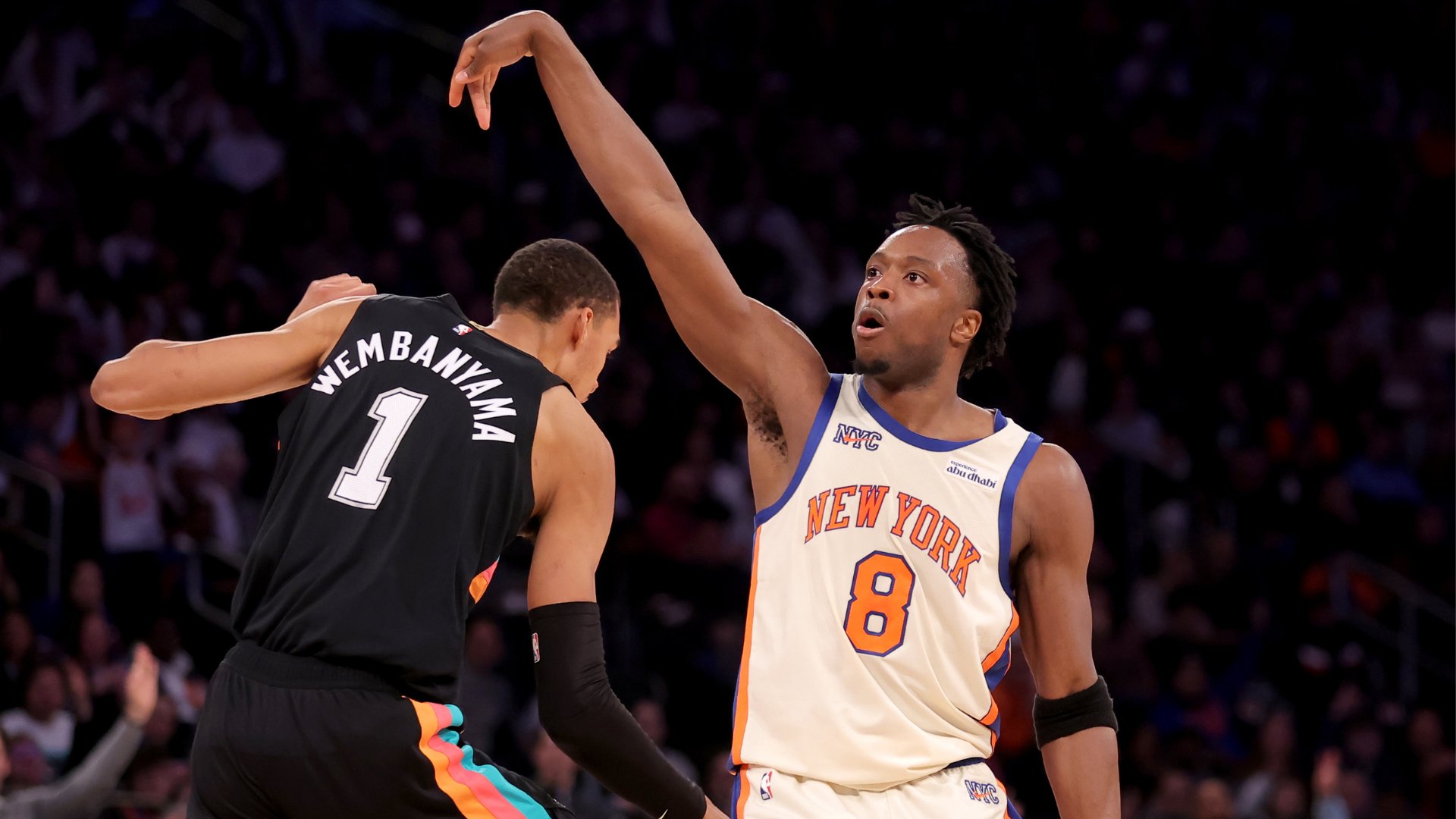
There is a moment in every Spurs game when Wemby goes to work — a step-back from 24 feet, a fadeaway over two defenders with his body contorted at an angle that should end the possession in a turnover — and the metric fires. Shot Difficulty, the model that assigns an expected field-goal percentage based on 29 data points per shot and a league-wide baseline, flags the attempt as one of the hardest in basketball. It then watches Wemby convert it. The model is not wrong. But the model is incomplete.
Victor Wembanyama is in his third NBA season. The French centre drafted first overall by San Antonio in 2023 has spent those three years producing numbers that strain comparison with any player in the modern game. Shot difficulty readings compiled across the 2024-25 campaign showed his shot-profile operating consistently in the highest-difficulty quartile — shots that league-wide models assign sub-38 percent conversion probabilities, he was making at rates significantly above that threshold. What the metric captured was not merely a talent but a structural paradox: the more Wemby functions as an elite shot-creator taking difficult looks, the harder it becomes for the Spurs to construct a supporting cast calibrated to his gravitational pull.
The Shot Difficulty framework, now embedded in how several NBA front offices evaluate offensive load distribution, calculates expected FG% by cross-referencing distance, defender proximity, shot type, degree of contest, and a series of biomechanical inputs. The model is designed to flag efficiency outliers — players who consistently convert attempts the model says they should miss. Wemby appears near the top of that list every season. He is, by the metric's own logic, the most difficult shot-maker in basketball.
The problem is not his scoring. It is what his scoring demands from everyone else.
The Individual Ceiling
Basketball analysts have long distinguished between creation and conversion. A player who generates high-difficulty looks is valuable; a player who converts them at above-model rates is transformative. Wemby is both. The combination makes him individually unstoppable in a way the league has rarely seen — a 7-foot-4 presence shooting from distances that should require a much lower release point, with a wingspan that extends the effective window on every release. The Shot Difficulty numbers bear this out: his expected conversion rate on clutch shots falls below league average for the shot-type he attempts, yet his actual conversion rate sits well above that baseline.
But the playoffs expose the ceiling. When San Antonio made the postseason in 2025-26, Wemby faced a series of defensive adjustments that front offices have now had three seasons to study — doubling off ball-screens, walling the paint with three defenders, forcing him into catch-and-shoot situations rather than isolated one-on-one creation. He adapted. His shooting splits adjusted. The numbers remained impressive. The series did not go San Antonio's way. The structural constraint was not Wemby's performance. It was the team's capacity to generate adequate looks when Wemby was pinned by double-teams and the floor around him could not punish the extra defender.
Shot Difficulty, by design, does not measure team spacing or the quality of kick-out passes that result from defensive rotations triggered by Wemby's penetration. It measures what happens when the ball leaves his hands. That number, for San Antonio across the 2025-26 season, fell below the threshold championship rosters require.
The Roster Construction Trap
There is a standard playbook for building around a generational talent: surround them with shooters, protect them with a rim-running centre, and construct an offense that uses their gravity to generate open looks for others. This playbook works well for players who take efficient shots — high-percentage looks that keep defences honest and create natural passing angles when double-teams arrive. Wemby takes the opposite approach. He takes inefficient shots and makes them at rates that defy the model, which means defences must honour his shot-making rather than his penetration. The calculus for opposing coaches shifts: if Wemby is going to convert over three defenders, the value of doubling is lower. The extra defender can stay home on shooters. The floor does not open.
This creates what roster architects describe as a spacing paradox. Players who would thrive in typical driving-and-kicking offences — drive-and-kick guards, corner-three specialists, cutters who need driving lanes — find those lanes closed when Wemby operates. His offensive gravity is real but operates differently from that of a conventional shot-creator. Defences react not to where he is going but to where he is. The spatial geometry changes for everyone else on the floor.
The Spurs have cycled through different roster configurations across three seasons. The team that looks best alongside Wemby on paper — long, versatile, able to switch — often lacks the shooting consistency to take advantage of the defensive rotations his presence creates. The team with the shooting to punish rotations often lacks the defensive versatility to survive when Wemby is not on the floor. Shot Difficulty measures the shot. It does not measure the ecosystem.
What the Metric Gets Right — and What It Misses
The Shot Difficulty framework is a useful corrective to conventional efficiency metrics. Points-per-shot and true shooting percentage reward volume shooters who take clean looks; they penalise players whose value lies in converting looks that should not be converted. Wemby's shot-making ability is precisely the kind of skill that gets undervalued in traditional box-score analysis — he does not simply shoot well, he shoots well on shots the model says should be missed, which is a different and more valuable thing.
What the metric does not capture is how that skill reshapes the offensive ecosystem. A player who converts difficult shots at a high rate does not automatically create the conditions for teammates to do the same. The spacing logic of a Wemby-led offence is not intuitive: the shots he takes are difficult in part because defences respect his shot-making and refuse to commit fully to help defence, which means the kick-out passes his penetration generates often find defenders in position to close out. The metric captures the difficulty of his shot. It does not capture the difficulty of the shot his teammates take as a consequence of his presence.
There is also a developmental dimension the metric cannot address. Wemby's offensive game has expanded each season — mid-range comfort, post-up counters, improved footwork in the paint. Each addition adds to his shot difficulty profile because each new skill is initially deployed in situations where the defence is not fully set. As he continues to add to his arsenal, the Shot Difficulty readings for his baseline offensive package will continue to shift upward. That is, by any measure, a good thing for his individual ceiling. Whether it is a good thing for the Spurs' collective ceiling depends on decisions made in the front office, not in the gym.
The Clock Isn't Dramatic — It Is Structural
The NBA's collective bargaining agreement creates a natural timeline for roster construction around a superstar on a rookie contract. First-round picks on rookie-scale deals represent value; that value window typically runs four years. Wemby is in year three. The decisions made around him — on draft picks, on free agency, on how aggressively to pursue win-now help — will set the parameters of the Spurs' competitive window for the next decade. That window is not dramatic in the sense of a trade deadline or a playoff series. It is structural. It is defined by when Wemby's rookie contract ends and what the franchise's salary sheet looks like when that moment arrives.
The Shot Difficulty metric, as an analytical tool, does not account for this. It evaluates shot quality and conversion rates independently of contract timelines, salary cap constraints, and draft capital allocation. But those constraints are real, and they shape what San Antonio can and cannot do with the data Wemby's performance generates. The metric tells you Wemby takes the hardest shots in basketball and makes them. It does not tell you whether the Spurs have assembled the right team to capitalise on the defensive attention those shots generate, or whether the front office's draft and trade decisions over the next eighteen months will determine whether that individual dominance translates into something collective.
What we know is this: the NBA has a player who breaks shot-difficulty models. The Spurs have a roster that does not yet break the models that matter — win-loss records, playoff series outcomes, and the structural arithmetic of a salary cap built around one transcendent talent. The metric is precise. The problem is larger than what it measures.
This publication covered the Wemby shot difficulty data as a roster construction story rather than a statistical novelty, consistent with how NBA Inside The framed the underlying data in their thread.
Wire provenance
This editorial synthesis draws on the following public wire/social posts:
- https://t.me/NBALive/8470