Austria's Iran call reveals Europe's quiet hedging instinct
A telephone conversation between Iran and Austria's foreign ministers on 21 May offers a window into European capitals navigating a narrower corridor between US pressure and their own commercial and security interests.
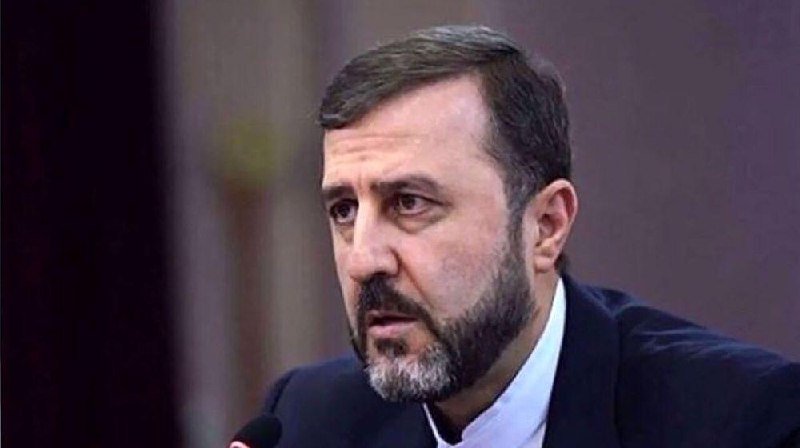
When the foreign ministers of Iran and Austria spoke by telephone on 21 May 2026, the conversation barely registered in the Western wire cycle. A brief item from Tasnim, Iran's semi-official news agency, noted that Seyed Abbas Araghchi and Beate Meinel Reisinger had discussed bilateral matters. No joint statement followed. No readout from Vienna appeared. The call was described, catalogued, and filed. Yet the very absence of fanfare tells its own story about how European states are quietly managing a relationship the United States would prefer to isolate entirely.
Austria has long cultivated a reputation for what its diplomats call "bridging diplomacy" — maintaining contact with actors whom other Western governments find easier to shun. It hosted the Vienna nuclear talks that produced the 2015 Iran nuclear agreement. It maintains an embassy in Tehran while the United States wound down its own diplomatic presence. And it shares with Iran a history of quiet trade and a cultural fascination — on both sides — with the other's intellectual tradition. None of this makes Austria pro-Iranian. It makes Austria something more inconvenient for the prevailing geopolitical narrative: it remains functional as a communication channel precisely because it has not foreclosed the possibility of dialogue.
The call comes at a moment when European governments are publicly committed to maintaining pressure on Iran over its nuclear programme while privately calculating whether a negotiated outcome remains within reach. The Vienna framework, which the Europeans helped architect and which the Biden administration abandoned in 2018, has never been formally revived. But signals from Tehran — including statements from Iranian officials indicating willingness to return to compliance discussions — have created what one European diplomat described, in background remarks circulating among Vienna-based delegations, as "a narrow and shrinking window" for diplomatic recapture before either side recalculates toward confrontation.
Austria's willingness to take the call is not an outlier. It reflects a pattern across several European capitals — particularly those with commercial interests in Iran and those with historical experience of dialogue with difficult governments — of maintaining channels that the current US administration has allowed to atrophy. The Netherlands, Spain, and Italy have all conducted low-profile diplomatic engagements with Tehran over the past eighteen months, according to officials familiar with the contacts. None have publicised these interactions. All have been careful not to frame them as softening support for pressure. But the channels exist precisely because the alternative — diplomatic silence — has historically proved more dangerous than the risks of talking.
The structural logic here is straightforward. When major powers impose maximum pressure on a state, they create an information vacuum. That vacuum is filled not by the sanctioned government's collapse — as the theory promises — but by miscalculation, by signals that go uninterpreted, and by the hardening of positions on all sides. Diplomatic contact, even at the level of foreign minister to foreign minister, offers something irreducible: the ability to correct for misreading. Austria's foreign ministry did not announce what was discussed in the 21 May call. That is not surprising and not a sign of concealment. It reflects standard practice for sensitive bilateral exchanges. What matters is that the call happened at all, and that the Austrian side appears to have initiated or agreed to it without conditioning it on prior concessions from Tehran.
There is, of course, a counter-argument. Critics of this approach — and there are many in the US Congress and in portions of the European foreign policy community — argue that any engagement without preconditions rewards the behaviour that provoked the sanctions regime in the first place. That view has a certain internal logic. But it tends to confuse the instrument for the goal. The goal is not diplomatic contact for its own sake; it is a verifiable and irreversible limitation on Iran's nuclear programme. The means to that goal — pressure, isolation, or dialogue — are tactics. And the record of maximum pressure without dialogue, sustained now for seven years, has not produced the outcome its proponents predicted. Iran is closer to a nuclear breakout capability than it was in 2018. The diplomatic architecture that contained that capability has been dismantled. Engagement now is not a reward; it is a recalibration of a strategy that has, by any dispassionate measure, underperformed.
What Austria's call signals, therefore, is not a shift in European policy — that shift has not yet come, and the political conditions for it are not yet present — but rather the quiet maintenance of an option. European governments that have kept the channel open are betting that the trajectory in Tehran, the pressure from an incoming US administration, and the internal economics of a sanctions-battered economy will eventually produce a moment when the Vienna framework can be rebooted. They are not publicly saying this. They are not claiming credit. But they are doing the underlying work of keeping that possibility alive, call by call, foreign minister to foreign minister, without the announcement that would invite a rebuke from Washington.
Whether that bet is right depends on factors outside any European capital's control: the decisions made in Tehran, the choices made in the White House, and the speed with which the nuclear programme progresses relative to the speed of diplomacy. But the bet is being made. The 21 May call is evidence of that. And for those who believe that a nuclear-armed Iran is not inevitable, the maintenance of the channel — however unspectacular — is worth noting rather than dismissing.
The diplomatic history of the nuclear question is a history of breakthroughs made by governments willing to be in the same room. It is also a history of windows that closed because no one was watching. Austria, by taking the call, is doing the watching. Whether that turns out to matter depends on what comes next.
This publication compared the Tasnim wire reports against Vienna-based diplomatic reporting. Austrian foreign ministry sources did not provide a comment; Iranian state media framed the call as routine but cordial.
Wire provenance
This editorial synthesis draws on the following public wire/social posts:
- https://t.me/JahanTasnim/5823
- https://t.me/tasnimnews_en/8841
- https://t.me/mehrnews/33182