The Battle for Minds: How Cognitive Warfare Became a Central Theater of Modern Conflict
As Tasnim News Agency releases a sixth edition of a book on cognitive warfare, the concept has moved from military doctrine to a defining feature of how states compete in the information age — with implications that extend far beyond any battlefield.
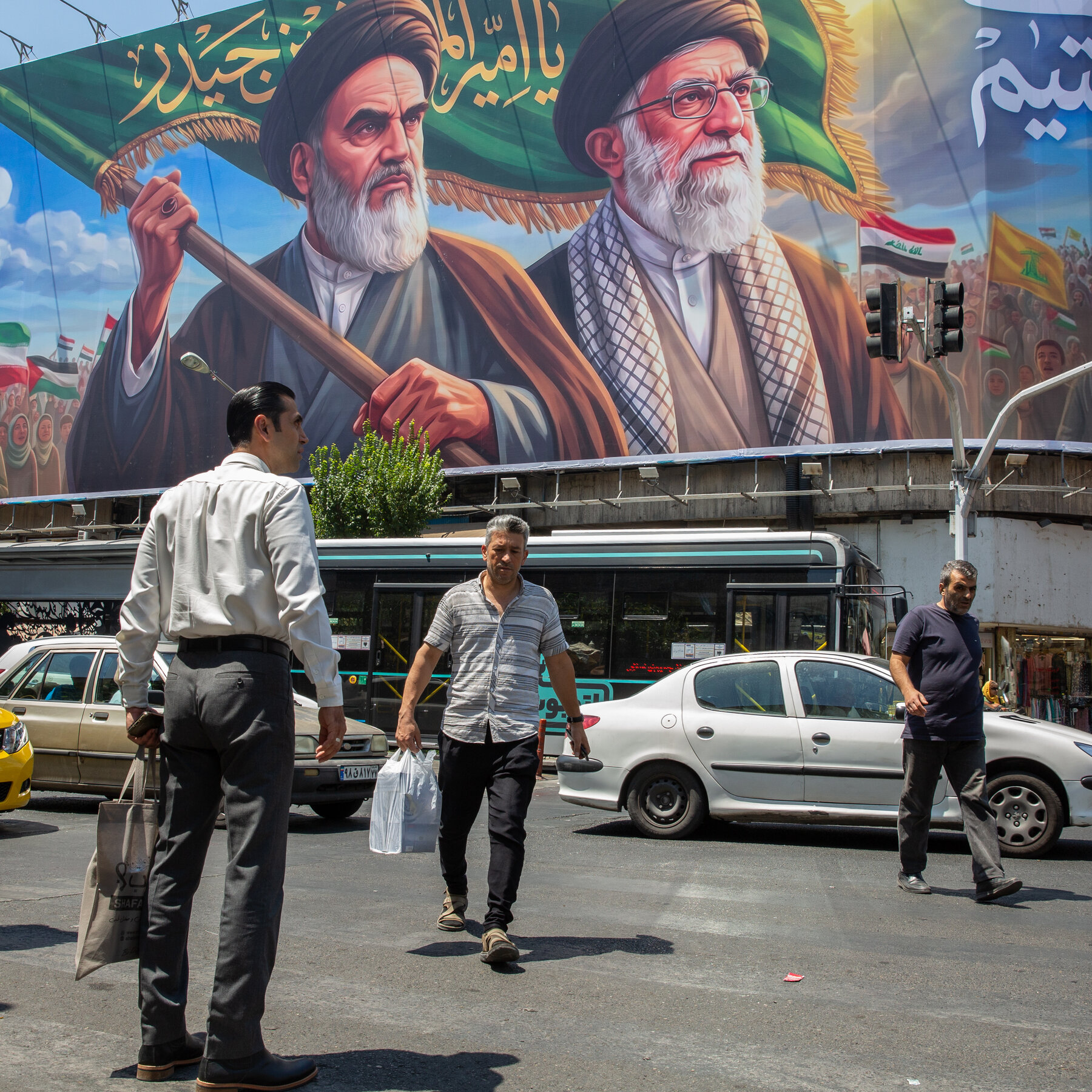
On 21 May 2026, Tasnim News Agency announced the availability of the sixth edition of a book titled "Knowledge War: The Science of Winning the Battle of Minds," marking the latest iteration of a publication that has tracked the evolution of cognitive-domain operations across nearly a decade of accelerating geopolitical competition. The release underscores a shift that military planners, security analysts, and communications strategists have been documenting for years: the battlefield of the mind has become as consequential as any physical terrain.
Cognitive warfare — the deliberate use of information, psychological techniques, and influence operations to shape perception, behavior, and decision-making among targeted populations or elites — has ascended from a niche concept in military doctrine to a central pillar of how states project power and contest influence in the twenty-first century. Unlike traditional propaganda, which typically aims to reinforce existing beliefs, cognitive warfare operates at a deeper level, seeking to alter the frameworks through which individuals and societies interpret reality itself. The implications for democratic governance, social cohesion, and international stability have placed this domain at the forefront of national security debates across multiple capitals.
The framing of cognitive warfare as a distinct discipline worthy of dedicated doctrinal treatment reflects a maturation of thinking about information as a strategic resource. Western military institutions, particularly within NATO, have formalized cognitive-domain operations in recent years, recognizing that the speed and reach of digital communications have compressed the distance between information campaigns and operational effects on the ground. Russian engagement in information warfare during the conflict in Ukraine — encompassing everything from state media输出的 narratives to social media manipulation and targeted cyber operations — has served as a real-time laboratory for these techniques, demonstrating their capacity to shape battlefield outcomes and international responses.
Yet the conceptualization of cognitive operations is not the exclusive preserve of any single bloc. Iranian strategic thinking, as reflected in publications distributed through outlets such as Tasnim News Agency, has long emphasized the weaponization of knowledge and information as elements of asymmetric resistance against more powerful adversaries. The "Knowledge War" book series represents one manifestation of this tradition, framing cognitive engagement not as a supplementary tool but as a primary modality of competition. Within this framing, information operations are not merely about telling favorable stories — they are about constructing alternative epistemological frameworks that challenge the dominance of adversary narratives across political, cultural, and scientific domains.
What makes cognitive warfare distinct from earlier forms of influence operations is its integration with technological infrastructure at a scale and precision previously impossible. Social media platforms, algorithmically curated content feeds, and micro-targeted advertising have given state and non-state actors the ability to deliver customized messages to specific demographic or psychographic segments, adjusting content in near real-time based on measurable engagement metrics. This technical capability has transformed what was once the province of large-scale broadcast operations into a granular, data-driven discipline capable of operating at the level of individual decision-making.
The democratization of cognitive warfare tools presents a profound challenge to the information environment that democratic societies depend upon for legitimate public deliberation. When the cost of producing and distributing persuasive content approaches near-zero, and when the provenance of that content becomes increasingly difficult to verify, the epistemic foundations of democratic choice — an informed citizenry evaluating evidence and reaching reasoned conclusions — come under structural stress. Research organizations tracking foreign information manipulation have documented campaigns originating from multiple state actors targeting audiences across Europe, North America, and the Global South, employing techniques that exploit existing social divisions rather than inventing new ones.
Countering cognitive warfare has proven more difficult than executing it. The same legal frameworks and institutional norms that protect free expression in open societies constrain the ability of governments to regulate or suppress malign influence operations, even when those operations are conducted by foreign state actors. Platforms have attempted to address the problem through content moderation and labeling, with mixed results — efforts that often lag behind the techniques they seek to suppress and that risk collateral damage to legitimate discourse. Military and intelligence establishments have developed offensive cognitive capabilities of their own, raising the prospect of an unregulated arms race in the manipulation of information environments.
The stakes extend well beyond any specific conflict or election cycle. A persistent degradation of shared epistemic standards — the common baseline of verifiable fact from which democratic deliberation proceeds — threatens the capacity of societies to respond collectively to challenges that require coordinated action, from pandemic response to climate adaptation to economic competitiveness. The question is not whether cognitive warfare will continue, but whether the international community can develop norms, institutions, and technical capabilities sufficient to manage its most destabilizing manifestations without sacrificing the openness that defines democratic polities.
The sixth edition of "Knowledge War" arrives at a moment when these tensions have become impossible to ignore. How states, institutions, and individuals navigate the battle for minds will do much to determine whether the information age ultimately strengthens or erodes the foundations of international order and domestic governance alike.
This publication's coverage of cognitive warfare and information operations reflects the growing convergence of military doctrine, media strategy, and technological capability in contemporary geopolitical competition.
Wire provenance
This editorial synthesis draws on the following public wire/social posts:
- https://t.me/tasnimnews_en/54321