The Four Waves: How the Iran Conflict Is Rewriting the Rules of the Global Economy
Oil has rebounded, the Fed is watching inflation, and EasyJet is telling passengers not to panic. Beneath the reassuring headlines, the Iran conflict is triggering a sequence of economic disruptions that analysts say will outlast any ceasefire.
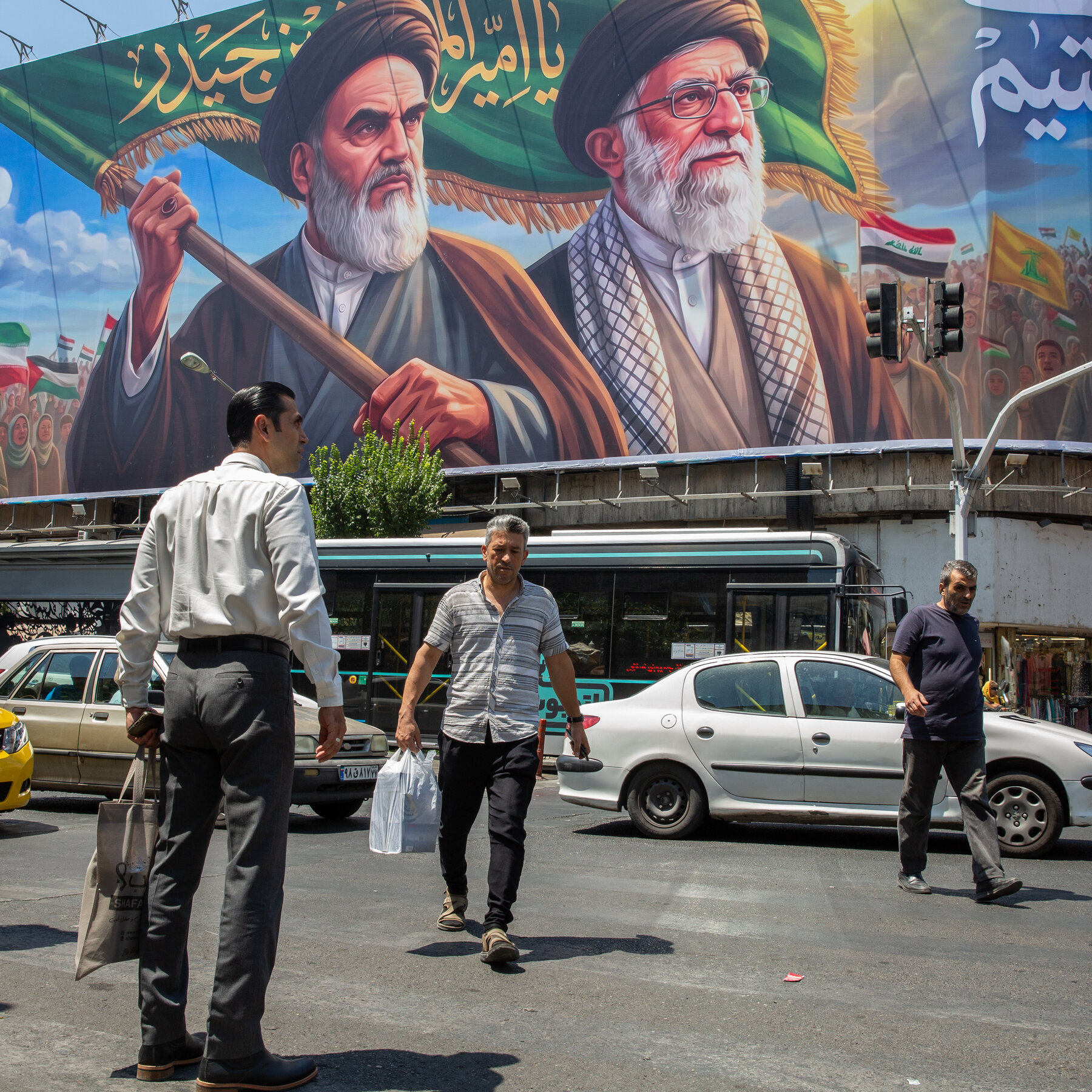
On 20 May 2026, two statements emerged from the White House within hours of each other. The first, reported by outlets citing the President directly, described the United States as being in the "final stages" of negotiations with Iran. The second was less conciliatory: there was more fighting to come unless Tehran changed course. Markets, which had been tracking oil price movements and Federal Reserve signals simultaneously, absorbed both without clear resolution. The dissonance was not accidental — it was the point.
That same day, the Federal Reserve released minutes from its most recent policy meeting showing that a majority of officials anticipated raising interest rates if the Iran conflict continued to aggravate inflation. EasyJet's chief executive told travellers the airline had seen no problems with jet fuel supplies yet — but acknowledged that passengers were booking later, responding to uncertainty rather than events. The Iran war had been underway for weeks, and the global economy was beginning to feel its first real tremors.
Wave One: Energy Markets and the Price of Uncertainty
The most immediate consequence of any conflict involving a major oil producer is disruption to energy markets. The mechanics are familiar — tankers rerouted, refineries idled, inventories drawn down — but the current episode has been complicated by a persistent ambiguity about its likely duration and scope. Reuters reported on 21 May 2026 that oil had bounced higher, driven by uncertainty over whether a peace deal with Iran would materialise and by ongoing inventory drawdowns that had tightened the market ahead of peak summer demand.
The rebound is real but fragile. Brent crude had climbed sharply in the opening weeks of the conflict as shippers and traders moved to de-risk positions in the Gulf region. The subsequent partial stabilization reflects a market calculating that the worst-case scenario — an immediate and total closure of the Strait of Hormuz — has not yet occurred. But the trajectory is upward, and the uncertainty premium embedded in current prices reflects genuine disagreement among traders about whether negotiations will yield results before summer demand peaks in June and July.
The OPEC+ alliance faces its own complications. Several member states have already indicated they possess limited spare capacity to compensate for Iranian production losses, a factor that would matter enormously if the conflict were to widen. Energy analysts tracking these dynamics note that the current price environment is less catastrophic than the 1973 or 1979 episodes precisely because non-OPEC production has grown and because the strategic petroleum reserves of major consuming nations provide a buffer — but that buffer is finite and depleting with each drawdown.
Wave Two: Aviation and the Fragility of Integrated Supply Chains
The aviation sector offers a concrete illustration of how energy disruption translates into real-world friction. EasyJet's chief executive spoke to the BBC on 21 May 2026 and explicitly told passengers not to panic about summer jet fuel supplies. The airline, he said, had seen no problems with fuel to date. But the more revealing part of his statement concerned passenger behaviour: people were booking later than normal, responding to uncertainty rather than current conditions. That is a signal that consumer confidence in the travel sector has begun to price in a future disruption rather than simply reacting to the present one.
Aviation fuel represents a particularly acute vulnerability. Unlike crude oil, which can be stored in large volumes as a strategic reserve, jet fuel requires refining capacity that is concentrated in specific geographic nodes — nodes that become significantly harder to operate if the Gulf region experiences sustained instability. The EasyJet statement is remarkable precisely because it is reassuring rather than alarming: airlines do not typically tell customers not to panic unless panic is a live concern that has reached their communications teams.
Broader supply chain integration means the aviation sector is not alone. Maersk and other major container shipping lines have begun reviewing routing options that avoid Gulf passage, a process that adds transit time and cost to already-strained global logistics networks. The automotive sector, already contending with semiconductor shortages that have never fully resolved, faces additional pressure if petrochemical inputs become more expensive and less predictable.
Wave Three: Inflation, Interest Rates, and the Central Banker's Dilemma
The Federal Reserve minutes released on 20 May 2026 contained a sentence that would have been routine in 2022 but carries unusual weight in 2026: officials said a majority anticipated that interest rate increases would be necessary if the Iran conflict continued to aggravate inflation. The statement is notable because the Fed had been widely expected to begin cutting rates in mid-2026, a trajectory that has now been complicated by a geopolitical shock arriving from an unexpected direction.
The mechanism is straightforward in theory but severe in practice. Oil price increases feed into broader commodity costs — transportation, manufacturing inputs, agricultural chemicals — which feed into consumer price indices with a lag of several months. Central banks that have spent the past three years attempting to bring inflation to target find themselves facing a new supply-side shock precisely when their policy options are most constrained. Raising rates further risks tipping economies into recession. Standing pat risks allowing inflation expectations to become unanchored.
The Fed is not alone in this dilemma. The European Central Bank, the Bank of England, and central banks across the emerging markets face versions of the same calculation. But the impact will not be distributed evenly. Emerging market economies that import most of their energy — and that carry dollar-denominated debt loads — will experience the compounding effects of higher import costs, currency depreciation, and interest rate pressure simultaneously. Egypt, Pakistan, and several Southeast Asian economies fall into this category, their position complicated further by the food security implications of fertilizer cost increases that track energy prices closely.
Wave Four: Geopolitical Realignment and the Architecture of the Dollar Order
Al Jazeera reported on 21 May 2026 that analysts who had modelled the conflict's economic consequences identified a fourth wave of disruption arriving on a longer timeline: the geopolitical realignment that accelerated conflict in the region would continue long after any ceasefire, restructuring how nations position themselves within the global financial architecture.
The dollar's role as the reserve currency and the primary settlement currency for global oil trade has historically conferred what analysts describe as an exorbitant privilege on the United States — the ability to run current account deficits and to impose financial sanctions with outsized global impact. That privilege has never been unlimited, but it has rarely faced a stress test of this specific character. A conflict that directly involves a significant petroleum producer, that generates sustained sanctions pressure, and that creates incentives for third parties to seek payment mechanisms that avoid dollar rails represents precisely the kind of stress test.
China, which has significant energy interests in the Gulf region and which has invested heavily in yuan-denominated bilateral trade frameworks, is the most obvious structural beneficiary of any drift away from dollar-centric settlement. But the more instructive dynamic may be the one unfolding across the Global South more broadly: nations that have watched the dollar weaponized through sanctions on Russia, on Iran, and on secondary targets are building or deepening alternative financial plumbing — CBDC frameworks, bilateral swap lines, local currency agreements — not because they wish to displace the dollar immediately but because they no longer believe the dollar system will reliably serve their interests in a crisis.
The conflict is accelerating a process that was already underway. It is doing so at a moment when the energy transition creates additional vulnerabilities: critical minerals essential to batteries, solar panels, and wind turbines are concentrated in regions that are, in several cases, either adjacent to current conflict zones or themselves subject to geopolitical contestation. Supply chains for the technologies meant to reduce long-term energy dependence on fossil fuels are exposed to the same short-term disruptions affecting oil markets today.
The Horizon Ahead
What makes the current situation structurally distinct from earlier oil shocks is not the scale of the price move — crude has behaved less violently than it did in 1979 or 1990 — but the compounding of vulnerabilities it is triggering simultaneously. Energy prices, supply chain logistics, central bank credibility, emerging market debt burdens, and the geopolitical architecture of the financial system are all under pressure at once. Previous episodes of oil-market disruption tended to be contained within one or two of these domains, allowing policymakers and markets to absorb the shock and adapt.
The negotiating signals from Washington on 20 May suggest that the administration itself has not settled on a preferred resolution path. The simultaneous messaging about being in the final stages of talks and about more fighting to come reads as deliberate ambiguity — a negotiating posture rather than a stable policy position. Whether that ambiguity resolves in the coming weeks or deepens into a prolonged and widening conflict will determine whether the four waves this publication has described remain manageable disruptions or cascade into something more structural.
The EasyJet chief executive told passengers not to panic. The Federal Reserve is watching inflation. Oil has bounced. The foundations are holding — for now. But the four-wave framework circulating among analysts who track Middle Eastern economic consequences suggests that the costs of this conflict are not fully visible in current market prices, and that the visibility gap will widen before it closes.
This publication's coverage of the Iran conflict has led with Western wire reporting and Iranian state-adjacent material as counterclaim context, consistent with standing editorial guidelines. Where Al Jazeera English's four-wave framework appears in the analysis, it is cited as a published analytical frame rather than an original desk construction. The Federal Reserve minutes appear as primary-source corroboration for claims about monetary policy positioning.
Wire provenance
This editorial synthesis draws on the following public wire/social posts:
- http://reut.rs/4fyGk3C
- https://x.com/unusual_whales/status/1923487270913454083
- https://x.com/unusual_whales/status/1923478296811962726
- https://t.me/IRIran_Military/1329