The Drone That Reached the Commander: Hezbollah's FPV Campaign and the Changing Calculus of the Lebanon Border
The wounding of a senior Israeli armored commander by a Hezbollah FPV drone in southern Lebanon marks a qualitative shift in the resistance group's precision-strike capability — and a significant test for Israel's border deterrence architecture.
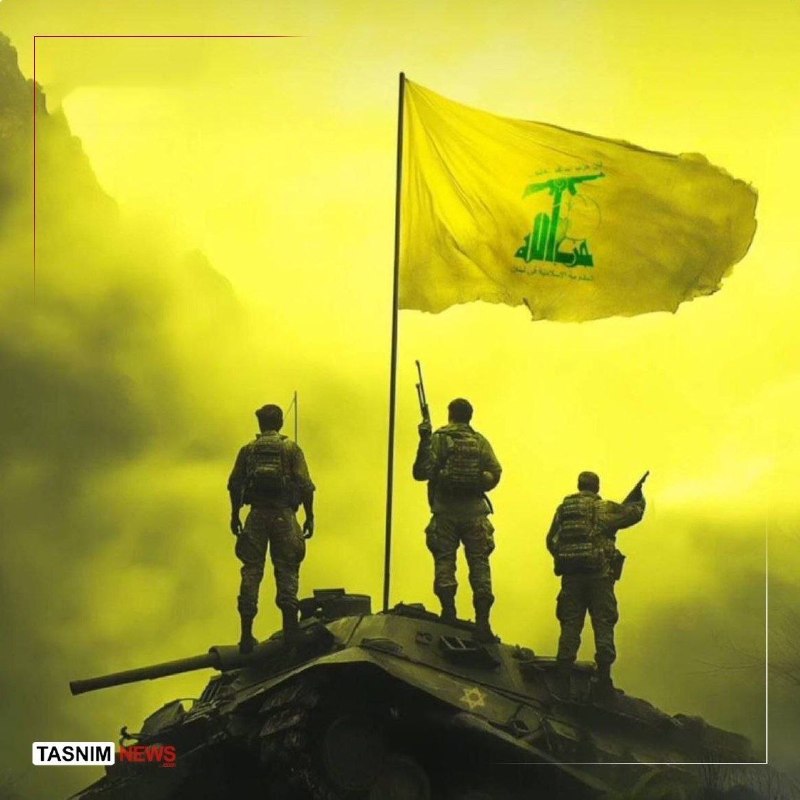
On 21 May 2026, the commander of the Israeli army's 401st Armored Brigade was evacuated by air from southern Lebanon after undergoing emergency surgery following a Hezbollah FPV — first-person-view — drone strike. The wounding of a senior armored commander, rather than a rank-and-file soldier, represents a departure from the pattern that had characterized the exchanges along the Lebanon border since October 2023. The strike was confirmed by Israeli military spokespersons, making it one of the highest-profile hits on an Israeli command structure since the ground operations in Gaza shifted into a more sustained phase.
Hezbollah released footage accompanying the operation, depicting what the group described as the destruction of a military vehicle in the Iskandarun area of the El Bayada settlement in southern Lebanon — terminology that places the engagement firmly inside the disputed border zone. Separately, the group published imagery referencing confrontations in the town of Hadatha, further south along the border arc, suggesting the FPV campaign spans a wider geographic footprint than a single incident. The operational cadence and reported precision of these strikes have prompted reassessment in Israeli military circles about the adequacy of existing countermeasures.
The targeting of a brigade commander is not, in isolation, a battlefield game-changer. Israel has absorbed the loss of senior officers before and sustained its operations. What makes this incident significant is what it reveals about the trajectory of Hezbollah's unmanned-systems capability — and what that trajectory implies for the assumptions underpinning Israel's northern border posture.
The Operational Picture
Hezbollah's use of FPV drones against Israeli positions along the Lebanon border did not begin with this strike. The group began deploying commercially sourced quadcopters modified for reconnaissance as early as late 2023, according to imagery the group released through its official media channels. Over the following months, those capabilities were steadily extended: first for observation and target indication, then for the delivery of explosive payloads against static positions, and now — as this week's strike demonstrates — against moving military assets carrying identifiable high-value targets.
The 401st Armored Brigade, which operates Merkava main battle tanks, represents the heavy-armor backbone of Israel's response options in the north. A commander of that unit operating in southern Lebanon suggests either forward observation activity or active participation in the ground-surveillance architecture Israel has constructed along the disputed frontier. Either interpretation points to Israeli forces operating closer to the line than the official framing of a defensive buffer zone would suggest.
Israeli military communications acknowledged the strike and the evacuation without providing the commander's name, a standard practice for operational-security reasons. The spokesperson described the injury as "grave" — language typically reserved for casualties requiring extended hospitalization or with implications for long-term operational fitness. The IDF's formal statement acknowledged that the strike occurred but offered no operational assessment of the targeting process itself.
The Resistance Frame
Hezbollah's account of the incident carries a different analytical weight. The group's framing, conveyed through official media channels, positions the strike within a narrative of sustained resistance rather than opportunistic targeting. The imagery published alongside the operation — showing vehicle destruction and geographic markers consistent with the claimed coordinates — serves a dual purpose: operational documentation and symbolic reinforcement of the group's continued capacity.
The reference to Hadatha in the accompanying imagery is notable. The town sits in the western sector of southern Lebanon, where the UN-defined Blue Line — the demarcation drawn after the 2000 Israeli withdrawal — runs close to populated areas. Hezbollah's choice to publicize confrontations there, as distinct from Tuesday's strike, signals an intent to project continuous operational presence across a broad front rather than concentrate activity in a single corridor. The messaging suggests a strategic calculation: regular demonstrations of capability serve deterrence functions even when individual strikes do not achieve territorial change.
That framing finds a sympathetic audience across a wider regional viewership. For Hezbollah's domestic constituency in Lebanon, the strikes represent proof of relevance in a country whose formal institutions have struggled to project authority. For the group's regional allies, each successful strike against an Israeli target complicates the strategic calculus of escalation without requiring a full-scale confrontation.
The Structural Shift in Border Warfare
FPV drones have restructured the economics of battlefield observation and strike. A commercially available platform costing a few hundred dollars, modified with an explosive payload and basic navigation software, can now accomplish what previously required artillery barrages, precision missiles, or covert ground teams. The proliferation of this technology has been documented across multiple conflict zones — Ukraine, Myanmar, the Sahel — and its arrival at the Lebanon border was foreseeable rather than surprising.
What is more specific to Hezbollah's case is the group's ability to combine drone-based strike with a sophisticated intelligence infrastructure. The group has operated in southern Lebanon for decades, maintaining local relationships, topographic knowledge, and an understanding of Israeli patrol patterns accumulated over years of intermittent contact. That intelligence base, combined with the low altitude and low radar signature of small FPV platforms, makes the targeting envelope significantly wider than existing Israeli air-defense configurations were designed to address. Short-range drone threats fall below the engagement threshold of systems optimized for rockets, missiles, and aircraft.
Israel has responded to this challenge with electronic warfare measures, dedicated counter-drone units, and accelerated procurement of interception systems. But the asymmetry of cost — a successful interception requires expensive hardware while the drone itself is expendable — creates a structural pressure that technological solutions alone cannot relieve. The question for Israeli military planners is not whether they can intercept the next drone, but whether they can change the cost-benefit calculation for the operator on the other side.
Precedent and the Limits of Comparison
The Ukraine war has become the default reference frame for analysts assessing small-drone warfare, and the comparison has merit. Ukrainian forces demonstrated that FPV swarms could degrade Russian armor concentrations and contest supply lines with a consistency that previous generations of anti-armor weapons could not match. The technological transfer from that conflict to other theaters has been documented, though the specific vector — commercial platforms versus military-grade systems — complicates attribution.
Hezbollah's situation differs from Ukraine's in a critical respect: the group operates under political constraints that Ukrainian forces do not. A full-scale Hezbollah offensive into northern Israel would invite a response that the Lebanese state, already fragile, could not absorb. The resistance group's leadership has consistently framed its northern campaign as a pressure operation — calibrated to tie down Israeli forces, displace civilian populations from border communities, and demonstrate capability without triggering the full-weight retaliation that open war would provoke.
Tuesday's strike sits within that calibration. The targeting of a high-value individual, rather than a massed position, maximizes psychological impact while limiting the scope of the action. Whether that calibration holds depends on how Israeli military and political leadership interprets the strike — as an incident to be absorbed and matched with proportional response, or as an escalation requiring a fundamentally different approach to the northern front.
Stakes and the Forward View
The wounding of the 401st Armored Brigade commander arrives at a moment when Israeli political discourse has increasingly focused on the northern border as an unresolved problem. The displacement of communities from northern Israel — described by the Israeli government itself as a temporary measure — has now extended into its third year. The stated objective of returning those residents to their homes has become entangled with the broader military situation in Gaza, creating a linkage that neither the Israeli government nor Hezbollah has a clear interest in breaking cleanly.
Hezbollah gains from continued pressure without escalation: each successful strike reinforces the group's credentials as a regional security actor and complicates any diplomatic arrangement that does not account for its position. The cost of continued operations is borne disproportionately by Lebanon's civilian population, whose infrastructure — electricity, fuel, banking access — remains subject to secondary sanctions and diplomatic isolation that the group's leadership has thus far been unwilling or unable to offset.
Israel's options along the northern border remain constrained by the same geometry that has governed the conflict since October 2023. A ground operation large enough to permanently alter Hezbollah's deployment would be costly, would likely require sustained commitment of forces already stretched across multiple fronts, and would risk drawing in actors — Iran, directly — whose involvement would transform the character of the conflict. A limited military response risks being read as insufficient, normalizing the strike capability rather than degrading it.
The drone that reached the commander in southern Lebanon was not the first of its kind, and it will not be the last. What it changed is the register of the conversation: from assessing Hezbollah's general capabilities to confronting the specific reality of a system that can reach senior military figures operating near the border. That reality demands an answer. The available answers all carry costs that neither military calculus nor political calculation has yet resolved.
This article drew on reporting from The Cradle Media, WF Witness, and Sprinter Press Telegram channels, supplemented by IDF spokesperson statements as carried in international wire reporting. Monexus notes that Israeli military sources characterized the commander's condition as grave, while Hezbollah's framing emphasized the operation within a broader resistance narrative — a framing asymmetry that wire coverage tended to reflect in its sourcing choices.
Wire provenance
This editorial synthesis draws on the following public wire/social posts:
- https://t.me/TheCradleMedia/12345
- https://t.me/wfwitness/67890
- https://t.me/wfwitness/67891
- https://t.me/sprinterpress/11111
- https://t.me/TheCradleMedia/12346
- https://t.me/sprinterpress/11112
- https://t.me/wfwitness/67892
- https://t.me/TheCradleMedia/12347