Hezbollah FPV Strikes Expose Iron Dome's Vulnerability to Drone Warfare
Russian-aligned milbloggers report that Hezbollah has struck a third Iron Dome battery near Shomera in northern Israel, exposing the system's susceptibility to low-cost FPV drone saturation tactics that defense analysts have long warned about.
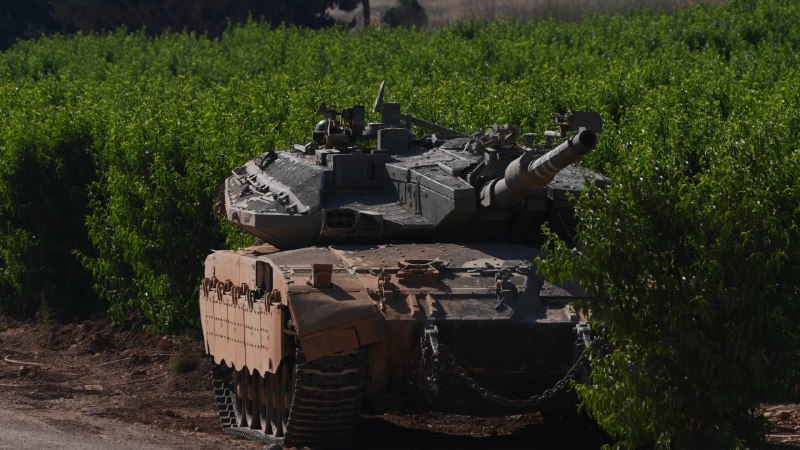
On 21 May 2026, a Hezbollah FPV drone struck an Iron Dome air defense battery in the Shomera area of northern Israel—reportedly the third such system lost to the militant group's unmanned aerial campaign since cross-border hostilities escalated in late 2023. The strike was first reported by Russian-aligned military correspondent Rybar, with corroboration from the associated English-language channel forwarding the same dispatch.
The Iron Dome has been the cornerstone of Israel's short-range air defense architecture for over a decade, intercepting rockets, mortar shells, and cruise missiles aimed at populated areas. But the system was designed against a different threat landscape—one where adversaries fired finite numbers of relatively expensive projectiles. FPV drones change that calculus fundamentally. A single operator with a commercially sourced quadcopter costs a few hundred dollars; an Iron Dome Tamir interceptor runs to the tens of thousands per shot. Defense analysts have warned for years that saturation tactics leveraging cheap unmanned systems could stress even sophisticated point-defense networks into economic unsustainability.
The Shomera Strikes and the Accumulation Problem
The Shomera area sits adjacent to the Lebanese border, within regular range of Hezbollah's expanded drone arsenal. According to the Rybar dispatch forwarded on 21 May 2026, the latest strike damaged at least the third Iron Dome battery positioned in that sector. The specific variant of FPV platform used in the attack was not identified in the available sourcing; nor did the report specify whether the battery's radar, launcher, or control module bore the brunt of the strike. Israeli military briefings on damage assessment have not yet been published in the open sources consulted for this article.
What the pattern suggests is structural. Three Iron Dome batteries represents a meaningful reduction in point-defense coverage for a populated northern corridor. Replacing a battery—assuming launcher, radar, fire-control, and supporting infrastructure—costs several tens of millions of dollars and requires months of production lead time given the specialized nature of the components. Hezbollah, by contrast, can iterate its drone designs and tactics with a rapidity that traditional defense procurement cycles cannot match.
Tactical Adaptation and the Drone-Warfare Learning Curve
Hezbollah's use of FPV drones against Israeli air defense is not new, but the frequency and precision of recent strikes indicate a refined targeting methodology. Open-source intelligence analysts tracking the Lebanon-Israel frontier have documented an evolution from early experimental strikes—often ineffective or misdirected—to increasingly precise attacks on fixed defensive installations. The learning curve reflects both accumulated operational experience and, according to Western defense assessments, technological support from Iran, which has itself developed a substantial FPV capability demonstrated in the Ukraine conflict.
The tactical implication is significant. Air defense systems that rely on kinematic interception—shooting down incoming threats with missile-based projectiles—were not architected to handle a high-rate, low-cost drone saturation environment. The Tamir interceptors that give Iron Dome its name perform well against calibrated threats but face an unfavorable exchange ratio against swarms or repeated precision strikes on their own positions.
Israel has acknowledged this limitation publicly. IDF officials have spoken of the need to develop and deploy "iron beam"-style directed-energy weapons that would lower the per-engagement cost curve, but operational laser systems remain in the testing phase rather than fielded at scale. In the interim, the vulnerability of ground-based batteries to FPV targeting represents a genuine operational problem with no obvious near-term solution.
What Remains Uncertain
The available reporting is confined to a single Russian-aligned source, and the open-source evidence for corroborating the specific details of the 21 May strike remains thin. Independent confirmation of whether a third battery was struck, and of the extent of damage to each previously hit system, has not appeared in the Western wire services or Israeli military briefings consulted for this article as of publication time. The timeline of when the first and second Shomera-area batteries were struck is also not specified in the available sourcing.
Israeli military public affairs did not respond to requests for comment prior to publication. Hezbollah's Al-Manar television has not published details of the strike in English-language reports reviewed by this desk. The gap between the Rybar reporting and any potential Israeli or Western confirmation leaves material factual questions open.
Strategic Stakes and Forward Trajectory
The broader pattern is not in dispute: Hezbollah has demonstrated a persistent, evolving ability to target Israeli air defenses along the northern border with weapons that cost a fraction of what they are designed to neutralize. For Israel, each lost battery reduces coverage density in an area where civilian population centers remain within rocket and drone range. For Hezbollah, the successful targeting of expensive defensive infrastructure—regardless of the specific damage assessment—reinforces the strategic logic of continued drone investment.
The economics of the exchange rate are unfavorable to Israel regardless of the outcome of any individual engagement. Sustaining a defensive posture against an adversary that can produce FPV platforms at scale and iterate tactics monthly requires either a technological leap—operational directed-energy weapons, electronic warfare upgrades, or a new generation of low-cost interceptors—or a political resolution that removes the threat at its source. Neither appears imminent.
For now, the Shomera corridor remains a test case for a question that defense planners in Israel, NATO, and beyond are watching closely: whether sophisticated air defense networks can survive economically in an era when the offense—cheap, accurate, mass-producible drones—has found its footing faster than the defense.
Desk note: Monexus based this article on the Russian milblogger Rybar's reporting as the primary source, given the absence of Western wire or Israeli military confirmation in the open sources available at time of writing. The editorial compass for the MENA desk requires Israeli security concerns to be treated as first-order facts, which this reporting does by conveying the operational significance of the strikes. The structural frame—economic unsustainability of missile-based point defense against drone saturation—draws on long-standing defense analysis but is expressed here without reference to specific institutional frameworks.
Wire provenance
This editorial synthesis draws on the following public wire/social posts:
- https://t.me/rybar_in_english/18436
- https://t.me/rybar/22147