Hezbollah Sanctions Are a Pressure Valve, Not a Policy
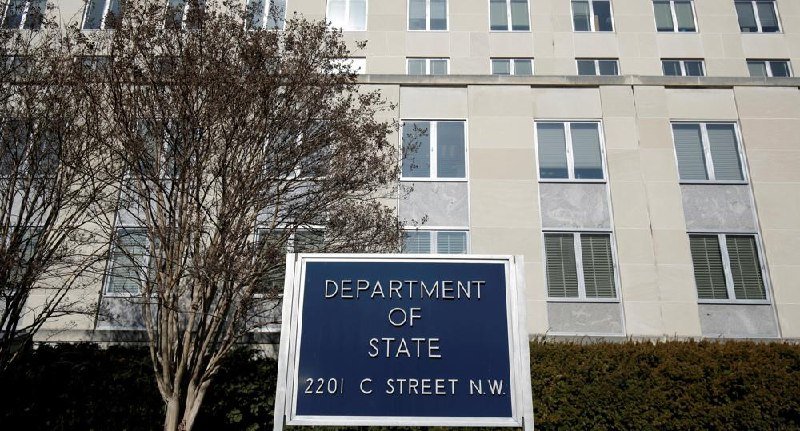
The United States Treasury Department announced on 21 May 2026 that it had imposed sanctions on nine Lebanon-based individuals, including four members of parliament reportedly affiliated with Hezbollah. The designations, confirmed by wire reports from the department's official communications channels, cite obstruction of Lebanon's peace process and interference with efforts to disarm the Shia movement as the stated grounds.
The move fits a pattern Washington has repeated across administrations: identify named individuals with ties to a designated foreign terrorist organization, freeze their assets under U.S. jurisdiction, and issue public statements asserting that the measure advances regional stability. The named individuals will face material consequences. Whether the designations move the needle on Hezbollah's institutional position inside Lebanon is a question the announcement leaves deliberately unanswered.
What the Sanctions Are Designed to Signal
The primary audience for designations of this kind is not Beirut. It is Washington — or more precisely, the executive branch's need to demonstrate sustained pressure on Iran-aligned actors in the Levant without committing to the harder diplomatic work that might actually alter Hezbollah's role in Lebanese governance. Sanctions are the instrument of least resistance: they satisfy congressional constituencies that track Middle East policy, they generate headlines that reads as action, and they impose real costs on named individuals without requiring a political strategy for what comes after.
That the four designated parliamentarians include members of a bloc that has operated openly within Lebanon's confessional system for decades is not incidental. Hezbollah entered Lebanese politics not through subterfuge but through the country's own power-sharing architecture, which was rebuilt after the civil war to include the communities and armed movements that had fought one another. The movement holds seats because Lebanon's constitution assigns them. Sanctions do not touch that architecture.
The Case for Targeted Pressure
It would be wrong to dismiss these designations as purely theatrical. Targeted financial sanctions on individuals with commercial networks extending beyond Lebanon's borders do bite. Travel bans accompanying U.S. designations can isolate senior figures from the financial infrastructure they rely on for transactions, family movements, and commercial activity conducted in dollars. When applied systematically and coordinated with allied governments — particularly those controlling the Gulf banking corridors that Hezbollah-affiliated networks have historically accessed — the cumulative effect on financing can be significant.
Proponents of sustained sanctions pressure also argue that designations weaken the political cover Hezbollah draws from its parliamentary representation. An individual whose name appears on a U.S. Treasury sanctions list is harder for potential coalition partners to defend in public. The isolation, incremental though it may be, carries diplomatic weight.
Why the Instrument Keeps Being Used Despite Mixed Results
Sanctions advocacy is self-reinforcing in Washington. The mechanism satisfies domestic constituencies, requires no troop deployments, and imposes no visible costs on U.S. interests. Once imposed, designations are politically easy to maintain and difficult to remove — removing them invites accusations of weakness. The result is a policy tool that accrues institutional momentum independent of its actual effectiveness on the ground.
Hezbollah has survived, and in some periods expanded, its footprint inside Lebanese institutions despite more than a decade of U.S. and allied sanctions pressure. The movement adapted by diversifying financing, deepening its reliance on Iran's regional network, and cultivating commercial interests less dependent on U.S.-dollar clearing. Targeted sanctions against named individuals have rarely disrupted the organizational core.
The structural problem is that Hezbollah's strength is not primarily financial. It is political and social — rooted in the same confessional distribution of power that governs every Lebanese parliament and cabinet. Sanctions can make individual members of parliament less comfortable. They cannot make the confessional system that elected them disappear.
The Stakes for Lebanon and for Washington's Strategy
Lebanon's political system remains fragile. The country has cycled through repeated governmental crises, economic collapse, and the aftereffects of the August 2020 Beirut port explosion, with no durable political settlement in sight. Hezbollah's role as both a military actor and a parliamentary force is a structural fact that any functioning Lebanese government must accommodate — not because Beirut has chosen to accommodate Iran, but because the architecture of Lebanese politics makes that accommodation inescapable.
The risk for Washington is that repeated sanctions without a coherent political strategy eventually become part of the landscape Hezbollah uses to its own advantage. Each U.S. designation that fails to produce a visible shift in the movement's position reinforces the narrative that external pressure is a blunt and ineffective instrument — a narrative that bolsters Hezbollah's self-portrait as an organization capable of withstanding imperial overreach.
Whether the nine individuals named on 21 May 2026 have any connection to genuine disarmament negotiations is unclear from the public record. What is clear is that disarmament — the stated objective cited in the Treasury announcement — has never been achievable through sanctions alone, in Lebanon or in any comparable context. The instrument is being used because it is available. Whether it is appropriate to the stated goal is a question the announcement does not pretend to address.
This publication noted that while wire coverage foregrounded the designations as a enforcement action, the structural conditions that give Hezbollah its institutional permanence inside Lebanese governance received less attention in the initial framing.
Wire provenance
This editorial synthesis draws on the following public wire/social posts:
- https://t.me/wfwitness/18432
- https://t.me/GeoPWatch/12841
- https://t.me/wfwitness/18430