The Summit That Wasn't: What India's Ebola Postponement Reveals About Global South Cooperation
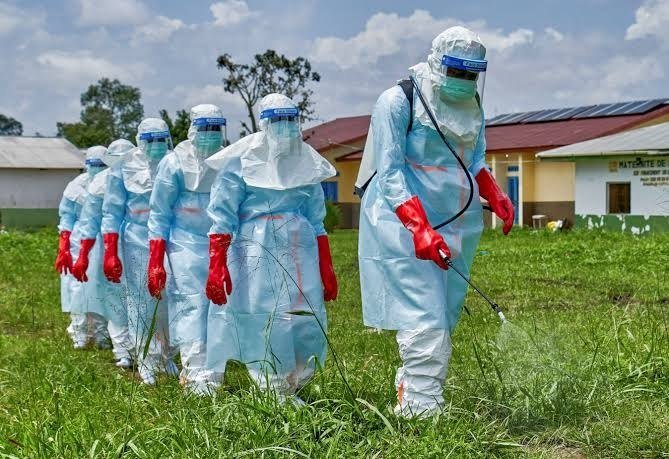
India and the African Union announced on 21 May 2026 the postponement of the India-Africa Forum Summit, which had been scheduled to convene in New Delhi the following week. The reason was a growing Ebola outbreak in eastern DR Congo, where 139 suspected deaths and approximately 600 reported cases had been recorded as of mid-May. The decision drew predictable headlines about diplomatic disruption. What received less attention was what the postponement exposes about the architecture of South-South cooperation: that when the continent's crises become inconvenient for its partners, the instinct is to wait them out rather than work through them.
The public health rationale for postponement is not in dispute. Ebola spreads through close contact, and mass gatherings in or near an active outbreak zone carry documented transmission risk. India has every basis for wanting to protect delegates and avoid the optics—later the political liability—of a diplomatic super-spreader event. That logic is sound. What the framing obscures is that the outbreak is not a natural disaster arriving from nowhere. It is unfolding in a specific geopolitical context that India, as a rising power with explicit ambitions in Africa, cannot afford to bracket as someone else's problem.
The eastern DR Congo region where the outbreak has taken hold includes areas under the control of the M23 armed group, a Tutsi-led militia that has seized large swaths of North Kivu and now parts of South Kivu. Humanitarian organisations have long warned that armed conflict and disease outbreaks are mutually reinforcing in this part of the world. Conflict displaces populations into overcrowded camps. Camps lack reliable water, sanitation, and healthcare. Overwhelmed clinics become vectors rather than firewalls. The first confirmed case in South Kivu, reported on 21 May, suggests the outbreak is moving into territory where the state's presence is weakest and access for response teams most constrained. This is not background colour. It is the operating environment for any serious engagement with African development, African security, or African health—and it is the environment that summit diplomacy consistently declines to engage with substantively.
The India-Africa Forum Summit, first convened in 2008, has been a vehicle for New Delhi to position itself as a credible alternative to Western and Chinese influence on the continent. Lines of credit, capacity-building programmes, and trade frameworks have been announced with fanfare. The summits project intent. What they less reliably produce is accountability for outcomes, or any mechanism for synchronising Indian development priorities with African Union-identified needs. The African Union did co-announce the postponement with India, which suggests a degree of shared decision-making. But the sources do not indicate that the AU had any role in shaping the summit's original agenda, its financing commitments, or the criteria by which it would proceed or be delayed. That asymmetry—partnership in postponement, not in design—is the structural reality beneath the diplomatic courtesies.
This is not a critique unique to India. China, Turkey, the Gulf states, Brazil, and the European Union all convene summits with African counterparts on terms that broadly favour the convening power. The format is not inherently illegitimate. But the pattern matters: when a crisis hits, the convening power's exposure is a postponed photo opportunity. For the continent, the crisis is the ongoing condition. India's postponement is a pause in a diplomatic exercise. For eastern DR Congo, the Ebola outbreak is a compounding emergency layered on top of a conflict that has displaced hundreds of thousands of people and is already stretching regional health systems beyond their limits. The sources do not specify what international support has been mobilised for the current response, or whether the summit postponement was accompanied by any reassignment of resources toward the outbreak itself. That absence is notable.
The stakes of this dynamic are practical, not merely symbolic. If South-South cooperation is to be more than a geopolitical hedge—a genuine reorientation of development relationships away from conditionality and toward mutual interest—then it must develop the infrastructure to engage with crises at their source rather than waiting for them to resolve or spread. That requires the kind of long-term institutional commitment, conflict sensitivity, and willingness to accept uncomfortable partners (local governance structures, rebel-affected communities, under-resourced regional health bodies) that summit-level diplomacy is structurally unsuited to provide. India has a legitimate interest in protecting its diplomatic calendar. It also has stated interests in African friendship and African credibility. Those interests point in different directions, and the postponement raises a question this publication finds worth posing: what would a partnership look like that did not pause when Africa became difficult?
The sources do not clarify whether the African Union pushed for any alternative arrangements—virtual sessions, a reduced-format meeting, a commitment to reschedule with a specific timeline—before the postponement was announced. They also do not indicate whether India has made any public commitments to redirect the diplomatic capacity freed up by the postponement toward the Congolese response. Whether this represents a missed opportunity or simply the ordinary friction of multilateral scheduling is a question the available reporting does not resolve. What the postponement makes visible, at minimum, is the gap between the ambition of South-South cooperation and its current operational capacity to respond to the conditions that define much of the continent's development trajectory. That gap will not be closed by waiting for the next summit.
Wire provenance
This editorial synthesis draws on the following public wire/social posts:
- https://t.me/AljazeraEnglish/33492
- https://t.me/StandardKenya/198452
- https://t.me/france24_en/287561