India's Ebola Postponement Exposes the World's Selective Solidarity with Africa
When an Ebola outbreak in the Democratic Republic of Congo threatened to disrupt the India-Africa Forum Summit, New Delhi did not hesitate to postpone. The decision reveals uncomfortable truths about whose crises command global attention—and whose merely complicate the schedule.
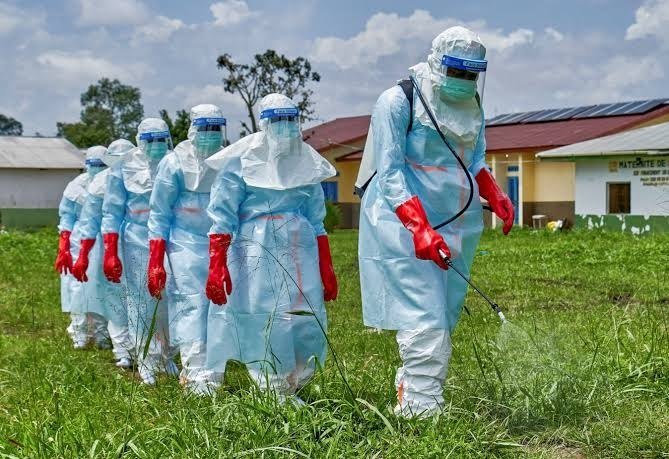
India's commitment to the Global South has long been a centrepiece of New Delhi's foreign policy. The India-Africa Forum Summit, now in its fourth iteration, was designed to demonstrate precisely that posture—a counterweight to the Western-dominated development architecture, a platform where South-South solidarity translates into trade agreements, credit lines, and capacity-building partnerships. When the summit was postponed on 21 May 2026, the stated reason was straightforward: a rapidly escalating Ebola outbreak centred in South Kivu, Democratic Republic of Congo, with suspected deaths approaching 139 and approximately 600 reported cases. India and the African Union jointly announced the deferment, citing the "emerging public health situation."
No one disputes the seriousness of Ebola. But the speed with which New Delhi moved to protect its diplomatic calendar from African disruption raises a question the official statement carefully sidesteps: what exactly does South-South solidarity mean when African problems threaten to complicate the North's convenience?
A Health Crisis the World Learned to Ignore
Ebola is not new to the Congo basin. The DRC has experienced fifteen outbreaks since 1976, and the current surge—concentrated in South Kivu province—has unfolded with the grim familiarity that international health machinery now seems to reserve for this particular kind of African emergency. Local health authorities and international partners are engaged. UN agencies are monitoring. What is conspicuously absent is the kind of global mobilization—emergency pledging conferences, headline diplomacy, airlifted medical personnel—that would accompany an equivalent outbreak in a G7 country.
This asymmetry is not a product of Ebola's viral characteristics. The disease's mortality rate, transmission dynamics, and containment requirements are well understood. What varies is not the medical threat but the political attention it commands. An outbreak that would trigger an emergency G7 summit if detected in Europe instead generates a politely-worded postponement notice from the Indian foreign ministry.
The sources do not record any Indian offer of medical assistance to the DRC, any accelerated contribution to the WHO emergency fund, or any public statement expressing solidarity with Congolese health workers. The summit was postponed; the partnership continued—in theory. In practice, the episode reified a familiar hierarchy: Africa supplies the raw material of multilateralism—dignitaries, communiqués, photo opportunities—while reserving the right to pause when African conditions become inconvenient.
The Architecture of Selective Engagement
India's Africa policy is not insincere. New Delhi has made genuine investments: the Lines of Credit programme, the ITEC training scholarships, the pan-African e-network that connected African universities to Indian expertise. These are real. But the architecture of South-South cooperation has always contained an implicit carve-out: solidarity operates in the direction that serves the donor's diplomatic priorities. India hosts summits; African heads of state travel to New Delhi. Credit lines flow southward; attention flows primarily northward, toward Washington, Brussels, and the Bretton Woods institutions where the real architecture of global governance remains anchored.
When African crises become headline risks—Zimbabwe's cholera emergency, the Sahel security collapse, the Ebola years that did briefly command global attention—the response is predictable. Emergency UN sessions convene. Donors pledge. The crisis is "contained." Then the headlines fade, the pledging conferences end, and Africa reverts to being the backdrop against which other powers conduct their real business.
The India-Africa Forum Summit postponement sits within this longer pattern. New Delhi's decision was rational within its own logic: why risk diplomatic optics when attendees might face quarantine, when the optics of hosting African leaders alongside an Ebola news cycle might complicate the summit's carefully choreographed messaging? The rational move was to defer. The problem is what that rationality reveals about the structural limits of South-South solidarity as currently practised.
What Genuine Partnership Would Look Like
It would be too easy to single out India. The same pattern recurs across the landscape of multilateral engagement with Africa. The EU's €150 billion Global Gateway initiative competes with China's Belt and Road—not because either has Africa's development priorities at its centre, but because infrastructure lending is a vehicle for geopolitical positioning. The United States' Prosper Africa strategy was designed to counter Chinese influence, not primarily to respond to African industrial policy requests. The G20's inclusion of the African Union as a permanent member is symbolically significant; the allocation of IMF quota shares tells a different story.
What would it look like if a summit designed to strengthen India-Africa ties actually treated African public health as a first-order diplomatic concern? It might mean convening a joint India-Africa health emergency fund as a concrete outcome of the postponed gathering. It might mean New Delhi accelerating its pledged contributions to the Africa CDC, or offeringLines of Credit specifically for epidemic preparedness infrastructure in outbreak-prone regions. It would certainly mean that the postponement announcement included not merely a citation of the "public health situation" but an explicit statement of what India intended to contribute to resolving it.
None of this appears in the public record as of this writing. The sources do not indicate that New Delhi has offered any additional support to Congolese health authorities. That silence is itself a statement.
The Stakes of Diplomatic Convenience
The consequences of treating African crises as scheduling inconveniences extend beyond optics. Every deferment reinforces the message that African stability is a variable external actors accommodate, not a priority they actively invest in maintaining. This matters for the durability of multilateral partnerships that depend on reciprocal legitimacy. African governments that travel to summits expecting genuine engagement will eventually note the asymmetry between the warmth of the welcome and the coolness of the response when the problem originates in Kinshasa rather than New Delhi.
India's postponed summit is a small data point in a large picture. But small data points accumulate. The countries that will shape the twenty-first century's multilateral architecture—India preeminent among them—are precisely those whose credibility as alternative power centres depends on demonstrating that their engagement with the Global South is not contingent on African problems staying off the front page.
The summit will be rescheduled. The partnership will continue—in the communiqués, in the credit lines, in the carefully staged photographs. What remains to be demonstrated is whether the relationship is robust enough to absorb African complexity without retreating to the comfort of a postponement.
Monexus covered this story as a diplomatic and structural analysis. The dominant wire framing centred on logistics and the outbreak's epidemiology; this piece foregrounds what the postponement reveals about the architecture of South-South cooperation.
Wire provenance
This editorial synthesis draws on the following public wire/social posts:
- https://t.me/StandardKenya/
- https://t.me/france24_en/
- https://t.me/FRANCE24/