Iran's 'Become Strong' Doctrine: Why Tehran Frames Negotiations as a Power Equation
Anonymous Iranian officials have spelled out the logic Tehran applies to every diplomatic overture: tensions with Washington will not ease until Iran is too powerful to pressure. That is not brinkmanship. It is doctrine, and it has shaped every negotiation cycle since 2003.
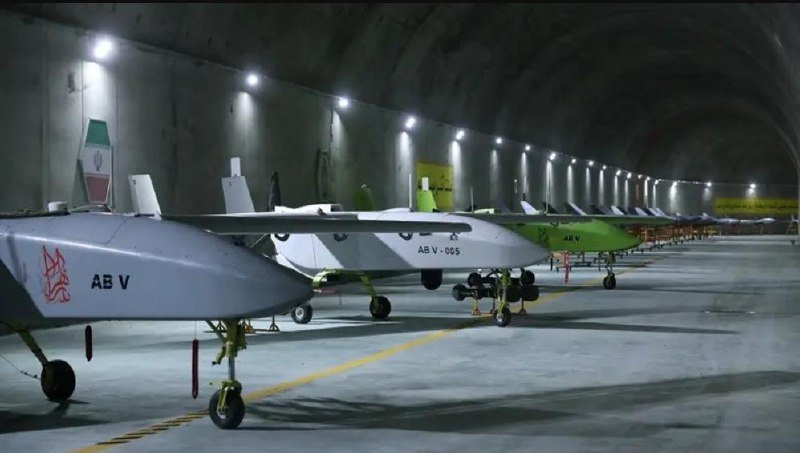
On 21 May 2026, anonymous officials quoted by Iranian state-linked media made the country's position on negotiations with Washington as explicit as it has been in years: tensions will not ease until Tehran is powerful enough that America cannot credibly threaten it. "Our problems with America will be solved when we become strong," one unnamed informant told Tasnim News, citing the Strait of Hormuz management, sanctions relief, and compensation for war damages as non-negotiable elements of any settlement. The framing is familiar. The underlying logic is worth examining closely.
The doctrine, stripped of its rhetoric, is simple: a credible adversary cannot be pressured into concessions, only negotiated with as an equal. Tehran has applied this logic across every nuclear negotiation cycle — from the 2015 JCPOA agreement to the collapsed Vienna talks of 2022 and the back-channel Omani mediation of 2024. The pattern holds. Iran will engage, signal flexibility, accept constraints on its nuclear programme — but only from a posture of demonstrated resilience. The concessions come after the test of pressure has failed, not before.
This is not simply a negotiating tactic. It is an ideological and strategic architecture that has governed Iranian state behaviour for decades. The nuclear programme itself functions as both evidence and instrument within this framework — evidence that sanctions and external pressure have failed to alter Tehran's course, and instrument through which future leverage against any successor arrangement can be demonstrated. Western capitals have repeatedly framed Iran's nuclear progress as a crisis requiring urgency. Tehran frames it as proof that urgency does not translate into capitulation.
The regional dimension of the stated position also carries weight. Iranian officials have long distinguished between Arab states that serve as platforms for American military infrastructure and those that function as acceptable interlocutors. The distinction matters: it signals to Gulf monarchies that normalisation with Iran requires accepting a hierarchy of regional influence that many of them find uncomfortable, while leaving the door open for mediation through Oman or Qatar. It is a divide-and-hedge strategy dressed in ideological language.
The picture becomes more complicated when the domestic context enters view. The Islamic Republic's hardline establishment has systematically constrained every pragmatic diplomatic opening — the 2015 deal survived protests and was eventually abandoned under maximum-pressure sanctions, and the economic damage from those sanctions has been real even as official statements play down the impact. The faction that governs Tehran has reason to prefer the current arrangement: a managed confrontation maintains the internal cohesion of the resistance economy and justifies continued suppression of domestic dissent. The pragmatists who might accept a comprehensive deal have consistently lost internal battles over its terms. The hardline constituency has structural veto power over significant concessions.
What this means for the trajectory of US-Iranian engagement is not straightforward. The stated position is not a ceiling — it is a floor. It describes the minimum conditions under which Iranian leadership would consider an agreement tenable domestically, not the maximum scope of what they would accept. The actual space for a deal may be broader than the public posture suggests, particularly if the sanctions regime continues to erode under inconsistent enforcement and rising oil-market complexity. But the space closes when the hardliners read American policy as unpredictable and conclude that any deal will be abandoned when political conditions shift in Washington.
The Strait of Hormuz, raised explicitly in the 21 May statements, remains the single most consequential leverage point in this dynamic. It is not a threat Iran needs to make explicitly — the geography does the work. Every administration since 1979 has calibrated its Iran policy partly around the assumption that disrupting transit would trigger a response too costly to tolerate. That assumption has held. It also means that any future negotiation over Hormuz management is not simply about oil-flow logistics — it is a structural conversation about the limits of American coercive power in the Gulf, conducted on terrain that inherently advantages the state with shorter supply lines and more immediate stakes in regional stability.
The statements published on 21 May tell us what Tehran wants to say to Washington. What they do not fully reveal is whether the calculation has shifted inside the regime — whether the new reality of a reshuffled Middle East, reduced American footprint, and a nuclear programme that has advanced considerably beyond 2015 baselines has changed the internal balance between factions that want a deal and those that need the confrontation. Both exist. Both have historically shaped Iranian policy. The question is which one the current moment favours.
There is a version of this story in which the gap between the two sides narrows quietly — where economic pressures inside Iran, shifts in the regional security architecture, and a second-term American administration looking for a legacy achievement converge on a framework both sides can call a win. There is also a version in which the doctrine holds: pressure builds, the hardliners are proven right again, and the confrontation continues until something breaks. The doctrine itself is not the obstacle. It has been the framework within which every previous deal was made. What it cannot tell us is whether this particular moment is the one that produces another agreement, or the one that forecloses one.
This piece drew on reporting from Tasnim News, Farsna, and Mehr News, all published on 21 May 2026, covering anonymous Iranian officials' stated conditions for resolving tensions with the United States.
Wire provenance
This editorial synthesis draws on the following public wire/social posts:
- https://t.me/tasnimnews_en/282640
- https://t.me/farsna/186892
- https://t.me/mehrnews/411856