Iran Restarts Drone Production as Hormuz Control Claims Deepen
Tehran has restarted drone manufacturing and published a revised map asserting military oversight over a 22,000 square kilometre stretch of the Strait of Hormuz, moves that complicate an already volatile Gulf transit corridor following months of regional conflict.
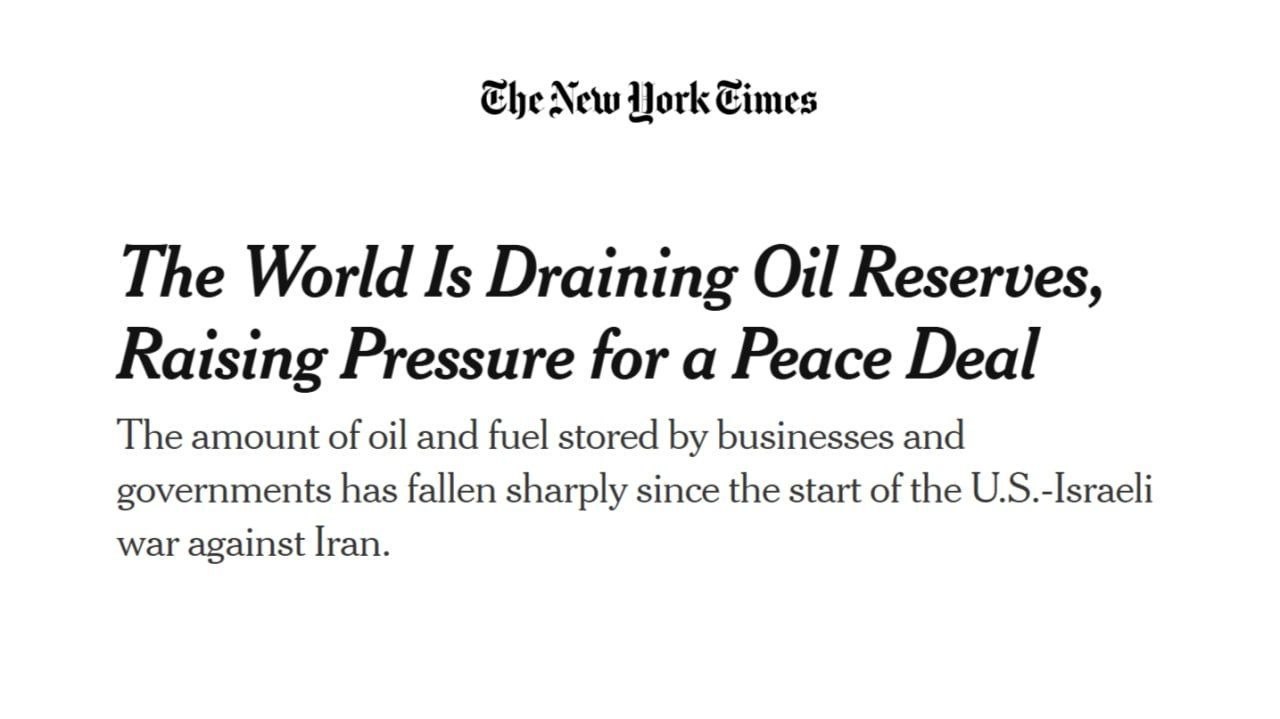
Iran has resumed production of unmanned aerial vehicles and published a revised territorial claim asserting military oversight over a 22,000 square kilometre zone around the Strait of Hormuz, according to reporting published on 21 May 2026. The twin moves, emerging less than two weeks after the end of active hostilities in the Iran conflict, signal that Tehran intends to consolidate strategic control of the Gulf corridor regardless of the diplomatic fallout.
The New York Times reported that Iranian drone manufacturing lines had been restarted at facilities believed to have been targeted during the opening phases of the conflict. Separately, Iranian state media released a map claiming "armed forces oversight" across an expanded zone of the strait, a body of water through which roughly a fifth of the world's liquefied natural gas trade passes. Oman and Iran are simultaneously discussing a permanent toll arrangement for transiting vessels, according to a BRICS-focused Telegram channel tracking Gulf developments on 21 May 2026.
The timing matters. Dubai announced on 21 May 2026 that it would provide economic incentives exceeding $400 million to businesses affected by months of strait disruption, a figure that underscores the financial damage already sustained. The Polymarket prediction market assessed a two percent probability that the Trump administration would agree to permit Iranian charging of Hormuz transit fees by the end of May 2026, suggesting Washington views such a concession as politically untenable. The gap between Tehran's ambitions and Washington一只手's willingness to accommodate them is wide—and the strait remains the fault line.
A Restarted Industrial Base
The resumption of Iranian drone production is significant not because the capability was ever in doubt—it was the sophistication and scale that Western planners challenged during the conflict. Before the strikes, Iranian UAV output was estimated to supply both domestic military programmes and export customers across the region. Iranian state-aligned channels had previously claimed certain facilities were immune to targeting; the New York Times reporting that production has resumed suggests either those assessments were correct or Tehran moved quickly to reconstitute capacity elsewhere.
Drone technology sits at the intersection of two pressures currently shaping Gulf security architecture. On one side, maritime insurers and shipping companies are recalculating risk premiums for any vessel transiting the strait. On the other, the United States has signalled a harder line on Iranian military reconstitution. An executive order expected as soon as 22 May 2026 would require artificial intelligence companies to submit new models for government review before public release, a measure framed partly around national security concerns about adversarial use of frontier AI systems. The connection to Iranian drone production is direct: autonomous systems increasingly depend on machine learning components, and restricting access to high-end AI tooling is one lever the administration believes it retains.
The Mapping Claim and Its Limits
Iran's publication of a revised map asserting military oversight over a 22,000 square kilometre zone is an act of administrative cartography with immediate diplomatic consequences. International law does not recognise unilateral maritime claims beyond what is established under the United Nations Convention on the Law of the Sea, and Iran is not a signatory to UNCLOS. But the absence of legal standing has never prevented a claimant from raising the political cost of contradicting it.
The 22,000 square kilometre figure represents a significant expansion from previous Iranian assertions, though the sources do not specify the prior claim's dimensions. What is clear is that the zone now encompasses lanes used by very large crude carriers and liquefied natural gas vessels departing Gulf terminals. Iranian state media described the mapping as routine administrative documentation; regional analysts reading the same release noted the word "oversight" rather than "control"—a distinction that allows Tehran to claim it is monitoring the zone without formally asserting sovereignty, while still establishing a narrative foothold for future demands.
Oman's involvement in the parallel toll discussions complicates the picture. Muscat has historically maintained a careful neutrality in Gulf security architecture, hosting US military assets at one end of the strait while maintaining diplomatic relations with Tehran. The fact that Oman is now sitting across a negotiating table from Iran on transit fees suggests either that Muscat calculates the status quo has permanently shifted, or that it is seeking a bilateral arrangement that gives it a cut of any new revenue stream rather than leaving the arrangement entirely in Iranian hands. The sources do not indicate how those discussions have progressed.
The Commercial Fallout
Dubai's $400 million incentive package is the most concrete measure yet of the economic damage the Hormuz disruption has inflicted. The incentive structure targets logistics firms, trading houses, and maritime service companies that experienced revenue collapse during months when transit risk made the strait prohibitively expensive for standard commercial traffic. Insurance surcharges alone were estimated to have added hundreds of thousands of dollars per voyage for vessels that continued operating.
The figure also represents a political calculation by Dubai's administration: absorbing the cost of keeping commercial networks intact is preferable to allowing a permanent rerouting of trade through alternative corridors. The Cape of Good Hope route, used during the most acute phase of disruption, adds approximately two weeks to transit times and significantly raises per-barrel costs for Asian refiners. Every day the strait remains partially or fully contested, that rerouting risk becomes more entrenched.
Whether the incentives are sufficient is a separate question. The $400 million figure is meaningful in absolute terms but represents a fraction of the losses the shipping and energy sector sustained over the past several months. A substantial portion of commercial traffic has already begun incorporating longer routing into forward planning, and reversing that decision will require more than a stimulus cheque.
The Diplomatic Horizon
Two percent on Polymarket is not a prediction—it is a statement of political unlikelihood. The Trump administration's stated position on the Iran nuclear file and its broader maximum-pressure posture makes any arrangement that legitimises Iranian revenue extraction from Gulf transit fees a difficult sell domestically. Yet the two-percent framing also raises the question of what it would take to move that number.
Iranian negotiators appear to be betting that the combination of resumed drone production, the revised mapping claim, and ongoing Hormuz uncertainty creates sufficient pressure to force a conversation. The toll talks with Oman suggest a parallel track that bypasses Washington entirely: if Muscat agrees to some form of revenue-sharing, Iran gains a bilateral fact on the ground that complicates any US effort to enforce free-transit norms.
What remains genuinely uncertain is whether Iranian forces have the operational capacity to enforce any new oversight claim against the combined naval presence of US and allied vessels in the Gulf. The conflict depleted elements of the Islamic Revolutionary Guard Corps' maritime capability, and the sources do not provide a current assessment of Iranian naval readiness. The mapping claim may be primarily a diplomatic instrument—an assertion of intent rather than a description of current capacity. Making that determination requires intelligence the public record does not contain.
The next several weeks will determine whether the Hormuz situation stabilises into a new equilibrium or whether the combination of resumed Iranian production, toll negotiations, and US AI oversight measures escalates into a second cycle of confrontation. The strait has survived decades of tension. Whether the current configuration is a new normal or a precursor to further conflict is a question the sources resolve only by pointing toward the next move—and the next move, for now, belongs to Washington.
This publication's primary framing prioritised the operational significance of the mapping claim and the commercial fallout from Hormuz disruption over the prediction-market odds, which appeared in the wire feed but reflect trader sentiment rather than policy reality.
Wire provenance
This editorial synthesis draws on the following public wire/social posts:
- https://t.me/BRICSNews/11432
- https://x.com/unusual_whales/status/19932945123456