The 'Iran Thing': How a Rose Garden Offhand Remark Exposed a Conflict With Global Economic Consequences
Trump's dismissal of his son's wedding in favour of what he called 'a thing called Iran' caps weeks of accelerating confrontation — and the economic shockwaves are already landing far beyond the Middle East.
On 21 May 2026, standing in the White House Rose Garden, Donald Trump was asked whether he would attend his son's wedding the following weekend. His answer was not a yes or a no. "He'd like me to go," the President said. "I'm going to try. I said, this is not good timing for me. I have a thing called Iran and other things." It was a formulation that managed to be both candid and evasive — acknowledging an active conflict while declining to name it as such. The "thing" he was referring to is a shooting war with consequences that are already measurable in fuel queues, manufacturing surveys, and balance-of-trade projections on three continents.
The economic dimension of the Iran confrontation has moved from background concern to front-page urgency in the space of weeks. On the same day as Trump's Rose Garden appearance, a Reuters report documented what businesses in the United Kingdom were already reporting: a measurable contraction in activity driven by uncertainty linked to the Iran war and the broader political turbulence surrounding it. Firms that had expected steady post-inflation recovery were instead flagging project delays, supply-chain nervousness, and a reluctance to commit to new hiring. The causality ran directly from the Persian Gulf to the Thames Estuary.
What Trump Said — and What It Reveals
The President's Rose Garden exchange was notable less for its content than for its framing. Trump did not describe an ongoing military operation. He did not invoke American service members by name or acknowledge the trajectory of hostilities. He spoke instead of "a thing" — a word that compresses a multi-front confrontation into an administrative inconvenience. The White House has maintained a communications posture throughout the conflict that oscillates between maximalist pressure and deliberate vagueness, neither fully committing to a defined endgame nor retreating from escalation.
Administration officials have offered several competing rationales for the campaign. The stated public rationale centres on Iran's nuclear programme and what the White House describes as a pattern of regional proxy aggression. A secondary argument — less formally articulated but present in off-record briefings — points to the structural goal of reasserting American power in a region where, over the past decade, alternative frameworks have gained ground. Neither rationale, however, has translated into a consistent public communication strategy that allows markets, allies, or adversaries to price the uncertainty accurately.
The result is a peculiar information environment in which the President can simultaneously communicate that the conflict is serious enough to supersede a family wedding and avoid providing enough specificity for financial markets to calibrate risk with confidence. Traders and corporate planners are left to infer intent from action — and the inference is not always flattering. When asked on 21 May whether gasoline prices would decline, Trump replied that they would fall "after Iran stops its actions." That formulation treats consumer pain as leverage, not as a consequence of policy.
The Economic Shock Is Already Here
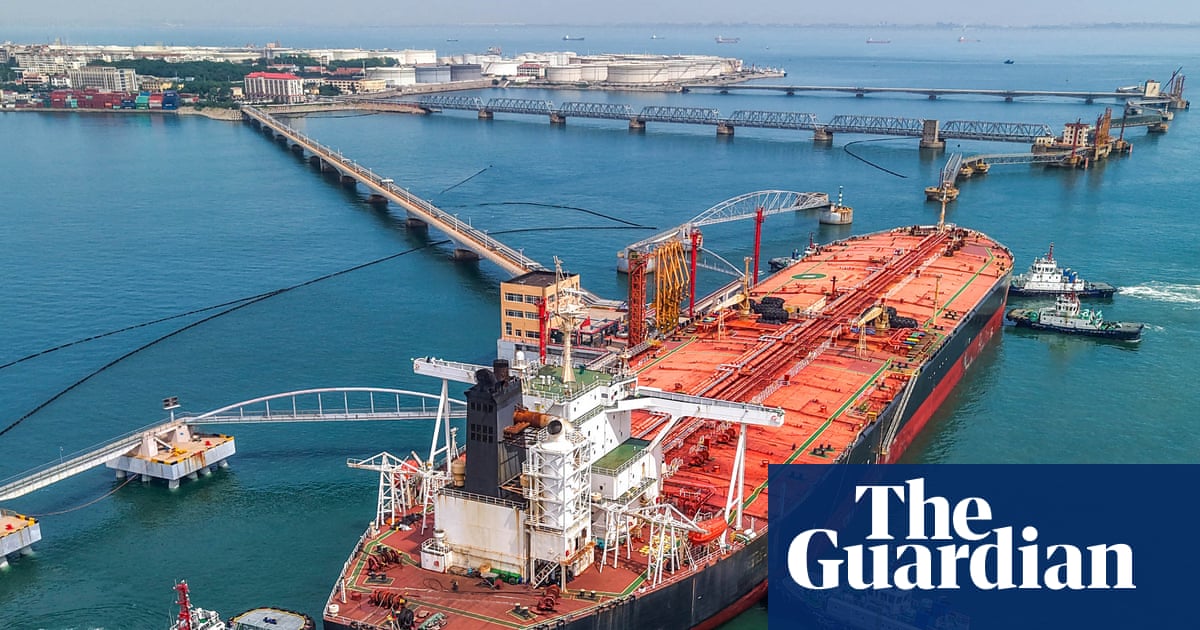
The Reuters reporting on UK economic activity is a useful proxy for what is happening across the advanced industrial economies. The mechanisms are straightforward. Iran sits adjacent to or controls several of the chokepoints through which global oil shipments flow. Any sustained disruption to tanker traffic through the Strait of Hormuz — through which roughly a fifth of the world's oil passes — immediately reprices crude. That repricing feeds through to petrol stations, aviation fuel, chemical feedstocks, and the freight costs that touch virtually every consumer product.
The UK data is not an outlier. Business surveys from Germany, Japan, and South Korea have similarly flagged input-cost pressures and order-book uncertainty linked to energy-price volatility. The common thread is not a single country-specific policy failure but the systemic exposure that exists when a significant share of global trade depends on open passage through regions that are simultaneously the site of active hostilities.
The political turbulence cited alongside the Iran war in the Reuters report matters because it suggests a compounding effect. Energy-price shocks are historically manageable when governments can point to a credible resolution timeline. When they occur alongside institutional uncertainty — caretaker administrations, snap election speculation, legislative gridlock — the confidence interval for corporate investment decisions widens considerably. Firms that were planning capital expenditure in Q3 2026 are deferring those decisions, not because their balance sheets are weak but because the operating environment has become unquantifiable.
The distributional consequence of that uncertainty is not evenly spread. Households with limited savings buffers and transport-intensive livelihoods absorb energy-price increases immediately and painfully. Small logistics operators face fuel-cost squeeze at the same time as consumer demand softens. Large diversified multinationals can manage the volatility through hedging instruments that smaller competitors cannot access. The Iran conflict, in this sense, is not merely a geopolitical event — it is a redistributional mechanism operating in real time.
The Global South Recalculates
For governments in Asia, Africa, and Latin America, the Iran confrontation arrives at a moment of already considerable stress. Many developing economies entered 2026 with their fiscal positions strained by dollar-denominated debt service costs. A spike in oil import bills — driven by a conflict that they did not initiate and cannot influence — further compresses the space available for development spending, debt repayment, and social expenditure.
The structural context matters here. The post-Cold War international order was characterised by a degree of stability in hydrocarbon pricing that, while imperfect, allowed long-range planning. The past decade has seen that stability erode for reasons that include American production growth, shifting Gulf state production decisions, and the gradual development of alternative energy pathways in parts of the industrialised world. But those alternative pathways — grid storage, electric vehicle fleets, LNG import infrastructure — require capital investment that developing economies cannot replicate at speed.
There is a secondary calculation underway in capitals that have watched American foreign policy with attention sharpened by recent experience. The tariffs imposed earlier in the Trump administration on goods from multiple trading partners have already strained relationships that were previously taken for granted. The Iran conflict, landing on top of tariff disruptions, reinforces a perception that the international rules-based architecture is less reliable than it was once assumed to be. This perception does not automatically translate into alignment with any alternative power — but it does translate into hedging behaviour, diversifying supplier relationships, and accelerating conversations about currency arrangements that reduce dollar exposure.
The nations best positioned in this environment are those with domestic hydrocarbon production sufficient to absorb price spikes without catastrophic balance-of-payments damage. Russia, which has for years invested in fiscal buffers derived from energy exports, is a structurally resilient actor in ways that oil-import-dependent developing economies demonstrably are not. The asymmetry is not lost on governments in Nairobi, Dhaka, or Buenos Aires.
Is There a Historical Parallel — and Does It Help?
The 1973 Arab oil embargo is the reference point most frequently invoked when analysts discuss Middle East conflict and global economic disruption. That episode saw Arab members of OPEC impose an oil embargo against the United States and other supporters of Israel following the Yom Kippur War, producing a quadrupling of oil prices, economic recession across the industrialised world, and a lasting restructuring of energy policy in multiple nations. The immediate trigger was different — the embargo was an economic weapon deployed by producing states, not a disruption caused by military hostilities — but the transmission mechanism was similar: a sudden reduction in the reliable flow of Gulf crude producing immediate consumer pain in import-dependent economies.
One difference that analysts note is the degree to which energy economics have diversified since the 1970s. American shale production provides a domestic supply buffer that did not exist fifty years ago, and LNG export infrastructure means that stranded gas can reach markets through routes less vulnerable to Hormuz disruption. On that reading, the current conflict should produce a sharper spike than the 1970s but a faster resolution as supply-side substitutes respond to price signals.
The counterargument is that the financialisation of energy markets since the 1970s means that price signals now incorporate anticipatory positioning by traders who are not merely reacting to current supply data but pricing in scenarios of future disruption. If traders collectively believe that the Iran conflict will persist for months, oil futures will reflect that belief before the physical market does. The price signal thus becomes a generator of economic harm, not merely a reflection of it.
There is also the question of institutional capacity. In 1973, the IEA — the International Energy Agency — was a relatively new institution with limited coordinated-response mechanisms. Today's equivalent bodies have more tools but face political headwinds that complicate collective action. When major consuming nations disagree about the underlying causes of a crisis and have divergent interests in its resolution, the coordination that softened the 1973 shock becomes harder to achieve.
The Road Ahead: Stabilisation or Spiral
The most honest assessment of where the Iran conflict and its economic consequences stand in late May 2026 is that several competing futures remain plausible. The optimistic scenario involves a negotiated de-escalation that allows shipping lanes to reopen, oil futures to correct, and business confidence to recover in time for the northern hemisphere autumn investment cycle. That outcome requires political will on all sides, credible guarantees, and verification mechanisms that take time to construct.
The pessimistic scenario involves continued or escalating hostilities that close or threaten the Strait of Hormuz, producing oil-price levels that compress global consumption, trigger recession in import-dependent economies, and accelerate the inflationary pressures that central banks have only recently brought under control. In that scenario, the cost of the Iran "thing" — to borrow the President's own framing — is paid not in the Persian Gulf but in fuel queues in Bolton, freight surcharges in Bangkok, and lost harvests in sub-Saharan agricultural economies that cannot absorb a fertiliser-price spike.
The middle path — managed disorder, persistent tension without full-scale closure of transit routes — is perhaps the most likely and the most corrosive. Low-grade conflict that introduces ongoing uncertainty is structurally damaging in ways that sharp shocks are not. Businesses cannot plan around it; governments cannot credibly reassure their populations about near-term economic conditions; and the diplomatic effort required to manage the crisis pulls attention and resources away from other priorities.
What is clear is that the economic consequences are not a side-effect of the Iran conflict — they are coextensive with it. Every day that Hormuz remains contested, every cargo shipment rerouted, every futures contract priced for disruption adds to a global tally that will be measured in reduced growth, deferred investment, and household economic stress in countries that have no direct role in the hostilities. Trump's Rose Garden formulation — "I have a thing called Iran" — is, in this sense, a compression of a problem that is vastly larger than any one leader's schedule. The conflict is not an item on a to-do list. It is a structural condition that the global economy is being asked to absorb, price, and survive.
This publication covered the economic dimensions of the Iran confrontation from the demand-side angle — what the conflict costs the importing world — against the wire tendency to lead with the military and diplomatic framing. The personal-voice hook of Trump's wedding comment was used to ground the piece in a specific moment rather than to humanise a political figure.
Wire provenance
This editorial synthesis draws on the following public wire/social posts:
- https://t.me/ClashReport/4821
- https://x.com/unusual_whales/status/1924187382949728473
- https://t.me/osintlive/11432
- https://x.com/unusual_whales/status/1924180437768929575