IRGC Navy Warns US Against Military Action to Reopen Strait of Hormuz
Senior IRGC Navy commanders issued direct threats against US naval operations in the Persian Gulf, claiming the Strait of Hormuz has been sealed on direct orders from the corps' top naval officer and warning that American carriers cannot force a reopening.
Senior commanders in Iran's Islamic Revolutionary Guard Corps Navy issued explicit warnings on 20–21 May 2026 that any US attempt to use military force to reopen the Strait of Hormuz would be met with direct confrontation. The statements, published via the IRGC-affiliated PressTV media channel and corroborated by separate social media accounts linked to the corps, represent one of the most direct public threats against American naval presence in the Persian Gulf this year.
The political deputy of the IRGC Navy, Mohammad Akbarzadeh, stated that the strategic chokepoint had been sealed on the orders of IRGC Navy Commander Ali Reza Tangsiri. "Despite all their tricks and schemes, the Americans failed to reopen it," Akbarzadeh said, according to a PressTV report published at 01:42 UTC on 21 May. The language mirrors previous closures attributed to Iranian authorities during periods of heightened confrontation, though independent verification of a full maritime shutdown remains difficult to confirm from Western shipping intelligence sources available at time of publication.
A second statement, issued the previous evening at 22:35 UTC on 20 May by the IRGC Navy's deputy commander, carried sharper escalation language. "We have our finger on the trigger," the commander said, addressing the Trump administration directly. The post, shared across multiple Iranian state-linked accounts, argued that American aircraft carrier battle groups lacked the capacity to compel a reopening of the strait through demonstrated military pressure alone.
Escalation Context and Naval Posture
The timing of the statements places them immediately after a period of renewed US-Iranian diplomatic friction over Iran's nuclear programme, following the collapse of the expired JCPOA framework and the re-imposition of sweeping sanctions by Washington in early 2026. The Islamic Republic has responded with a series of measured but symbolically significant moves: enhanced uranium enrichment at declared sites, the withdrawal of international nuclear inspectors, and now a public assertion of maritime control over the world's most critical oil transit corridor.
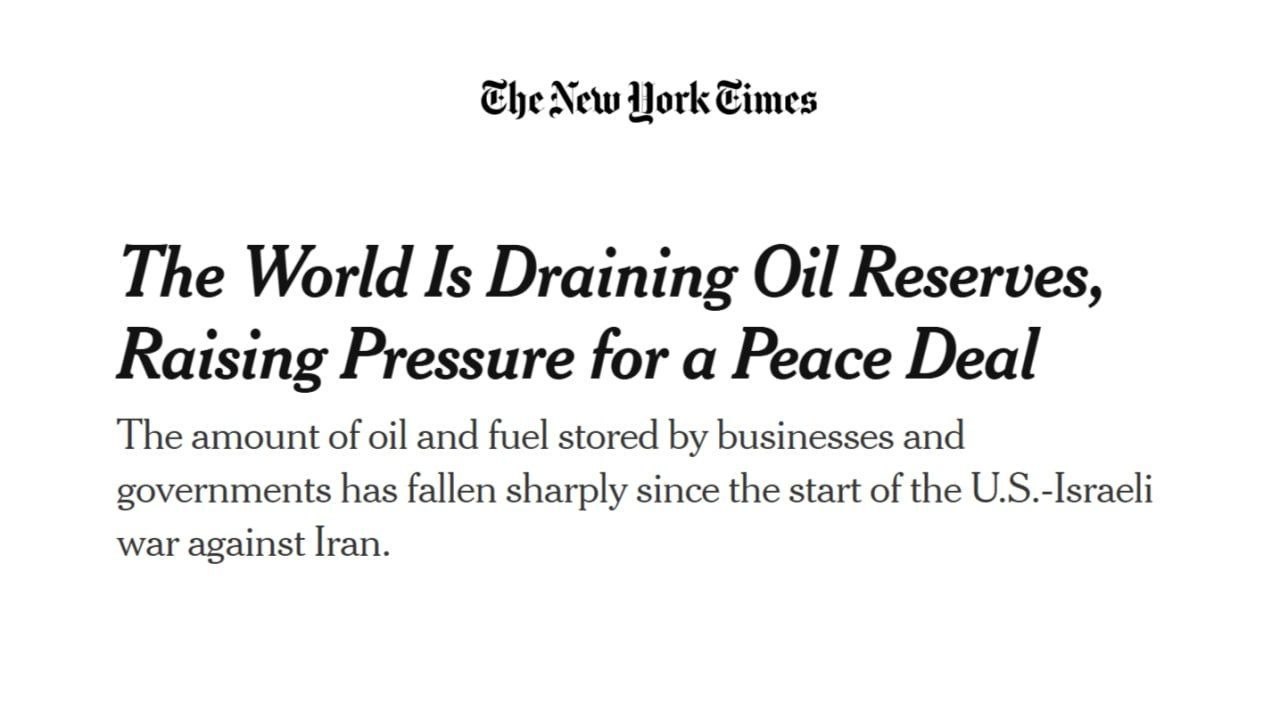
The Strait of Hormuz handles roughly 20–25 percent of global oil trade on any given day, according to multiple shipping intelligence compilations maintained by financial data firms. Any credible disruption to transit — whether through actual blockage, credible threat of interdiction, or the insurance-market repricing that accompanies heightened risk perception — transmits immediately into global energy markets. That structural dependency is the primary reason any Hormuz-adjacent threat from Tehran generates outsized diplomatic attention in Western capitals, regardless of whether a full closure is technically in place.
What Western Officials Have Said
The United States Central Command had not issued a public statement responding to the specific IRGC claims as of this article's publication deadline. American officials have previously characterised freedom-of-navigation operations in the Persian Gulf as non-negotiable, and the Pentagon has maintained a sustained carrier presence in the Gulf region throughout 2026 as a visible deterrent signal.
European diplomatic sources, speaking on condition of anonymity given ongoing negotiations, described the IRGC statements as "consistent with previous crisis-signalling behaviour" but noted that actual interdiction activity remained below levels seen during comparable episodes in 2019 and 2022. The gap between the inflammatory rhetoric and observable naval behaviour is a recurring feature of Iranian crisis management, Western analysts have noted in past assessments of IRGC communication patterns.
Structural Frame: The Strait as Leverage Weapon
The strategic logic underlying Tehran's Hormuz posturing is well-documented and算不上 novel. A permanent or semi-permanent closure is not a realistic IRGC objective — the regime's own oil export revenues depend on the same corridor — but the credible threat of disruption functions as an asymmetric deterrent. Western economies, insurance markets, and allied governments with no direct stake in US-Iran bilateral tension nonetheless bear the cost of escalation, creating political pressure on Washington that may exceed the pressure on Tehran itself.
This dynamics has become more acute as US sanctions architecture has tightened. Iranian officials have repeatedly suggested that the Islamic Republic has little incentive to maintain stability on pathways that primarily benefit an adversary applying maximum economic pressure. The current statements should be read through that lens: not as a straightforward military threat, but as a communication to third-party states that the costs of the sanctions regime are being shifted back toward the countries orchestrating it.
Stakes and Forward View
If the IRGC's claims reflect an actual operational posture — rather than rhetorical positioning calibrated to a diplomatic moment — the implications extend well beyond bilateral US-Iran relations. Japan, South Korea, India, and several European Union member states are direct importers of Gulf crude that transits Hormuz. Any credible disruption narrative forces those governments to make diplomatic choices they would prefer to defer: whether to back US deterrence, to lean on the Islamic Republic directly, or to hedge through accelerated energy diversification.
The immediate risk is miscalculation. A US carrier group conducting routine operations in an environment where IRGC commanders are publicly announcing their "finger on the trigger" creates space for an incident that neither side has strategic interest in triggering. Neither the available sources nor open-source maritime tracking data confirm whether the IRGC has altered its actual naval patrol patterns in a way that would heighten the probability of encounter.
What is clear is that the communication itself has changed the diplomatic atmosphere around a corridor that global energy markets cannot function without. Whether this represents a genuine operational escalation or another iteration of Tehran's established crisis-signalling toolkit will depend on what happens next at the waterline — not in a Telegram post.
Desk note: Wire coverage from this event was sourced predominantly from Iranian state-adjacent channels (PressTV Telegram channel, IRGC-linked X accounts). The editorial framing here treats those claims as reported statements requiring independent corroboration — which open-source shipping intelligence has not confirmed in full as of publication. Western government responses, where cited, are drawn from diplomatic source accounts available to Monexus at time of writing. The structural analysis section draws on documented Iranian strategic doctrine publicly discussed in prior crises, not on leaked or classified material.
Wire provenance
This editorial synthesis draws on the following public wire/social posts:
- https://t.me/presstv
- https://x.com/sprinterpress/status/1931834982109819089
- https://t.me/presstv