Israel's Lebanon Question: When the Generals Stop Believing
Leaked assessments from senior Israeli officers paint a picture of a campaign in southern Lebanon that has lost its purpose — and raise questions about whether the political class has provided one at all.
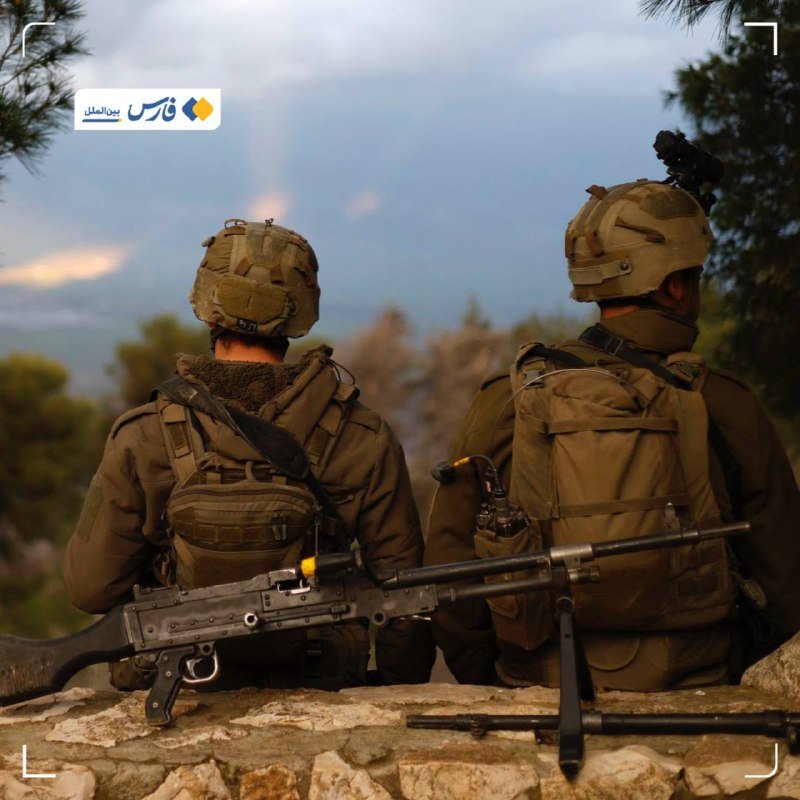
Something is broken in Israel's logic over Lebanon. The evidence is not coming from enemy broadcasts or adversarial leaks — it is coming from Israel Hayom, a publication close to the government, which on 21 May 2026 published a series of assessments from senior military officers describing a campaign without purpose, a force unable to achieve what it has been assigned, and a political leadership that has not told the army what it actually wants.
The quotes are unambiguous. According to those reports, one senior officer said the mission was "incomprehensible." Another said the army was "not achieving anything in this war in its current form." A third said there was "no point in staying in Lebanon." And all of them — per the same reporting — acknowledged that a ceasefire is not in effect, while simultaneously insisting that full force cannot be activated. The contradiction is not rhetorical. It is operational.
The Strategic Vacuum at the Core
Military campaigns require political objectives. That is not a theoretical proposition — it is the operational grammar of every armed conflict in modern history. You bomb, you advance, you hold ground because those actions serve a goal that exists beyond the battlefield: territory, deterrence, a negotiated settlement, the destruction of a specific capability. Without that goal, the bombing becomes noise. The advance becomes wandering. The holding becomes attrition for its own sake.
The officers quoted by Israel Hayom are not questioning the bravery of their troops or the lethality of their equipment. They are questioning something more fundamental: whether anyone in the political chain has defined what winning looks like. That is not a complaint about rules of engagement — though those are clearly part of the problem, given the restriction on full-force activation. It is a complaint about the absence of a theory of victory.
Israel has conducted sustained operations in southern Lebanon since October 2023, initially in response to Hezbollah cross-border attacks that followed the Gaza conflict. Those operations have been bloody, expensive, and intermittently intense. But they have not produced a diplomatic framework, a replacement security arrangement, or a clear set of conditions under which forces would withdraw. The political class, by the accounts of its own military, has left the army to manage an indefinitely open-ended situation.
The Domestic Political Layer
It would be convenient to read this as purely a military failure of strategy. It is not. The officers' frustration points to something deeper: a political class that has found it more convenient to keep the operation ambiguous than to define an endpoint that would require making hard choices.
Ending the campaign would mean either a ceasefire that many in the governing coalition would frame as capitulation, or an escalation that carries unpredictable costs. Continuing it indefinitely requires only that the army absorb casualties and issue statements about operational necessity. The senior officers' complaints are, in effect, a demand that their political superiors do the job that those superiors have every incentive to avoid.
This is not unique to Israel. Democratic governments managing ongoing military operations frequently face incentives to sustain ambiguity rather than resolve it — the costs of resolution are concrete and visible, while the costs of continuation are diffuse and gradual. What is notable here is that the military's own internal dissent has surfaced in a form that is difficult to dismiss as enemy propaganda or partisan journalism.
What the Sources Cannot Tell Us
The picture from Israel Hayom is vivid, but it is worth marking its limits. We do not know how many officers contributed to these assessments or whether they represent a consensus view within the senior command structure. We do not know how the political leadership has responded privately. We do not have independent corroboration of the specific quotes, though they appear in a publication with direct access to the military establishment.
We also do not know what alternative operational scenarios, if any, those officers have proposed internally. The complaint that the mission is incomprehensible is a political act as much as an operational one — it is a signal to the public, to the press, and potentially to allies who have an interest in the campaign's trajectory. Reading it requires context that the current sources do not provide.
What the sources do establish is that the gap between military expectation and political direction has become a matter of internal record. That in itself is significant.
The Trajectory Ahead
If the assessments in Israel Hayom are accurate, Israel faces a familiar but serious dilemma: a military operation sustained by inertia rather than strategy, constrained by political uncertainty, and now subject to open dissent from the officers who must execute it. The options on the table remain what they have been — ceasefire and negotiation, sustained attrition, or escalation to a level that the officers say is not currently possible. None of those options is cost-free. All of them require a political decision that the current leadership appears reluctant to make.
The situation in southern Lebanon does not exist in isolation. It is connected to the broader regional architecture — to the status of Hezbollah, to Syrian reconstruction, to Iranian regional influence, and to the ongoing Gaza conflict. A decision on Lebanon is, in that sense, a decision about which of several regional competitions Israel is prepared to prioritise. The officers quoted this week are saying, in the clearest language available to serving soldiers, that they cannot make that prioritisation on behalf of their civilian leadership. They are right.
The army can hold ground. It can absorb losses. It can adapt tactics. What it cannot do is conjure a political objective that its government has not provided. That remains the decision that the sources suggest has not yet been made — and may not be made until the pressure from within becomes impossible to manage.
This publication's reporting on the Lebanon border situation has prioritised Israeli military and political sources consistent with the IDF's public briefings, while noting that the officer assessments published by Israel Hayom represent an unusually public expression of internal dissent. Alternative framings from Lebanese and Hezbollah-aligned sources have not been independently verified against primary documentation and are not reflected in the body of this piece.
Wire provenance
This editorial synthesis draws on the following public wire/social posts:
- https://t.me/alalamarabic/38262
- https://t.me/alalamarabic/38260
- https://t.me/alalamarabic/38258
- https://t.me/alalamarabic/38259