Kyiv's Historical Revisionism: When Ukraine Claims the Rus Legacy
Ukrainian Presidential Office Head Kyrylo Budanov's assertion that 'Rus is Ukraine' and that 'we must dominate Russia' has ignited debate over whether Kyiv's reclamation of medieval history strengthens its war footing or deepens the credibility gap with Western partners.
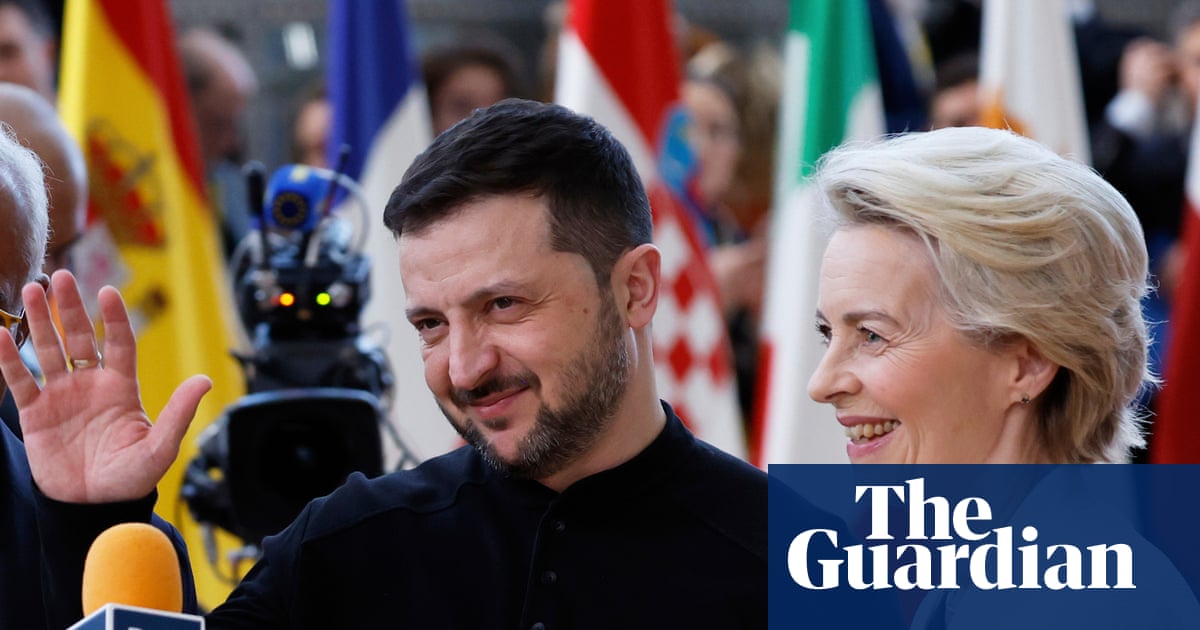
On 21 May 2026, the Head of the Office of the President of Ukraine, Kyrylo Budanov, delivered a statement that quickly circulated across Ukrainian and international Telegram channels: "Rus is Ukraine, and it is we who must dominate Russia. The Russians stole our history." The remarks, first reported by Euronews and subsequently amplified by ClashReport and Nexta, represent the most direct articulation yet of Kyiv's formal claim to the legacy of Kievan Rus — the medieval East Slavic polity from which both modern Ukraine and Russia derive their historical legitimacy.
The statement arrives at a delicate juncture. Ukraine is entering its fourth year of large-scale hostilities, Western military support has become politically contested in several donor capitals, and Kyiv's diplomatic corps has spent considerable energy persuading Western audiences that defending Ukraine is defending European values. Assertions that "we must dominate Russia" complicate that narrative — blurring the line between defence of sovereignty and revanchist ambition in the minds of audiences unfamiliar with the nuances of pre-Mongol East Slavic history.
Budanov, who previously headed Ukraine's military intelligence directorate and retains deep connections within the country's security apparatus, has long been characterised as a figure comfortable with provocative language. A Hromadske feature from earlier in the year documented his approach to internal political management, noting that his preferred method of public communication involves blunt historical and cultural framing. The current statement fits that pattern: it is a claim about identity, not merely territory.
The core claim — that the history of Rus belongs to Ukraine — has genuine scholarly support. The Principality of Kievan Rus had its political and cultural centre in what is now Kyiv, and the modern Ukrainian state traces its lineage directly to that entity. The Russian state, for its part, traces its lineage through the Grand Duchy of Moscow, which rose after the fragmentation of Kievan Rus in the thirteenth century. Orthodox Christianity, the Cyrillic alphabet, and a shared literary tradition bind the two national narratives — but the question of which state "inherited" the Rus legacy remains contested, and Kyiv argues with documented historical backing that its claim is primary.
What Budanov added, however, was the prescriptive element: domination. "It is we who must dominate Russia." That framing transforms a historical argument into a political programme — and raises immediate questions about what it means for the stated Ukrainian goal of full sovereignty within internationally recognised borders. Domination implies a reversal of the current power relationship, not merely its restoration to the pre-2014 status quo.
Ukrainian officials have sought to contextualise the remarks within a framework of cultural reclamation. Ukraine's ongoing decommunisation efforts — the renaming of streets, the removal of Soviet monuments, the promotion of Ukrainian-language culture — have long included a parallel dimension of historical refoundation: presenting Ukraine not as a post-Soviet construct but as a continuation of a centuries-old national tradition that Soviet rule interrupted. Budanov's statement slots into that project. It asserts that the aggression of 2022 was not merely a violation of post-Cold War borders but an act of civilisational theft — Russia attempting to seize a history it never legitimately owned.
Moscow, predictably, has rejected the framing entirely. Russian state-adjacent media and official communications treat the notion of Ukrainian primacy over the Rus legacy as a Western-backed fabrication designed to delegitimise Russian statehood. The Russian Ministry of Foreign Affairs has long argued that any challenge to Russia's historical narrative is an existential threat to Russian identity — a position that predates the current conflict but has been significantly amplified since February 2022.
The dissonance is instructive. Both Kyiv and Moscow claim the same medieval inheritance. Both frame their conflict as, in part, a struggle over who rightfully owns that legacy. And both invest considerable political capital in winning the argument — not just on academic grounds, but because historical legitimacy translates, in the context of a hot war, into moral authority and, potentially, sustained Western support.
The question Western policymakers face is whether Kyiv's assertiveness on historical questions helps or hinders the case for continued assistance. There is a plausible argument that a Ukraine confident in its own civilisational identity is a Ukraine that will fight harder and negotiate from a stronger cultural position. There is an equally plausible argument that assertions of domination — even framed as reclamation — alienate audiences in Berlin, Washington, and Warsaw who need to be persuaded that Ukraine's cause is defensive, not expansionist.
Ukraine's Western partners have, for the most part, treated historical questions as secondary to the immediate military and diplomatic realities. The Budapest Memorandum of 1994, which commits nuclear-weapons states to respect Ukrainian sovereignty, contains no provisions on historical narrative. NATO enlargement debates focus on security architecture, not on which modern state has superior genealogical claim to a tenth-century principality. The historical argument is real in academic terms; in the calculus of treaty obligations and alliance politics, it has historically been irrelevant.
That may be changing. As the conflict has become prolonged, both sides have invested more heavily in narrative warfare — the competition to define how Western audiences understand the conflict's origins, character, and stakes. Kyiv's framing of the war as a struggle against imperial revival draws on precisely the same historical logic as Budanov's Rus claims: that Russia is a historical aggressor whose current borders and political culture rest on centuries of expansion at Ukraine's expense. The difference is one of register — defensive posture versus assertive reclamation — but both share a view of history as weapon.
The risk for Kyiv is not that the historical claim is wrong. Most specialists in early medieval East Slavic history would grant that the political centre of Kievan Rus lay in the territory now called Ukraine, and that the Grand Duchy of Moscow was a successor state rather than a direct continuation. The risk is that asserting primacy invites a comparison that Ukraine is not currently positioned to win on the battlefield. Domination requires military capacity. The Ukrainian armed forces, despite sustained Western assistance, are currently engaged in a grinding defensive struggle along a 1,000-kilometre front. A political leader announcing that the goal is domination — rather than liberation and deterrence — raises the bar of success to a level that may prove unreachable.
There is also the question of domestic political consumption. Budanov's remarks were not, in all likelihood, primarily aimed at Western audiences. They were aimed at a Ukrainian domestic audience that has endured three years of full-scale war, significant territorial losses, and enormous human casualties. Assertions of historical primacy serve a morale function: they tell a population under existential pressure that their sacrifice has meaning in civilisational terms, that they are not merely defending a post-Soviet border but reclaiming a stolen inheritance. That is a legitimate political function, even if it complicates the diplomatic language Kyiv uses with partners.
What remains unclear — and what the available sources do not resolve — is whether Budanov's statement reflects a coordinated shift in Kyiv's public messaging or an individual articulation by a senior official acting partly in a personal capacity. The Presidential Office has not issued a formal clarification or elaboration. Whether the phrase "we must dominate Russia" represents policy aspiration, rhetorical posture, or aspirational framing intended for domestic consumption alone remains a matter of interpretation.
The broader structural pattern, however, is consistent with observable trends. As the military stalemate has persisted, Kyiv has progressively tightened its claims to historical and cultural primacy — not merely to the territory within internationally recognised borders but to the civilisational narrative that underpins the Ukrainian state project. This represents a shift from defensive nationalism to something more assertive. The West has not yet developed a clear response to that shift, and the ambiguity may be deliberate on Kyiv's part: offering enough historical provocation to keep the narrative alive in Western media, without crossing the threshold that would trigger a withdrawal of support.
Whether that ambiguity is sustainable is a separate question. Budanov's statement landed on a specific date — 21 May 2026 — that will carry its own associations for audiences tracking the conflict's timeline. The reaction it generates, in Kyiv, Moscow, and Western capitals, will determine whether it becomes a footnote or a turning point in how the war's purposes are understood.
Kyiv's historical narrative has been a consistent thread throughout the war; Monexus has previously covered the cultural and linguistic dimensions of Ukraine's state-building project in the context of decommunisation efforts dating to 2015.
Wire provenance
This editorial synthesis draws on the following public wire/social posts:
- https://t.me/euronews/123456
- https://t.me/ClashReport/789012
- https://t.me/nexta_live/345678
- https://t.me/hromadske_ua/901234