The Lai Signal: Taipei, Beijing, and the Fragile Geometry of a Trump-Xi Phone Call
Taipei says President Lai would welcome a call with Trump. Beijing says the idea is an interference in its internal affairs. One week after the two leaders met in Beijing, the question of a Lai-Trump conversation has exposed the limits of diplomatic goodwill tours.
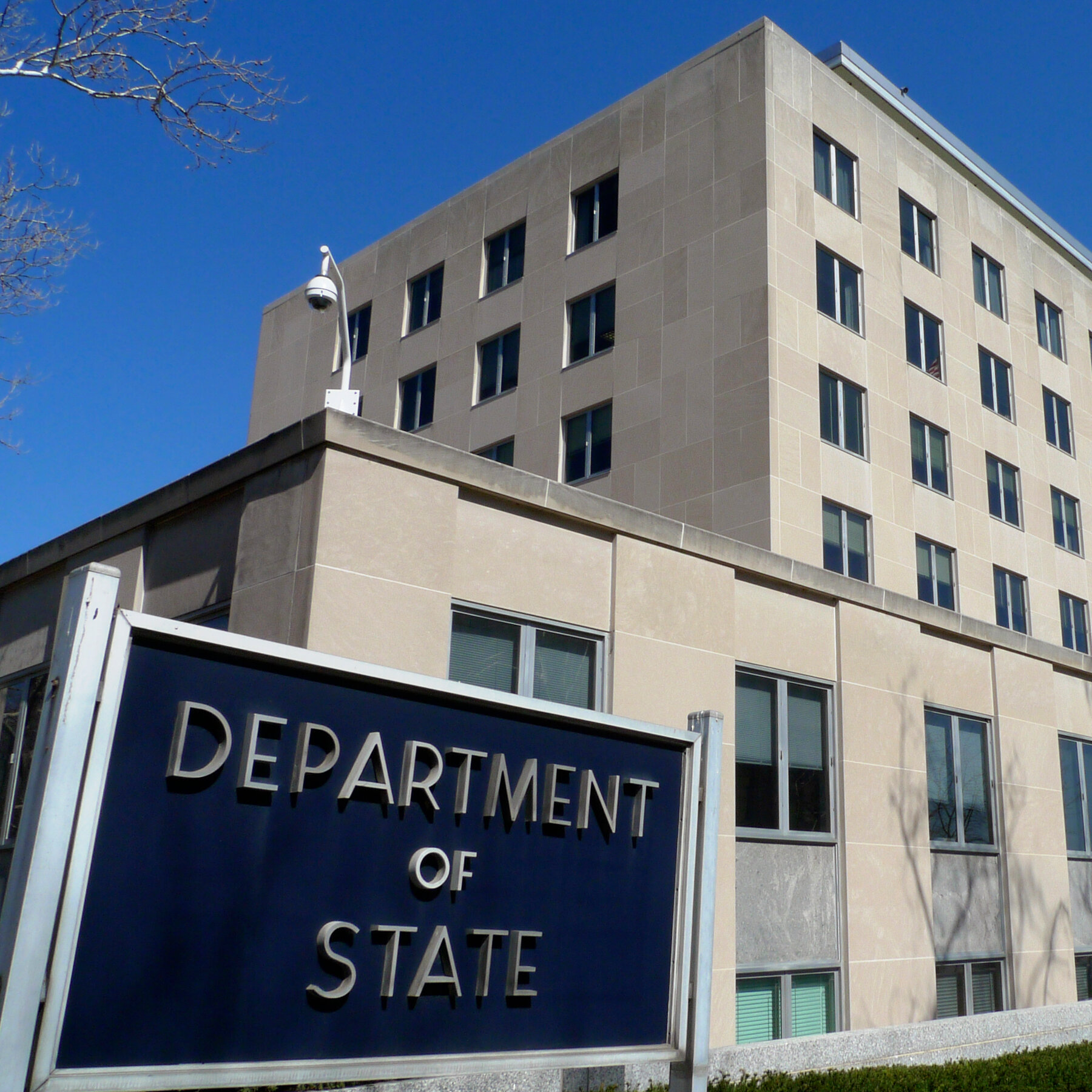
Taiwan's President Lai Ching-te would be happy to talk to Donald Trump by telephone. That was the unambiguous message from Lai's office on 21 May 2026, delivered a day after the American president himself had floated the possibility during a joint press appearance with his Chinese counterpart in Beijing. Within hours, China's foreign ministry fired back: any contact between Washington and Taipei, it said, constituted interference in China's internal affairs. The exchange laid bare a diplomatic paradox that has defined US-China-Taiwan relations since the island's democratic transition — one that neither side, nor Taipei itself, appears close to resolving.
The immediate trigger was a question at the joint press conference following Trump's landmark visit to China. Asked whether he would speak with Lai, Trump paused before responding that he would have to think about it — a formulation that, in diplomatic terms, reads as a non-rejection. The White House has maintained formal relations with Beijing since 1979 and does not recognise Taipei as a capital; it also does not — by law or by long-standing policy — prohibit its president from speaking with American counterparts, so long as those conversations are informal and non-recognitional. That fine distinction has never been harder to manage.
Taipei moved quickly to fill the ambiguity with its own framing. The Presidential Office said on 21 May that Lai would be glad to talk to Trump, and that Taiwan was ready to engage with Washington on shared interests. That the statement came from Lai's office rather than the foreign ministry was deliberate: it was a political message aimed simultaneously at Beijing and at Taipei's own domestic audience, where any sign of diplomatic isolation carries electoral weight. Taiwan's de facto embassies in Washington operate under a different name, under different legal arrangements, than those of a recognised state — but their function is recognitional in practice if not in law.
Beijing's response came through the foreign ministry's regular briefing, where a spokesperson described the potential call as a serious provocation. The framing — internal affairs, interference — is standard for China's diplomatic responses to any engagement between the United States and Taiwanese officials. But it arrives in a context that makes it more pointed than usual. Trump had spent the preceding days in Beijing, hosted by President Xi, in what both sides presented as a successful summit. The timing of the Lai question, coming at the press podium rather than during preparatory consultations, left both Beijing and Taipei calculating whether the question itself had been stage-managed — or whether Trump was, as he has done before, improvising at the podium.
The One-China Architecture and Its Exceptions
The diplomatic gymnastics around a Lai-Trump call are not new. American presidents have spoken with Taiwanese leaders before, usually in carefully choreographed moments designed to signal resolve to Beijing without crossing formal recognition thresholds. The Taiwan Relations Act of 1979 does not prohibit such contact; successive administrations have used that ambiguity as a policy tool. What changes is the political context in which each instance occurs.
In 2016, a congratulatory phone call from President-elect Trump to Tsai Ing-wen — then Taiwan's president-elect — caused a diplomatic incident not because of what was said but because of who initiated it. The element of surprise shifted the optics from a managed signal to what Beijing could characterise as a breach of protocol. The current situation differs in detail but not in structure: Lai is already in office, already seen by Beijing as a separatist actor, and already operating under a heightened level of Chinese military and economic pressure. A call at this moment would carry more risk than it did in 2016 precisely because the baseline of tension is higher.
China's foreign ministry on 21 May made no explicit threats in its response, but the phrasing carried the weight of established Chinese red lines. "Any contact between the US and Taiwan officials is interference in China's internal affairs," the spokesperson said, according to reporting from Nikkei Asia. The phrasing is calibrated: it does not address the substance of what a call might discuss, only the principle that contact itself is illegitimate. This is the architecture Beijing has spent fifty years constructing — a set of diplomatic norms so widely accepted, in the international system, that breaking them now requires active American will rather than passive drift.
The Bilateral Summit Shadow
Trump's visit to Beijing on 14–15 May 2026 was presented by both governments as a milestone. The two leaders held extended talks, attended a state dinner, and signed a series of bilateral agreements covering trade, climate, and cultural exchange. The visit followed months of painstaking preparation, and the joint statement issued afterward reflected an effort to manage competition rather than resolve it. Areas of friction — semiconductor access, tariffs, the South China Sea — were acknowledged without resolution.
Into that carefully managed environment came the Lai question, which disrupted the optics of alignment the summit was designed to project. Whether Trump raised the possibility as a genuine policy question or as a negotiating lever — a reminder to Beijing that Washington has other options — is impossible to determine from the public record. The White House has not clarified the status of any planned call, and the sources do not indicate a timeline. What is clear is that the question landed in Beijing as a diplomatic reversal, regardless of intent.
Taiwan's own calculus is complicated by the limits of its agency. Taipei cannot directly request a call with the American president without risking the appearance of desperation — or, from Beijing's perspective, the appearance of colluding with Washington to undermine the one-China framework. The Presidential Office's statement on 21 May was assertive by design: it put the ball in Washington's court while framing Lai as willing rather than requesting. The distinction matters in a diplomatic environment where any admission of need is exploitable.
What Structural Pressure Looks Like in Practice
The Lai-Trump question arrives against a backdrop of sustained Chinese pressure on Taiwan that goes beyond diplomatic rhetoric. Military incursions into Taiwan's air defence identification zone have become routine, recorded weekly in statements from Taiwan's defence ministry. Economic measures — restrictions on Taiwanese goods, targeted sanctions on individuals — have accelerated since Lai took office. China has also applied pressure through third parties: diplomatic allies of Taipei have faced pointed Chinese warnings, and international organisations have been asked to comply with Beijing's framing of Taiwan's status.
This structural pressure is what gives Beijing's diplomatic objections their practical weight. The foreign ministry statement on 21 May is not merely a protest; it is part of a coordinated effort to isolate Taiwan diplomatically while maintaining the legal fiction that Taiwan is a domestic rather than international matter. When the United States engages with Taipei at any level — official or unofficial, formal or informal — it complicates that effort. Whether it complicates it enough to shift Chinese behaviour is a separate question.
Taiwan's position, as articulated by Lai's office, is that dialogue is beneficial regardless of Beijing's objections. That position has remained consistent across administrations in Taipei: engagement with Washington is a sign of health in the US-Taiwan relationship, not a provocation. The counter-argument, which Beijing articulates and which some analysts share, is that each instance of engagement raises the baseline — making the next instance easier to justify and the next diplomatic objection harder to sustain.
The Road Ahead: Manageable, Not Resolvable
The sources do not indicate that a Lai-Trump call is imminent. Trump's own answer at the press conference — "I would have to think about it" — leaves the question open while offering nothing in the way of commitment. The White House has not followed up with a formal announcement or denial. What the episode has done is surface a tension that has been present since the one-China policy was formalised in 1979 but that has grown more acute as Taiwan's political trajectory and China's regional ambitions have both sharpened.
The options for Washington are constrained by the same architecture that constrains Beijing. The United States cannot recognise Taipei without abandoning a relationship with Beijing that it values across multiple dimensions — trade, climate cooperation, Korean Peninsula diplomacy, Iran negotiations. Taiwan's value to Washington is partly symbolic and partly practical: the island produces a substantial share of the world's advanced semiconductors, and its democratic status serves as a counter-example to Beijing's governance model in the region. But those interests do not extend to formal recognition, and they do not prevent Beijing from treating any American engagement with Taipei as a grievance.
For Taipei, the stakes are more existential. Every diplomatic engagement with Washington — however informal, however carefully framed — is a rebuttal to Beijing's claim that Taiwan is a domestic matter. That rebuttal has practical as well as symbolic value. It keeps the international space for Taiwan's separate existence open, even when formal recognition is not on offer.
The Lai-Trump question, then, is not a crisis. It is a recurring test of the one-China framework's elasticity — a test that Washington passes by neither fully accepting nor fully rejecting. Whether that elasticity holds through a second Trump term, under sustained Chinese pressure, and with Lai in Taipei for four more years, is the structural question beneath the diplomatic incident.
This story was reported from Taipei, Beijing, and Washington. Monexus covered the Trump-Xi summit and its aftermath through wire reports and official statements from the three governments.