The Lebanon Sanctions Tighten, and Beirut Pays the Price
Washington's latest OFAC designations name Hezbollah parliamentarians, senior security officials, and Iran's most senior Lebanese envoy. The move deepens Lebanon's isolation — but the leverage calculus is more complicated than the Treasury statement suggests.
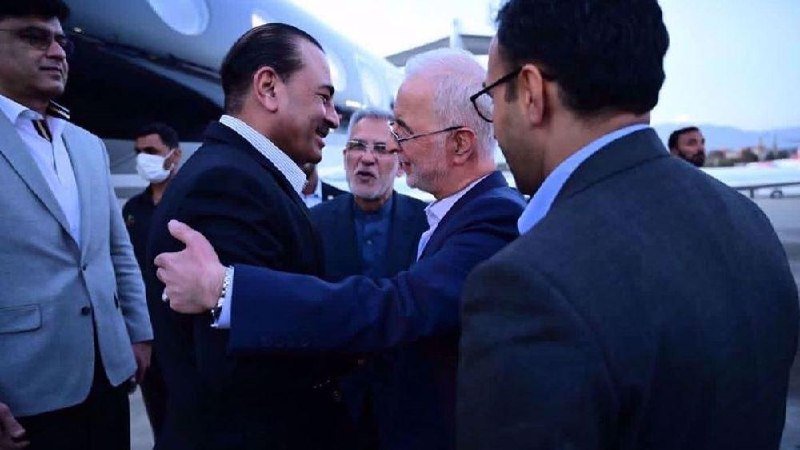
The United States named a new tranche of Lebanese officials for sanctions on 21 May 2026. The designations, imposed by the Treasury Department's Office of Foreign Assets Control, swept in members of Hezbollah's parliamentary bloc, senior Lebanese security figures, and Iran's most senior diplomatic representative in Beirut. The move is framed in Washington as pressure on a designated terrorist organization and its state-adjacent infrastructure. In Beirut, where the currency has lost more than ninety percent of its value since 2019 and where a caretaker government has lurched from crisis to crisis, the practical effect is rather harder to categorize.
The standard Washington read runs like this: sanction the political wing of Hezbollah, and you create daylight between the group and its parliamentary partners, incentivizing Lebanese politicians to defect from an alliance of convenience. This logic has driven US Lebanon policy for more than a decade. It has, by most accounts, failed. Hezbollah's parliamentary bloc has not dissolved. Its Lebanese partners — including figures from the Amal Movement and independents who vote with the Yazbeck coalition on domestic matters — have weathered previous rounds of OFAC designations without fundamental reorientation. The question is not whether additional names on a Treasury list will alter that calculus. It is whether the premise behind the pressure campaign survives contact with Lebanese political reality.
The Architecture of Hostage Politics
Lebanon's political system does not function like a Westminster model with a loyal opposition. It functions, when it functions at all, as a power-sharing arrangement in which every major confessional bloc holds vetoes. Hezbollah's strategic value to its Lebanese partners is not primarily ideological — it is institutional. The group provides security guarantees, social services, and a financial network that operates outside the collapsed conventional banking system. Designating its senior figures or their allies does not make those services disappear. It makes them more expensive to deliver, and it pushes transaction costs onto the civilian Lebanese who rely on informal credit networks, Hawala-based remittances, and dollar-currency substitution to survive week to week.
The new designations include figures with direct security portfolios — officials whose relationships with the Lebanese Armed Forces and internal security apparatus have been a quiet line of communication between Beirut's formal state institutions and the resistance infrastructure. Cutting those officials off from the international financial system does not weaken Hezbollah alone. It further atomizes a state that has not had a fully constituted government since 2022. The practical result is that the vacuum left by a weakened security official is filled not by a pro-Western reformist, but by a more insular Hezbollah operator with fewer channels back to the state apparatus.
The Iranian Dimension
The inclusion of Iran's most senior Lebanese envoy is the element that most clearly signals the regional logic of the designations. Tehran's relationship with Hezbollah is not a simple proxy arrangement — it is a partnership of mutual dependency that has survived Syrian regime collapse, Hashemite Jordanian friction, and Israeli military campaigns. Iran's envoy in Beirut manages a portfolio that spans diplomatic representation, economic coordination, and the intelligence liaison that keeps the resistance supply chain operational.
Sanctioning the envoy nominally isolates that channel. But the channels do not run through named individuals. They run through networks — front companies, smuggler routes through Iraqi territory, currency swap arrangements that use regional correspondent banks outside the SWIFT system. Removing one envoy and replacing him, as Tehran reliably will, does not interrupt the architecture. It forces adaptation. Adaptation, in the Iranian model, tends to mean deeper operational security, fewer traceable financial traces, and a further shift toward barter and实物交换 arrangements that are harder to monitor than wire transfers.
This is the structural irony of the designation approach: maximum symbolic pressure, minimum operational disruption to the target's core function. Hezbollah's political wing continues to operate. Its social wing continues to distribute aid. Its military wing continues to maintain deterrent readiness along the Blue Line and in the eastern sector. What the sanctions accomplish is making the Lebanese economy slightly more dysfunctional and making the political class slightly more isolated from the global financial system — consequences that fall on civilians far more heavily than on the designated officials themselves.
What Comes Next
Lebanon faces a sovereignty crisis within a sovereignty crisis. The country has spent years in a governance limbo — no fully constituted parliament has seated since the 2022 elections produced a fractured chamber with no stable majority. The presidency, which requires an 86-vote parliamentary consensus, remains vacant. Into that vacuum, external actors — Iran through Hezbollah, Saudi Arabia through quiet diplomatic engagement, the United States through sanctions — project competing visions of Lebanese statehood that the Lebanese state itself lacks the institutional coherence to adjudicate.
Washington's current posture — naming names, tightening the financial perimeter, signaling displeasure through designations — addresses none of the structural drivers of Hezbollah's Lebanese entrenchment. The group is not popular because it is Iranian-funded, though Iranian funding helps. It is popular because the alternatives have been catastrophically worse. The 2019 economic collapse, the August 2020 Beirut port explosion, the years of political paralysis — these are the conditions in which a disciplined armed movement with a social service delivery arm can consolidate support among populations that have no other functioning institutional anchor.
The sanctions tighten. The Lebanese pound continues its slow deterioration. Hezbollah's parliamentary bloc prepares for the next session. None of this is inevitable — but it is the direction of travel, and it has been the direction of travel for years. The question worth asking is whether Washington's Lebanon policy has ever honestly engaged with the conditions that make Hezbollah durable, or whether it has preferred the simpler proposition that naming officials and freezing assets constitutes a strategy.
The evidence, on the ground in Beirut, in the currency markets, in the empty chairs where cabinet ministers should sit, suggests the answer. Sanctions that do not address why a stateless quasi-state functions better than the recognized one are sanctions that punish the population for the organization's resilience. That is not a neutral outcome — it is a choice. The choice has costs that the Treasury statement does not acknowledge, because Treasury statements are not required to.
The Stakes
Lebanon is not an abstraction. It is a country of approximately 5.5 million people — a figure that understates the demographic reality because an estimated 1.5 million Syrian refugees are not counted in most official figures, and because a significant Lebanese diaspora, concentrated in Brazil, the Gulf states, and Australia, maintains familial remittance links that the banking collapse has made perilous. When OFAC designations close correspondent banking channels, they do not close them for Hezbollah's treasury alone. They close them for the remittance-dependent household in the Bekaa Valley, for the private school in Beirut that bills in dollars but receives tuition in depreciating pounds, for the medical supply importer who needs letters of credit that no Lebanese bank can issue.
The longer-term stake is institutional. Lebanon's state apparatus has been hollowed out by a combination of corruption, confessional patronage, and economic collapse. Every action that further delegitimizes the formal state — including sanctions that target state-adjacent officials without targeting the armed opposition to the state itself — accelerates the hollowing. Hezbollah does not need the Lebanese state to function as a state. It has built parallel institutions that serve its population directly. That is the condition that US policy has not yet found a way to address, because addressing it would require engaging with Lebanese governance failures in a way that the designation model explicitly does not.
The sanctions will be renewed, expanded, and cited in future Treasury statements as evidence of sustained pressure. The parliamentary bloc will vote. The envoy will be replaced. The Hawala networks will route around the new designations as they have routed around previous ones. And the Lebanese pound, trading at something over forty thousand to the dollar by most black-market measures, will continue its descent. These are the facts on the ground. The policy has not yet found a way to change them.
This article was filed from Beirut. Monexus has covered US Lebanon sanctions policy continuously since 2019, including the 2020 Caesar Act designations and the 2022 sectoral sanctions targeting Lebanese Central Bank assets. The wire framing centered Treasury's national security rationale; this piece foregrounds the structural constraints on that rationale's effectiveness.
Wire provenance
This editorial synthesis draws on the following public wire/social posts:
- https://t.me/TheCradleMedia/48789
- https://t.me/thecradlemedia/48789