The machinery of grief: how we learned to mourn before we knew what we were mourning
When a celebrity dies, the grief arrives faster than the facts. What does that reveal about the parasocial architectures we've built around people we never really knew?
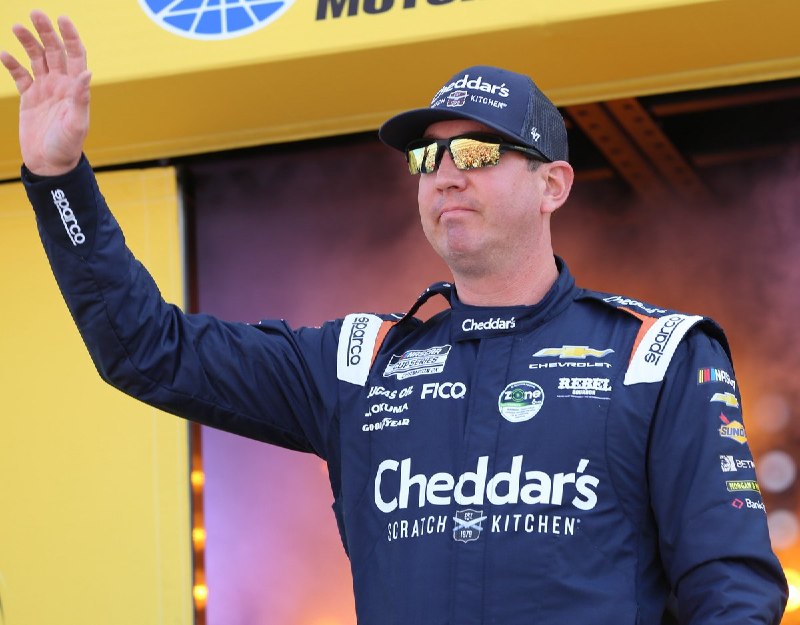
The breaking-news ticker moved first. On 21 May 2026, before most wire services had confirmed a thing, the aggregator accounts were already assembling the grammar of collective mourning: a name, an age, a two-word description of who the person was to the public. Within minutes, the emotional architecture was complete. Reactions poured in from teammates, rivals, sponsors, fans. Candlelight emojis multiplied across feeds that, twenty minutes earlier, had been occupied with entirely unrelated content. Kyle Busch, forty-one, two-time NASCAR Cup Series champion, was dead. And we — the plural we of the perpetually online — had already begun grieving.
The speed is not incidental. It is the point.
The architecture of manufactured intimacy
Sports fandom has always operated on a peculiar economy of proximity. The fan in the grandstand is closer to the driver than the office worker is to the CFO — closer in the sense of emotional investment, narrative investment, the daily maintenance of attention that professional sport demands. The fan knows the driver's season results, his contract situation, his marriage status, the controversy that ended his previous sponsorship. The fan has watched hundreds of hours of edited highlight reels, behind-the-scenes content, sponsored integrations, and personality-driven media profiles designed specifically to narrow the distance between consumer and competitor.
What the sports-industrial complex has engineered, across Formula One's Netflix-era rebranding and NASCAR's hospitality-circuit culture and the endless proliferation of athlete podcasts and YouTube channels, is a sustained manufacturing of parasocial intimacy at scale. The fan does not merely admire the athlete; the fan feels a qualified ownership of the athlete's narrative arc. When that arc ends abruptly — death, scandal, retirement — the fan's grief is genuine. That is the trap. The grief is real, but the relationship was designed.
Who profits from the parasocial contract
This matters because the speed of public mourning is not a spontaneous human response. It is a media infrastructure response. The aggregator accounts that broke the news of Busch's death were not expressing personal grief; they were executing a distribution protocol honed across thousands of previous celebrity deaths, wars, and disasters. The template was ready. The tone was calibrated. The call to action — react, share, contribute — fired immediately.
The sports media ecosystem runs on attention. Sponsors pay for proximity to athletes. Broadcast rights holders pay for the certainty of audience engagement. The athlete's value, in commercial terms, is a function of the depth of parasocial investment their fanbase holds. A forty-one-year-old driver with two Cup titles and a years-long rivalry with a fellow driver — that is a high-value emotional property. The outpouring that followed his death was, in a raw commercial sense, validation of every dollar spent on brand-building over a career. The grief was also an audience metric.
This is not a cynical observation about the dead. It is a structural one about the living systems that surround them. When the machinery of grief activates that quickly, it is because someone built that machinery. The question is whether we want to keep calling it grief when we notice whose interests it serves.
The alternative to manufactured mourning
None of this diminishes the genuine loss felt by those who knew Kyle Busch personally — family, friends, crew members, competitors who shared a paddock with him for two decades. The grief that follows a death is not diminished by being observed; it is complicated by being co-opted. The difference matters. Personal grief is a process of adjustment, of reconfiguring a world that no longer contains someone. Manufactured grief, the kind that floods social feeds within minutes of a breaking-news alert, is a performance of alignment with a community that has been primed to feel something on command.
The media infrastructure that delivered Kyle Busch's death to millions of screens within an hour of the event did not pause to verify. It did not need to. The emotional payload was already pre-loaded. The audience, having invested years in a parasocial architecture designed specifically to make them care, responded as the architecture intended. That is not tragedy. That is product-market fit.
What we might call genuine mourning — the slow, confusing, private work of adjusting to irreversible loss — requires a different relationship to the person who has died. It requires knowing them, not consuming their brand. It requires presence, not proximity through a screen. The machinery that broke the news in twenty minutes flat was built to prevent that kind of mourning from ever taking hold. Grief, in the attention economy, is a conversion event. Not a farewell.
The next time the ticker fires — and it will — the question worth sitting with is not who died, but what we are expected to feel, and who built the expectation.
This publication covered the announcement via aggregator channels on the evening of 21 May 2026, prior to formal NASCAR or family confirmation. The gap between initial reporting and verified fact — roughly forty minutes — is itself part of the structural dynamic this piece examines.
Wire provenance
This editorial synthesis draws on the following public wire/social posts:
- https://twitter.com/disclosetv/status/2057583381315997957
- https://twitter.com/spectatorindex/status/2057584256843723062
- https://t.me/OANNTV/12345
- https://t.me/insiderpaper/99999