The Long War Tax: How Middle East Instability Is Forcing a Global Energy Reckoning
France's assessment that the Middle East crisis will stretch years rather than months is accelerating strategic pivots from Bangkok to Brussels—from Thai energy giants repositioning in LNG markets to European central bankers quietly revising growth forecasts for 2026.
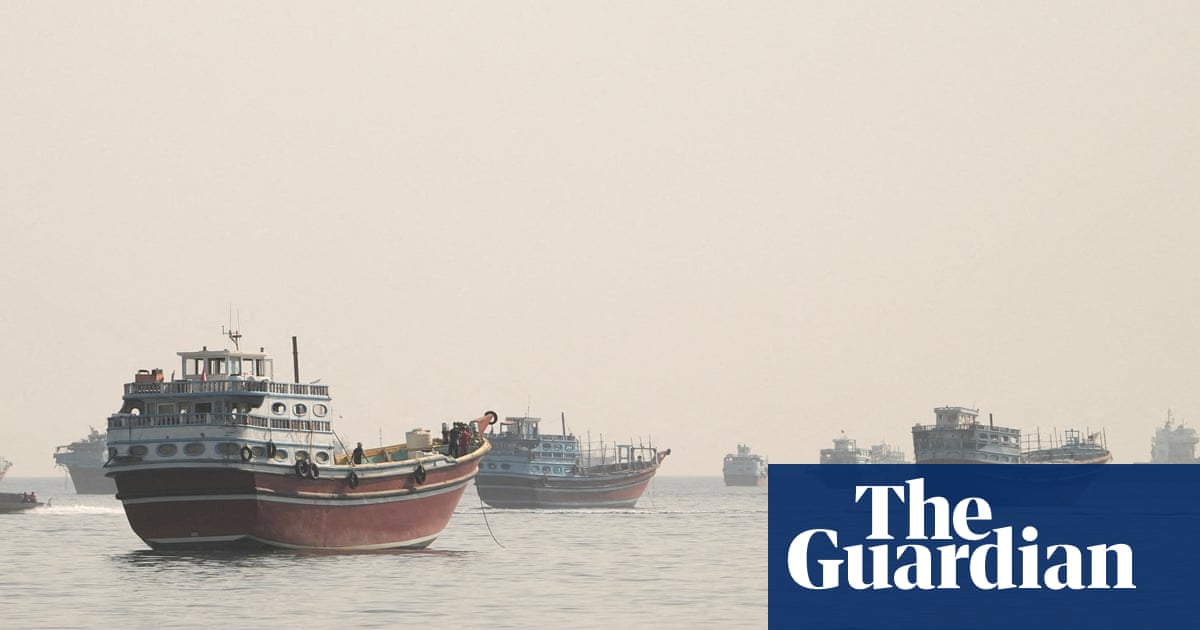
The Strait of Hormuz is thirty miles wide at its narrowest. The gas tankers that pass through it supply roughly a fifth of the world's liquefied natural gas. When regional analysts talk about the cascading costs of an extended Middle East conflict, they are talking about straits like this one—not abstract supply chains but physical geography that can be interrupted by a single decision made in Tehran, Jerusalem, or Washington.
That calculus is now moving markets in ways that go well beyond the immediate theatre of conflict. Thailand's state energy company PTT is accelerating its pivot into liquefied natural gas trading, according to reporting by Nikkei Asia. The company's strategy is explicit: capture profits from rising price volatility, build longer-term supply contracts that lock in favourable terms before competitors do the same, and position the firm as a regional LNG hub as traditional Middle Eastern supply routes become less reliable. The word "turbulence" appears in the reporting more than once—applied not to the political situation but to the market conditions that political turbulence has created.
Simultaneously, the French government has concluded that the crisis will outlast the assumptions built into most Western policy planning. Per intelligence and diplomatic reporting circulating in European capitals, Paris believes other nations are underestimating the timeline. France has extended state aid to gas for its fishing and farming industries—not as a temporary measure, but as an indication that it expects elevated energy costs to persist into at least 2027 and possibly beyond.
And in Frankfurt, ECB policymakers are running revised scenarios. Reuters reported on 21 May 2026 that euro zone growth is now projected to slow in 2026, with the Middle East conflict cited as a direct inflationary pressure on energy import costs. The causation is straightforward: when LNG prices spike, they show up in industrial input costs, transport costs, and eventually consumer price indices. The bank that spent three years bringing inflation back toward target finds itself running in place.
These three developments—corporate repositioning in Bangkok, strategic subsidy extension in Paris, and central bank forecast revision in Frankfurt—are not unrelated. They are the signature behaviour of economic actors who have processed the same underlying assessment: this is not a short-term disruption.
The French government's read on duration is the least visible but potentially most consequential of the three. Western policy planning has, by most accounts, operated on a timeline that treats the current Middle East crisis as an episode—a severe one, but bounded. France is reportedly operating on a different assumption. If Paris is correct, then the hedging behaviour currently visible in corporate boardrooms and central bank offices is not alarmist. It is rational preparation for a structural shift in energy cost baselines.
That reading carries implications for allies who may be working from shorter timelines. If European governments are calibrating support for Ukraine, diplomatic engagement with Iran, or domestic energy subsidies against a different set of assumptions than Paris, the divergence will compound over time. Fiscal headroom allocated for a twelve-month crisis is insufficient for a thirty-six-month crisis. The political economy of sustained expenditure—visible already in debates about Western arms supplies to Kyiv—takes on a different character when the timeline is measured in years rather than quarters.
What makes the PTT story particularly instructive is that it shows the adaptation running ahead of any official consensus. Thai energy planners are not waiting for the French intelligence assessment to be confirmed. They are reading the same signals—LNG price volatility, the fragility of Gulf transit routes, the demonstrated willingness of regional actors to weaponise energy infrastructure—and making commercial decisions accordingly. PTT's pivot toward LNG trading, per Nikkei Asia's reporting, is explicitly framed as a response to Middle Eastern turmoil, not to Thai domestic demand.
This matters because it suggests that the pressure on global energy architecture is being felt first in the spaces most exposed to Gulf supply disruption—Asia's Pacific Rim importers, whose energy security calculus has always been more acute than Europe's, which has spent the post-2022 period building alternative pipeline routes and storage capacity. The lesson of 2022 was that Europe could be shocked into adaptation. The lesson of 2026 is that Asia is adapting ahead of Europe, not because it is more prescient but because it has less margin.
The ECB's revised growth projections are, in one sense, a lagging indicator. By the time a central bank adjusts its forecasts, the underlying conditions have been apparent for months. What the revision confirms is that the transmission mechanism from Middle East instability to European growth is now official consensus, not fringe analysis. The channel is energy prices, and the channel is open.
The structural frame here is not complicated, but it is easily obscured by the immediacy of daily coverage. The international energy system was designed around assumptions of relative stability in the Gulf—assumptions that go back to the pricing mechanisms established after the 1973 embargo, the transit agreements ratified in the 1980s, and the logistics infrastructure built in the 1990s and 2000s. Those assumptions are being revised downward, not because the Gulf has become more unstable—it has always been unstable—but because the buffer capacity that once absorbed that instability has been eroded by underinvestment, the transition away from fossil fuel financing, and the progressive shrinking of spare production capacity that OPEC maintained as a market management tool.
When spare capacity contracts and geopolitical risk rises simultaneously, price volatility is the mechanical outcome. The current Middle East crisis is not the cause of this structural condition; it is the catalyst that has exposed it. PTT, France, and the ECB are each, in their different ways, responding to the exposure—not to the crisis itself, but to what the crisis has revealed about the underlying system.
There is a counter-argument worth naming. Optimists in Western policy circles note that US shale production has provided a significant buffer against Gulf disruption—a buffer that did not exist in the 1970s or 1990s. American LNG export capacity has expanded substantially since 2022, and a conflict-driven spike in global prices would incentivise American producers to accelerate output. In this reading, the market has a self-correcting mechanism, and the current volatility is a temporary repricing, not a structural break.
That counter-argument has merit. American production is real, and the arbitrage between US wellhead prices and international LNG spot prices is a genuine stabiliser. But it has limits. US export infrastructure—the terminal capacity to liquefy and ship gas to European and Asian buyers—is not unlimited. The gap between what American producers could theoretically supply and what they can physically deliver remains significant. And the assumption that American production can substitute for Gulf LNG at current prices requires that Gulf production remain largely offline—an assumption that, if wrong, leaves the US competing with restored Middle Eastern supply at lower prices, undermining the investment case for the capacity expansion that the buffer requires.
The stakes of this trajectory are unevenly distributed. Countries with strong fiscal positions—France, Germany, the larger EU members—can absorb elevated energy costs through subsidy extension and strategic reserves. They will not enjoy the absorption; it constrains fiscal space needed for defence, infrastructure, and the energy transition. But they can manage it. The same is not true for smaller European economies, for energy-importing nations in the Global South, or for Asian economies whose growth models depend on the continued availability of cheap Gulf gas.
PTT's pivot toward LNG trading is, at one level, a corporate strategy story. At another level, it is a proxy for every energy-importing economy that is watching the same signals and drawing the same conclusions. The question is not whether adaptation will happen. It is whether adaptation will happen fast enough to avoid the sharper disruptions—a sudden supply shock, a transit blockage, a price spike that triggers the kind of demand destruction that the 1973 embargo delivered to the global economy.
France is planning for three years. The evidence suggests that is the right timeframe. Whether the rest of the international system is planning on the same basis is the question that this week's succession of forecasts, pivots, and subsidy extensions has quietly posed.
This article was filed from wire and regional reporting on 21 May 2026. Monexus lead with the French assessment of duration as the structural frame, rather than the ECB's growth revision—prioritising the strategic read over the financial one, on the grounds that the former explains the latter.
Wire provenance
This editorial synthesis draws on the following public wire/social posts:
- https://t.me/rnintel/
- https://t.me/NikkeiAsia/
- https://t.me/nikkeiasia/
- https://t.me/rnintel/
- http://reut.rs/4tKDTyj
- https://t.me/nikkeiasia/
- https://t.me/NikkeiAsia/
- https://t.me/rnintel/