The New Mediators: How Pakistan and the Global South Are Redrawing Middle East Diplomacy
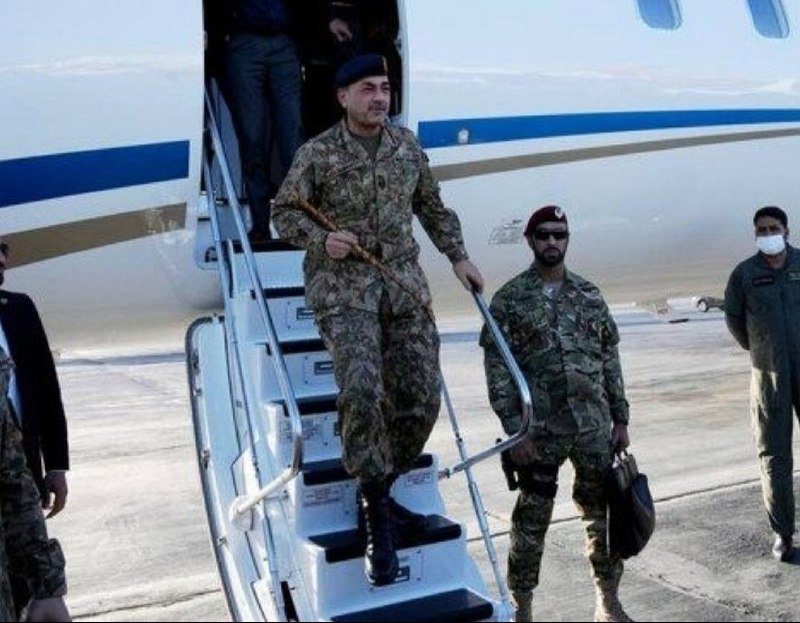
Pakistan is not the country most analysts would have picked to broker the most consequential diplomatic conversation of the decade. Yet here we are. On 21 May 2026, Pakistani officials were actively mediating between Washington and Tehran as the Trump administration dangled the prospect of renewed military strikes against Iranian military infrastructure — an escalation that regional capitals have watched with deepening unease.
The Indian Express reported that Pakistani officials were engaged in stepped-up mediation efforts even as President Trump made clear that military options remained on the table. Simultaneously, the same news cycle brought reports that US intelligence had assessed Iran was rebuilding a military base and accelerating drone production at rates that surprised Western analysts. These two stories are not separate threads. They form the connective tissue of a geopolitical moment that is, beneath the surface noise of presidential threats and intelligence assessments, fundamentally about who gets to speak for the region — and who is left out of the conversation.
The American preference for bilateral pressure and unilateral deterrence is not new. What is new is the context in which it operates. Ipsos's 2026 Generations Report, released this week, offers the structural backdrop that makes sense of Pakistan's sudden centrality as a mediator. Global population growth is slowing. Workforces across the developed world are aging. The demographic engine of the next half-century will not be in Washington, Berlin, or Tokyo — it will be in Karachi, Lagos, and Jakarta. These are the capitals with growing young populations, expanding labor forces, and a stake in regional stability that does not run through NATO structures or bilateral alliance architectures.
When Pakistan reaches out to Tehran and offers itself as a diplomatic bridge, it is not simply performing a transactional role for Washington. It is asserting a position that the region's problems require regional solutions. That posture has rarely found traction in an American foreign policy culture that treats back-channel diplomacy as a means of extracting concessions rather than building consensus. But the Ipsos data suggests the power differential that made that posture viable is eroding.
This is not an argument for sentimentality about Pakistan's motives or capabilities. Islamabad has its own strategic calculations, its own relationship with Tehran that predates American interest in either country, and its own reasons to prefer a stable border over a region consumed by military escalation. The drone production data that US intelligence officials flagged is not reassuring. Iran's acceleration of unmanned aerial vehicle manufacturing — reportedly faster than Western assessments had projected — suggests Tehran is preparing for a conflict environment rather than a diplomatic one. That capability, whatever its ultimate purpose, changes the calculus for every actor in the region.
What the intelligence reporting does not capture is the diplomatic dimension. Iran has been here before. The Islamic Republic survived economic sanctions, cyber operations, the assassination of its most prominent military commander, and years of "maximum pressure" without capitulating to American demands. It has consistently demonstrated a capacity to absorb external shocks and redirect resources toward strategic resilience. The base reconstruction — reported by US intelligence and cited by Indian Express on 21 May — fits a pattern Tehran has followed since the early 2000s: external pressure triggers internal consolidation, not internal collapse.
Pakistan's mediation role is therefore not incidental. It reflects an understanding, held across capitals from Islamabad to Riyadh to Ankara, that the American approach to Iran has failed to produce outcomes that serve regional stability. The alternatives being discussed — negotiated freezes on enrichment levels, regional confidence-building measures, gradual reconnection to global financial systems — look radically different from the maximalist demands Washington has historically placed on the table. They also look different from the unilateral strike options that the current administration has not ruled out.
The question is not whether these alternatives will work. It is whether Washington has the institutional patience and political bandwidth to pursue them. The Trump administration's threat posture serves a domestic political function that analysts have noted extensively: it signals strength to a base that views Iranian negotiations as appeasement. It also signals to regional allies — Saudi Arabia, Israel, the UAE — that American commitments remain robust even as the administration signals openness to ending other foreign entanglements. But diplomatic signaling and diplomatic outcomes are different things.
What the Global South knows, and what the Ipsos report quantifies in demographic terms, is that the next fifty years will not reward diplomatic postures. They will reward sustained engagement, economic integration, and the kind of institutional relationships that survive individual administrations. Pakistan is building those relationships. Washington is, for now, using them as a pressure-release valve while maintaining the substance of a confrontational posture.
That asymmetry is not lost on the capitals that are watching this unfold. The mediation Pakistan is offering is not a favor to the United States. It is an assertion of agency by a country that has spent decades being treated as a strategic asset rather than a strategic actor. The drone production in Iran, the mediation efforts from Islamabad, the demographic data from Ipsos — these are data points in the same sentence. The sentence is about power diffusing away from the structures that have defined the last half-century of Middle Eastern geopolitics.
Whether that diffusion produces a more stable region or a more chaotic one is the question nobody in Washington seems eager to answer. What is clear is that the answer will not come from military threats alone — however loudly they are delivered.
The sources do not specify what specific terms Pakistan has proposed in its mediation efforts, nor what response, if any, Iranian officials have given to Islamabad's overtures. What is documented is the escalation in American signaling and the intelligence community's assessment of Iran's military reconstruction. The gap between those two tracks — diplomatic back-channel and public pressure — is where the next several weeks of Middle Eastern diplomacy will be decided.
Monexus framed this story differently from the wire. While the Indian Express led with the intelligence assessment of Iran's drone capabilities, this publication foregrounds the diplomatic mediation dimension and the structural context of shifting global demographic power — arguing that Pakistan's role as intermediary tells us more about the emerging regional order than the weapons programs that generate the immediate headlines.