Nuclear Drills and Empty Pockets: What Putin's Beijing Charm Offensive Actually Delivered
Moscow's staged nuclear exercises with Belarus coincided with Putin's latest visit to Beijing, yet the optics of alliance masked a familiar pattern: broad declarations of shared purpose, but no binding agreements on the issues that matter most to either side.
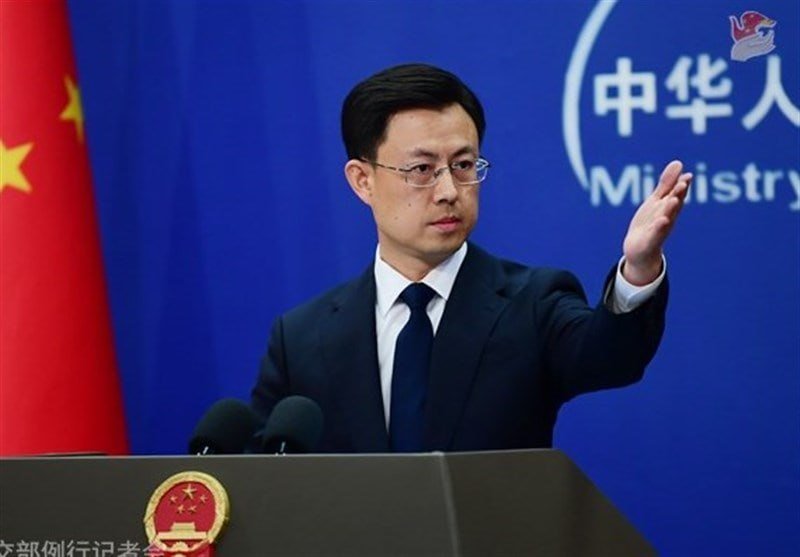
On the same day Russian and Belarusian forces rehearsed the deployment of tactical nuclear weapons inside Belarus—warheads Moscow transferred to Minsk in 2023—President Vladimir Putin wrapped his third visit to Beijing in eighteen months. The timing was deliberate. Russia's nuclear posture in Europe and the joint military exercise program with Belarus provided the undertone of pressure that has come to define every Russia-China summit since 2022. The message, directed as much at Western audiences as at the host, was meant to signal: the partnership is intact, the alignment is deepening, and neither Moscow nor Beijing is isolated.
The South China Morning Post reported that China and Russia did indeed present a united front on global order during Putin's visit, signing a joint statement that reaffirmed shared positions on sovereignty, non-interference, and the illegitimacy of what both governments describe as Western-centric international institutions. The language was expansive. The commitments were rhetorical. By the time Putin departed, no new trade agreements of substance had been announced, no new financial instruments unveiled, and no binding commitments on energy pricing or technology transfer had been disclosed to the press. This was not an oversight. It reflects a structural feature of the Russia-China relationship that survives on managed ambiguity.
The Nuclear Choreography
Russia's delivery of nuclear warheads to Belarus and the subsequent three-day military exercise represent a deliberate escalation in the signaling of nuclear deterrence toward NATO's eastern flank. According to Al Jazeera's breaking coverage, Russian strategic forces rehearsed what state media described as the "use of nuclear forces"—a phrase that, while calibrated to fall short of explicit threat, carries unambiguous weight when spoken alongside a leader who has repeatedly refused to rule out nuclear use in Ukraine. The exercise took place within days of the Beijing summit, and Western defense analysts noted the proximity was not coincidental.
Putin's own framing, as cited by the ClashReport Telegram channel, defined nuclear weapons as "an extreme and exceptional measure to ensure the national security of our states." The formulation is notable for what it omits: it does not name Ukraine, does not name NATO, and does not specify under what threshold of conventional threat the threshold for nuclear use would be crossed. That ambiguity is the point. It keeps Western decision-makers calculating rather than comfortable.
The exercises also expand the geography of nuclear ambiguity. Belarus, which shares a border with NATO members Poland and Lithuania, now hosts Russian tactical nuclear weapons and the infrastructure to deploy them rapidly. This extends Russia's nuclear umbrella—formally extended to Belarus under a 2021 treaty—into a physical presence on the alliance's immediate periphery. NATO has responded with increased air patrols and rotational deployments to the Baltic states, but has not altered its own nuclear posture. The dynamic is one of managed tension: Moscow generates instability, the West absorbs it, and the cycle repeats.
The Partnership's Material Limits
The challenge for analysts trying to assess the Russia-China relationship is distinguishing between the ceremonial and the substantive. On global positioning—on what the international order should look like, on the legitimacy of existing alliances, on the right of states to choose their own development path without external pressure—Moscow and Beijing are largely aligned. This alignment is real. It shapes how each country votes at the United Nations, how their state media cover Western interventions, and how their diplomats conduct themselves in multilateral forums.
But the SCMP reporting on Putin's most recent visit underscores a recurring pattern: the areas where alignment is easiest to declare are precisely the areas where it costs each side least to agree. The harder questions—who provides what to whom, under what conditions, and at what price—produce silence. Energy trade remains critical to both economies, but pricing mechanisms remain market-indexed in ways that disadvantage Moscow when oil prices fall. Technology transfer, particularly in semiconductors and advanced manufacturing, is something Beijing pursues with the West even as it deepens ties with Russia. There is no BRICS currency in sight, no替代 SWIFT system that has achieved global adoption, no joint military command structure beyond symbolic exercises.
This gap between strategic alignment and operational interdependence is not new. It has defined the relationship since 2014, when Western sanctions first pushed Russia toward China as an alternative partner. What has changed is the urgency. Russia is more dependent on Chinese economic access than at any point in the post-Soviet era. China, meanwhile, has gained negotiating leverage over a partner whose alternatives have narrowed. Whether this dynamic produces genuine integration or merely the appearance of it depends on whether either side is willing to accept the binding commitments that true alliance would require—and both have strong reasons to avoid that level of entanglement.
The Structural Picture
What is being constructed between Russia and China is not, by most definitions, an alliance. Alliances require mutual vulnerability: shared risks, shared costs, and mechanisms that constrain each partner's freedom of action. The Russia-China arrangement is, instead, a convergence of convenience—coordinated enough to challenge Western interests, flexible enough to preserve each side's autonomy. The language of partnership is deployed when it serves signaling purposes, as it did during the Beijing summit, and set aside when material interests diverge.
This is characteristic of great-power relationships in a multipolar system. When no single power dominates, partnerships form around specific issues and dissolve when those issues are resolved or when the cost of alignment exceeds the benefit. The Cold War alliance architecture, with its formal treaties and integrated command structures, was a product of a bipolar world. What Russia and China are building is something messier and more transactional—a alignment of tactics rather than strategy, of rhetoric rather than resources.
The nuclear exercises with Belarus are part of this. They signal alignment, demonstrate capability, and keep Western planners uncertain. They do not require China to commit a single soldier, renounce a single trade relationship, or sacrifice a single yuan of investment in Western markets. The cost is asymmetric: Russia bears the reputational and diplomatic cost of nuclear signaling; China gains the benefit of a partnership that constrains American attention and resources without requiring it to share the burden.
What Changes—and What Doesn't
If the trajectory holds, the Russia-China alignment will continue to deepen at the rhetorical level while remaining shallow at the institutional level. Moscow will continue to seek economic lifelines in Beijing; Beijing will continue to extract better terms from a desperate partner. The nuclear exercises will continue, as will the joint military drills announced for later this year—CSTO exercises and the bilateral "Collective Action 2026" program. These will generate headlines and anxiety in Western capitals.
What they will not produce is a new security architecture. No amount of joint exercises will create the kind of integrated command structure that would make the partnership genuinely dangerous to NATO. No amount of joint statements on world order will replace the hard infrastructure of alliance: logistics agreements, shared basing rights, integrated intelligence networks, and industrial bases capable of sustaining joint operations. Russia and China may be aligned on what they oppose. They remain divided on what they would build.
The nuclear drills in Belarus this week are real. The weapons are real. The threat, as Putin framed it in Beijing, is real in the sense that it cannot be dismissed. But the partnership that underwrites that threat is built on something less durable than shared ideology or shared interests: it is built on shared opposition to a common adversary, and that is a foundation that erodes the moment that adversary changes course.
Monexus framed this story alongside the wire as a joint nuclear-partnership narrative, treating Russia's Belarus exercises and the Beijing summit as a single coordinated display rather than separate events. The dominant wire framing—particularly from Western outlets—emphasized Putin's isolation and China's reluctant hosting. This article took a different approach, foregrounding the structural limits of the partnership rather than its immediate symbolic power.
Wire provenance
This editorial synthesis draws on the following public wire/social posts:
- https://t.me/ClashReport/
- https://t.me/myLordBebo/