Shohei Ohtani Defies Baseball's Economic Logic With Historic Two-Way Mastery
Shohei Ohtani's latest dual-threat performance against the Padres underscores a fundamental tension in modern baseball: the sport's industrial model assumes specialization, yet one player continues to render that assumption obsolete.
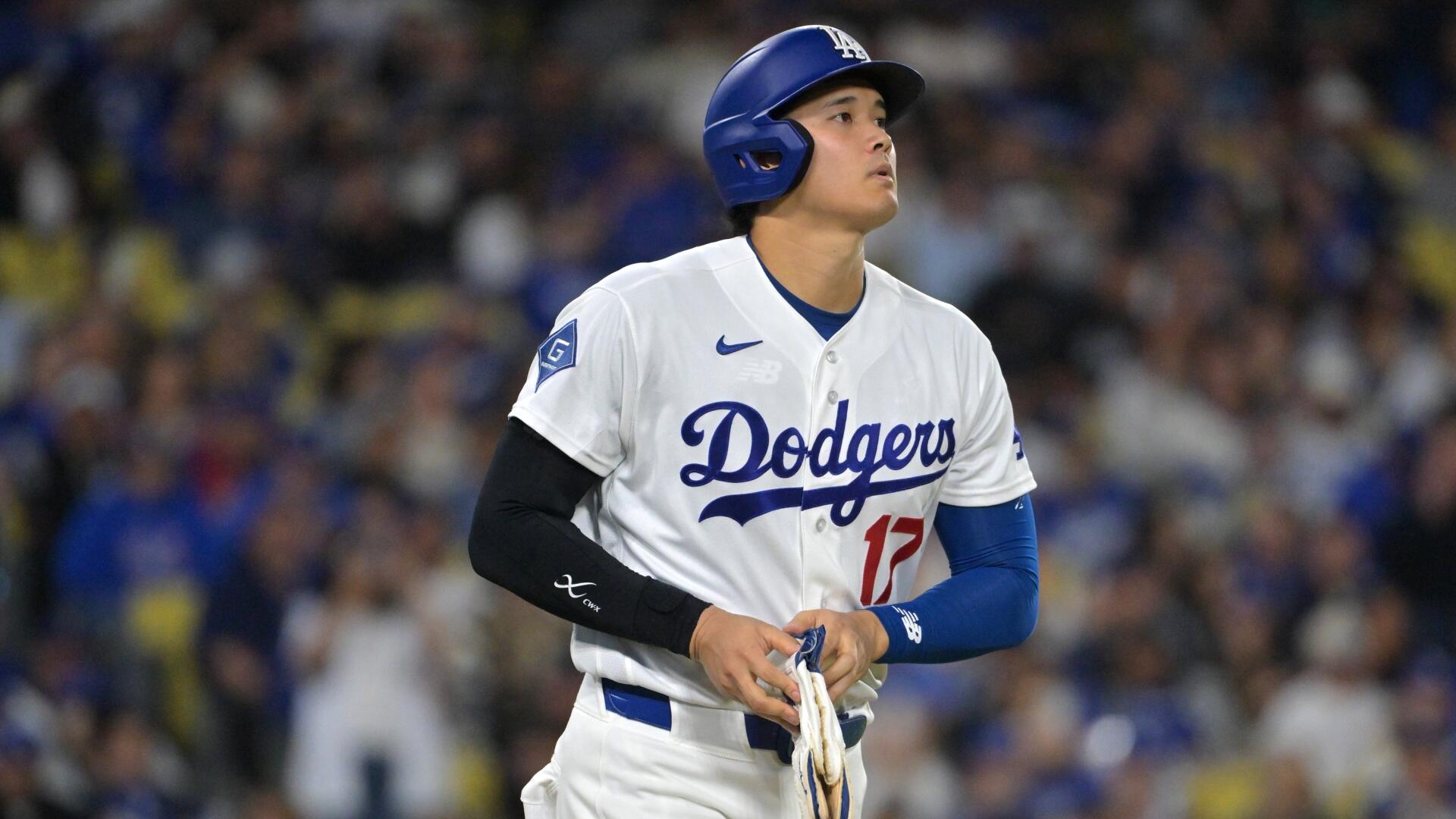
Shohei Ohtani stepped into the batter's box on Wednesday evening, May 20, 2026, with the Dodgers trailing by a run and no outs recorded. He drove the first pitch he saw over the right-field fence at Petco Park. Forty-eight hours later, he had completed five scoreless innings on the mound, and the Dodgers had completed a victory over the San Diego Padres, 8-2. The gap between those two moments captures something that baseball's prevailing economic logic struggles to explain.
Ohtani is not merely a good player performing two roles. He is a player whose existence punctures the assumptions embedded in how MLB franchises structure rosters, allocate payroll, and price contracts. The league's arbitration and free-agency systems were designed to compensate specialization. A pitcher commands a premium because his arm requires rest. A position player gets paid for daily availability. The two-way player breaks both equations—and yet, statistically, Ohtani's dual contributions are not additive but multiplicative.
The Wednesday Reset
What made the May 20 performance notable was not merely the outcome but the sequencing. The CBS Sports preview published the previous afternoon had flagged Ohtani as a "dual threat" for Wednesday's start, noting his "historic pitching start" to the 2026 campaign. The ESPN report, published the morning after the game, confirmed the specifics: leadoff home run, five scoreless innings pitched, a win that moved the Dodgers further ahead in the National League West. In professional sports, context is the first casualty of highlight culture. Here, the context matters enormously.
Ohtani had not pitched since his previous start. He had not played the field in between appearances. When he walked to the plate in the first inning, he was operating without the benefit of a defensive warm-up, without the routine rhythm that most hitters rely on between at-bats. He still produced one of the most efficient displays of the season.
The structural advantage this gives the Dodgers is difficult to overstate. A roster that can deploy Ohtani as both a mid-rotation starter and a power hitter is, in effect, carrying two high-value assets for the price of one roster slot. The luxury tax implications, the competitive balance tax thresholds, the 40-man roster constraints—all of them bend around a player who refuses to be categorized.
The Padres' Perspective
It would be reductive to frame Wednesday's result solely through the Dodgers' lens. San Diego entered the series having won three of their previous five games. Their pitching staff had posted a 3.41 ERA over that span—respectable by league standards, middling only when measured against the elite tier. They faced a version of Ohtani that is, by his own recent standards, underperforming with the bat and dominant on the mound.
The Padres' approach was not naive. Their coaching staff had presumably prepared for the leadoff spot, knowing Ohtani would bat there on his start days. They pitched him carefully in prior matchups. None of it registered. The ball left his bat at an exit velocity that Statcast systems logged above the 95th percentile for home-run probability.
What the Padres represent in this equation is the gap between preparation and execution that separates contenders from champions. They are not a bad team. They are, by most advanced metrics, a good team having a reasonably successful season. Ohtani made them look ordinary for one night. He has made several teams look ordinary across several nights.
The Roster Construction Dilemma
Major League Baseball's economic architecture was built for a world in which players choose a lane. The draft asks prospects to declare as pitchers or position players. The minor leagues develop them on parallel tracks that rarely reconverge. The arbitration system rewards accumulated innings or at-bats, not the capacity to produce both.
Ohtani arrived in MLB already fluent in both languages. His NPB career with the Hokkaido Nippon-Ham Fighters established the template. His Tommy John surgery in 2018 temporarily silenced the two-way conversation. His return in 2021, his MVP season in 2023, and his post-surgery evolution in 2024 and 2025 have each added a new layer of evidence that the dual-threat model is not a gimmick but a repeatable elite outcome.
The league has not adjusted its systems to account for this. Competitive balance tax thresholds treat Ohtani's contract as a single-line-item salary, not as the proxy for two players. The expanded playoff format gives him more opportunities to deploy both skillsets in high-stakes games. The Dodgers are exploiting a structural inefficiency that the league's governance documents have not yet caught up with.
The irony is that baseball's analytics community, which has spent two decades optimizing everything from defensive positioning to pitch sequencing, has been largely passive about the roster-rule distortions that Ohtani's existence creates. The conversation tends to stay停留在 performance narratives—the wonder of watching him hit 470-foot home runs and then sitting at 95 mph on the mound—rather than the incentive architecture that makes his contract simultaneously underpriced and structurally disruptive.
The Road Ahead
The Dodgers' rotation does not need Ohtani to pitch every game. They have depth. They have bullpen flexibility. They have a front office that has demonstrated a willingness to carry unusual roster configurations to maximize star utilization. The question is what happens when other organizations attempt to replicate the model.
A handful of prospects in the low minors are being developed with two-way potential. None are close to MLB readiness. None have demonstrated the physical durability that Ohtani has maintained across his thirties. The pathway from "promising dual-threat" to "Ohtani-caliber contributor" requires a confluence of biomechanical efficiency, pitch selection discipline, and mental management that the developmental pipeline has no framework to produce on demand.
For now, the Dodgers hold an asset that the league's salary structure underprices and its roster rules underconstrain. The Padres, like most teams in the National League, will face Ohtani again. The structural question—that baseball's industrial model assumes away the possibility he represents—is one the league will eventually have to answer.
Monexus covered this story as a performance dispatch, noting that most wire framing centered on the highlight reel. This piece foregrounds the roster economics that make the highlights possible.