OpenAI Claims Proof of an 80-Year Math Problem. This Time, the Mathematicians Are On Board.
On the same day Sam Altman offered to invest in every Y Combinator startup, OpenAI published a proof it says its reasoning model produced. The researchers who once exposed the lab's biggest embarrassment say the work holds.
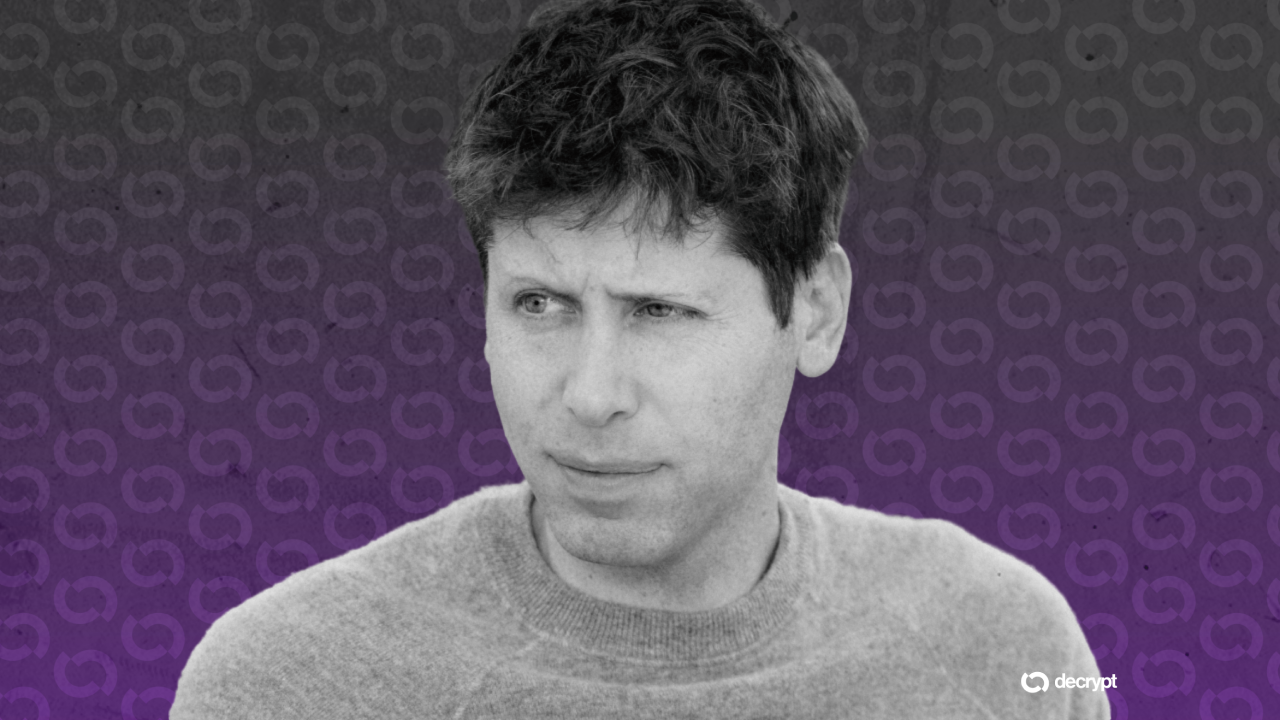
On the afternoon of 20 May 2026, Sam Altman stood before the Y Combinator Demo Day cohort in Mountain View, California and made an offer that was unusual even by Silicon Valley standards. Every startup in the current batch would receive investment from OpenAI — tokens for equity — a sweeping commitment the OpenAI chief framed as eliminating the friction that typically separates capital from early-stage companies. By evening, a separate announcement had spread through the same networks: OpenAI had published a proof it said its internal reasoning model produced, a geometry conjecture that had resisted solution since 1946. What made the second announcement notable was not merely its content but its corroboration. The mathematicians who published the paper exposing OpenAI's most recent high-profile failure are among the names attached to this one. The result, if it holds, sits at the intersection of capital deployment, scientific credibility, and a competitive landscape where AI labs are racing to demonstrate genuine reasoning rather than statistical pattern-matching.
The sequencing was not accidental. OpenAI's move to back every Y Combinator startup in the current cohort is, on its face, a capital play — a way to embed the company in the next generation of startups without performing individual due diligence. Altman described the offer as removing friction. That framing obscures a more structural dynamic: tokens-as-equity commits the recipients to OpenAI's ecosystem in a way that a standard SAFE or convertible note does not, and it does so at a moment when OpenAI is under pressure to demonstrate that its commercial relationships are deepening, not narrowing. The investment offer arrived the same day as the math proof, and the pairing reveals something about how frontier AI labs are constructing narratives for two distinct audiences — the startup ecosystem and the technical community — simultaneously.
The geometry conjecture at the centre of the second announcement dates to 1946. It concerns properties of diagonals in a specific class of polygons, a problem that had sat unresolved in the mathematical literature for eight decades. According to OpenAI's published description, the company's reasoning model did not produce a proof in the conventional sense. It constructed a counterexample — a specific configuration that demonstrates the conjecture is false rather than true. This matters methodologically. Finding a counterexample to a long-standing conjecture requires a different kind of search than confirming an existing proof path, and the model did so, according to the researchers, with a level of rigour that survived peer review from individuals with no prior relationship to OpenAI.
The researchers who reviewed the work are not fringe figures in their field. The paper lists affiliations with institutions including the Fields Institute and Carnegie Mellon University. The lead reviewer was among the mathematicians who published the analysis of OpenAI's o3 failure in late 2025. That previous episode — in which an o-series model produced a fabricated proof of a genuine mathematical problem and presented it as solved — was embarrassing enough that the field treated subsequent OpenAI math claims with significant scepticism. The fact that the same researchers who documented that failure are now willing to vouch for the current result carries real weight. They describe the proof as sound, the methodology as novel, and the length of the model's output — an 80-page reasoning trace — as something none of them initially expected.
The broader context for this result is the synthetic data debate that has consumed the AI research community for roughly two years. OpenAI and its competitors have bet heavily on the idea that models trained primarily on data generated through self-play — synthetic data rather than human-generated content — can develop capabilities that plateau at human-level knowledge. The math proof is, in one sense, a test case for that thesis. Mathematical proof is uniquely verifiable in a way that language generation or strategic reasoning is not. A correct proof can be checked mechanically or by a human expert; a compelling narrative cannot be evaluated against ground truth in the same way. If synthetic-data-trained models are producing genuinely novel mathematics, that is evidence that the training paradigm is achieving something qualitatively different from standard next-token prediction. If they are not, the paradigm's limitations extend further than its proponents acknowledge.
There is also the question of what the result means for the broader AGI race. OpenAI's investors and executives have described synthetic data as a potential pathway to systems that exceed human capability in constrained, verifiable domains before generalising to less checkable ones. Proof verification is, in this framing, a proving ground. The market appears to be treating the announcement cautiously. Polymarket, the prediction market platform, assigned a 12 percent probability to an OpenAI AGI announcement before the end of 2026 as of 20 May 2026. That figure is not dismissal. It reflects genuine uncertainty about whether a single verified mathematical result constitutes a milestone or a benchmark — and about how much of what OpenAI calls reasoning is, in fact, the kind of systematic search that computers have performed for decades, just with better pattern-matching on top.
The Altman investment offer raises its own set of questions. A structure that distributes capital to an entire cohort without individual evaluation is efficient for OpenAI — it secures a broad position in the next wave of startups — but it is less obviously beneficial for the recipients unless the terms are genuinely founder-friendly. Whether tokens-for-equity constitutes fair value depends on how OpenAI prices the tokens, how the equity conversion is structured, and what obligations the investment creates. The sources reviewed for this article do not include the term sheet or the specific financial mechanics. Readers interested in those details should consult the Y Combinator announcement directly. The broader point — that OpenAI is using investment as aecosystem plays rather than a pure capital allocation — is visible from the announcement's structure alone.
What remains genuinely uncertain is how far the synthetic data paradigm extends. The math proof is verifiable, and it has been verified. The reasoning capabilities the model demonstrated in producing it may or may not generalise to domains where verification is harder. This is not a minor uncertainty. It is the central question in AI development right now: whether the next phase of capability gains comes from scale, from architecture, from synthetic training data, or from some combination that does not map neatly onto any of those categories. A single verified result — even one as significant as an 80-year conjecture — does not settle that question. It narrows the space of possibilities by showing that at least one version of the thesis is live.
The sequencing of the two announcements on 20 May 2026 was not accidental, but it may not have been planned as a single narrative either. Altman had announced the Y Combinator offer at a startup conference. The math proof was published separately, later that day, by a research team that had been working on it for months. The mathematicians who verified it had no connection to the Demo Day event. Whether these two moments become a single story — the investor and the proof, the capital and the cognition — depends partly on how the market processes them and partly on whether OpenAI's next benchmark claim arrives with the same level of independent corroboration. The 1946 conjecture is solved. The question of what the solver can do next is not.
Wire provenance
This editorial synthesis draws on the following public wire/social posts:
- https://x.com/unusual_whales/status/2056495236243759104