Pakistan Army Chief lands in Tehran as Islamabad positions itself as Iran-US mediator
Pakistan's Army Chief General Asim Munir arrived in Tehran on 21 May 2026 to broker gaps between Iran and the United States, a diplomatic push that places Islamabad at the centre of one of the most consequential back-channel negotiations in recent Middle Eastern diplomacy.
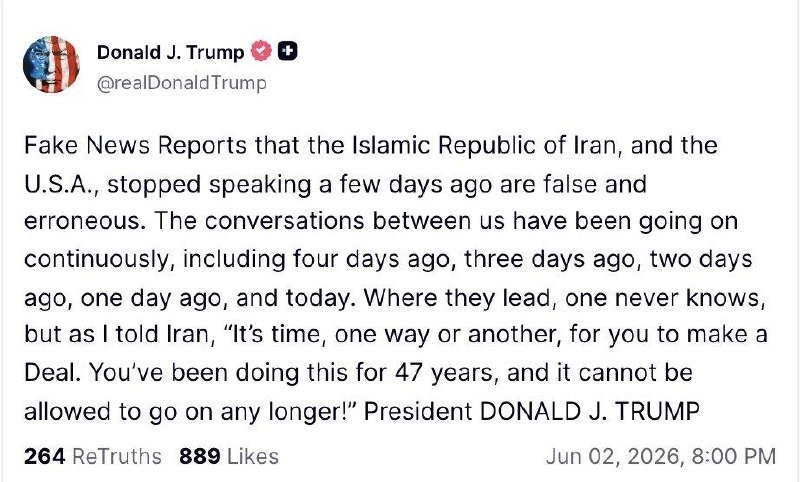
Pakistan's Army Chief General Asim Munir landed in Tehran on 21 May 2026, according to multiple reports from regional and open-source intelligence feeds. The visit, confirmed by Pakistani military sources and Iranian state media, positions Islamabad as an active intermediary between Tehran and Washington — a diplomatic gambit that, if successful, would elevate Pakistan's standing in Gulf security calculus at a moment when both principals are actively seeking off-ramps from confrontation.
The visit and its stated purpose
According to a Pakistani military source cited by Al Jazeera, Munir's trip was planned to close gaps ahead of a formal announcement on a memorandum of understanding between Pakistan and Iran. Iranian state broadcaster PressTV described the visit explicitly as part of Islamabad's effort to ramp up Iran-US mediation, a characterisation that aligns with the direction of travel in Pakistani official communications.
The visit comes against a backdrop of sustained, though uneven, diplomatic contact between Iran and the United States. Talks have been held in Oman and Switzerland under various formats over the past eighteen months, with both sides publicly acknowledging the channels while maintaining careful ambiguity about their substance. What the sources do not specify is the precise content of any proposed agreement or what concessions Islamabad is prepared to offer as inducement to either party — a gap that reflects the sensitivity of the back-channel format rather than any failure of reporting.
Islamabad's strategic calculation
The question worth asking is why Pakistan is doing this now. Pakistan's relationship with Iran has been shaped by a long border, shared intelligence concerns regarding militant activity in Balochistan, and periodic flare-ups that have included cross-border strikes. Its relationship with the United States has been equally complex: a long-standing security partnership now recalibrated under conditions of strategic competition with China and uncertainty about American staying power in Afghanistan.
Positioning itself as a diplomatic bridge serves Pakistan's interest in several ways simultaneously. It gives Islamabad leverage in Washington, where officials have shown renewed interest in indirect formats following the collapse of the original JCPOA framework. It signals to Tehran that Pakistan retains influence worth cultivating on the nuclear and regional security file. And it reinforces Pakistan's claim to be a consequential actor in its own neighbourhood — a framing that sits awkwardly with the reality of domestic economic pressure but has genuine resonance in the capitals that matter for Pakistan's strategic standing.
Whether that calculation pays off depends entirely on what the two principals — Iran and the United States — actually want from the process. The sources do not indicate that either side has delegated any authority to Pakistan to negotiate on their behalf. What Islamabad appears to be offering is not a settlement but a venue and a set of connecting channels that neither side currently has available to the same degree.
The regional context
The broader picture is one of managed competition rather than outright confrontation between the United States and Iran. The United States has maintained maximum pressure on Iran's oil exports while simultaneously holding discrete diplomatic channels. Iran has advanced its nuclear programme in measured increments — staying below thresholds that would trigger unified Western response while building leverage for any future negotiation. Neither side has had sufficient incentive to move to a comprehensive deal, but both have an interest in preventing escalation spirals that neither can fully control.
Into that space step intermediaries: Oman has played this role for decades. Switzerland has hosted back-channels. Iraq's government has occasionally attempted to position itself. Pakistan's entry is notable because it adds a military dimension that the others lack. General Munir is not a foreign minister — he is the head of Pakistan's armed forces, and his involvement signals that the mediation effort, if it has substance, touches on security questions that go beyond the nuclear file to encompass missile programmes, regional proxy networks, and the architecture of Gulf deterrence.
What the sources leave open
The thread of reporting from 21 May is consistent in its broad outlines but thin on specifics. No figures have been named on the Iranian or American side who are coordinating with Islamabad. The content of any proposed memorandum of understanding between Pakistan and Iran is not described. Whether the visit was requested by Tehran, Washington, or initiated by Pakistan itself is not clarified by any of the sources currently available.
What is clear is that the visit is happening, that it has been characterised by more than one source as an Iran-US mediation effort, and that both Pakistani and Iranian state-adjacent media are presenting it as substantive rather than ceremonial. That framing is itself a signal — both governments appear to want the public attention that a visit by a serving army chief generates.
Stakes and what comes next
The stakes are considerable. A successful mediation outcome — even a partial one involving confidence-building measures rather than a comprehensive agreement — would reshape the regional diplomatic landscape. It would give the United States a mechanism for managing Iranian behaviour short of the all-or-nothing framework that has repeatedly failed. It would give Iran relief from sanctions pressure without conceding nuclear advances. It would give Pakistan a tangible diplomatic achievement at a moment when its international standing has been under strain from IMF programme conditions and domestic political volatility.
The counter-case is equally worth noting. Back-channel diplomacy has a poor recent record in this bilateral. Multiple rounds of talks under Omani and Swiss auspices have not produced visible results. Iran's supreme leader has repeatedly signalled deep scepticism about American intentions. And Pakistan's own credibility as an honest broker has limits given its security relationship with the United States and its complex ties to Gulf states with their own interests in how any Iran-US settlement shapes out.
The visit on 21 May is a beginning, not a conclusion. Whether it produces anything of substance depends on conversations that will not appear in Telegram threads until long after they are held — if they appear at all.
Pakistan's military has declined to provide additional comment beyond confirming the visit took place. Iranian state media described the meetings as covering "regional security and bilateral cooperation." No American official has publicly acknowledged involvement in the Pakistani channel.
Wire provenance
This editorial synthesis draws on the following public wire/social posts:
- https://t.me/osintlive/8471
- https://t.me/osintlive/8473
- https://t.me/presstv/8474
- https://t.me/TheCradleMedia/8472
- https://t.me/TheCradleMedia/8475