Pakistan's Backchannel Diplomacy Hits the Wall — And Washington Should Be Worried
When Pakistan's army chief cancels a Tehran mission meant to carry messages between Washington and Tehran, something has gone badly wrong in the backchannel. The cancellation is not a procedural hiccup — it is a signal, and it is a worrying one.
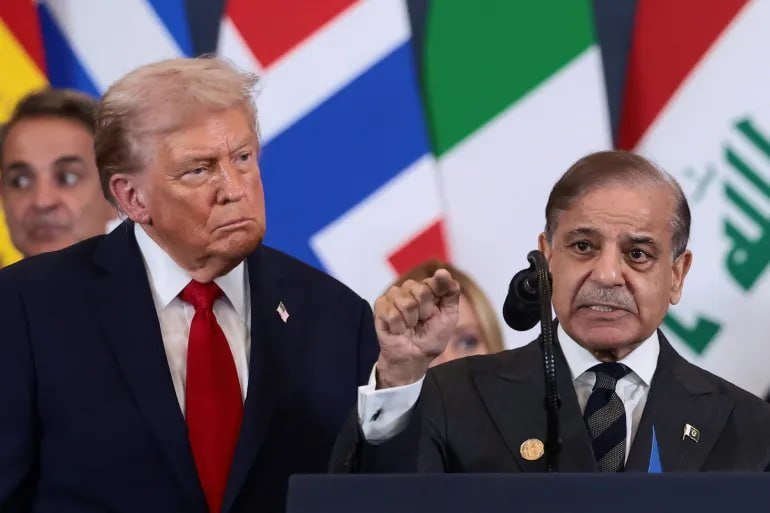
Something broke in the Pakistan-Iran backchannel — and the fracture matters more than the diplomats managing it are letting on. On 21 May 2026, according to sources cited by Al-Arabiya, Pakistan's Army Chief General Asim Munir cancelled a trip to Tehran where he was expected to relay communications between the United States and Iran. The mission had been on the books. The agenda was substantive. Then it wasn't.
This wasn't a scheduling conflict. It wasn't a logistical failure. When an army chief of a nuclear-armed state pulls a diplomatic mission at the last moment, it means one of two things: either the sender — Washington — rescinded the mandate, or the intermediary — Islamabad — concluded the cost of carrying the message outweighed the benefit. Either explanation is alarming.
The Messenger Has Become the Message
Pakistan has long played the role of corridor state — the country that sits between strategic rivals and occasionally Translates between them. The 2023 exchange that sawIran release detained foreigners throughOman's mediation is one recent example; the back-and-forth over uranium enrichment has passed through multiple intermediary hands over the years. Islamabad's utility as a discreet interlocutor rests on one condition: both sides need it more than they distrust it.
That condition appears to be eroding. General Munir's cancellation — confirmed by rnintel on 21 May at 19:36 UTC — suggests Islamabad has recalculated. Pakistan is in the middle of a structural economic crisis, a security deterioration along its western frontier, and a political environment where any perception of serving American interests at Iran's expense carries domestic political costs the government and the military leadership cannot easily absorb.
The timing is not accidental. The Trump administration has been pushing for progress on the Iran nuclear file — and has been doing so with a bluster that makes intermediaries nervous. Carrying a message to Tehran on behalf of Washington is one thing; being seen as doing so when the US is simultaneously applying maximum pressure on Iran through sanctions and regional posturing is another. Islamabad understood the optics problem. It chose to step back.
What the Silence Tells Us
The sources do not specify what triggered the cancellation. But the structural logic is clear enough: the US-Iran track has reached a point where the gap between what Washington is prepared to offer and what Tehran is prepared to accept is too wide to bridge with a single diplomatic message. Sending a messenger under those conditions doesn't close the gap — it exposes the messenger.
There is a second reading worth considering. Perhaps the cancellation reflects a decision in Tehran, not Islamabad — a rebuff issued through the Pakistani channel. Iran may have decided that engaging through intermediaries no longer serves its interests, that the moment demands direct communication or nothing. That would be a meaningful signal in itself: Iran closing the backchannel rather than using it.
The absence of official comment from the Pakistani foreign ministry, the Pentagon, or the Iranian foreign ministry is itself a data point. When a diplomatic channel closes without explanation, the silence is a message. The parties involved are not ready to discuss what happened, which means they are not ready to paper over it either.
The Structural Problem Washington Has Created
The United States has spent years treating regional intermediaries as disposable assets — useful when needed, expendable when inconvenient. Pakistan has been subject to this treatment across multiple administrations: sanctions imposed, aid suspended, the relationship instrumentalised for whatever the immediate priority required. The cumulative effect is a country that has learned to treat American engagement with justified wariness.
That wariness now has a concrete manifestation. When Washington needed a channel to Tehran, it looked to Pakistan because Pakistan was there. But the relationship has been hollowed out by enough years of transactionalism that Islamabad no longer trusts the arrangement to be worth the cost. General Munir's cancellation is the visible symptom of a deeper structural failure in American regional diplomacy.
Iran, for its part, has been watching this dynamic. Tehran knows that Pakistan's reliability as an interlocutor is constrained by domestic political pressures and by the broader deterioration of the US-Pakistan relationship. A backchannel that one party doesn't fully trust is not a channel — it is a liability. Iran may have concluded that messaging carried through Islamabad arrives damaged, or that the messenger will eventually defect under pressure.
What Comes Next
The cancellation of a single mission does not end the possibility of US-Iran talks. There are other channels — Oman, Switzerland, Qatar — and the structural incentives for dialogue on both sides have not disappeared. But the Pakistan episode narrows the options and raises the temperature. Each intermediary that steps back reduces the flexibility both sides have to maneuver without direct contact.
Washington is now more isolated on the Iran track than it was a week ago. The administration may have other options, but it has fewer than it did before General Munir picked up the phone and then put it down. The message Pakistan sent was not about Pakistan — it was about the feasibility of the channel itself. And the message is worth taking seriously.
The backchannel is not dead. But it has sustained damage that will not be easy to repair.
Pakistan's position as a diplomatic corridor between Washington and Tehran has been structurally degraded. The Munir cancellation is a symptom, not a cause — but it is one that the US administration can no longer afford to ignore.
Wire provenance
This editorial synthesis draws on the following public wire/social posts:
- https://t.me/rnintel/2847
- https://t.me/GeoPWatch/1983