Pakistan's Back-Channel Gamble: Tehran, Washington, and the Mediator in the Middle
Islamabad's quiet outreach to the IRGC commander suggests a diplomatic channel exists beneath the surface noise of sanctions and threats — but whose interests does it really serve?
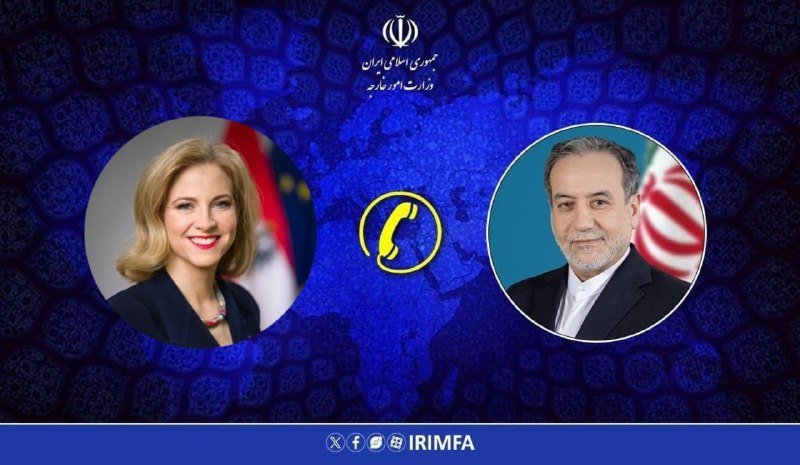
On the morning of 21 May 2026, Pakistan's Interior Minister arrived in Tehran for a meeting that would have been unremarkable six months ago. The counterpart was Ahmad Vahidi — commander of Iran's Islamic Revolutionary Guard Corps, a figure under United States sanctions, and the official responsible for one of the most consequential military organisations in the Middle East. The purpose of the meeting, according to multiple accounts, was not counterterrorism or border security. It was mediation. Pakistan had come to talk to Tehran on behalf of Washington.
Iran's Foreign Ministry confirmed the same day that the exchange of messages between Iran and the United States was continuing through the Pakistani channel, and that Tehran was reviewing the latest American proposals. The IRGC commander, not the nominal foreign minister, was the recipient. That detail is not incidental.
The Geometry of a Back-Channel
Back-channels are not new to Persian Gulf diplomacy. What is unusual here is the intermediary. Pakistan occupies an genuinely singular position in this configuration — it holds regular dialogue with the Iranian foreign policy establishment, hosts a US-trained and US-funded military, and sits directly between the two countries whose mutual hostility has defined regional security for four decades. Islamabad has the ear of both sides, however uncomfortable that arrangement makes Western capitals.
The decision to dispatch the Interior Minister rather than the Foreign Secretary or a special envoy carries its own signal. An interior minister deals with domestic security, law enforcement, the machinery of state control. Sending that official to a foreign capital to relay diplomatic messages suggests the channel was established through security-to-security contacts, not through formal diplomatic cables. It is a channel built on institutional trust between enforcement agencies, not on the performative choreography of official summits.
Iran's willingness to receive this message through Vahidi — rather than routing it through the Foreign Ministry in the conventional manner — indicates Tehran's assessment that this communication requires security guarantees, discretion, and a counterpart that understands the language of coercive statecraft. The IRGC, not the diplomatic corps, is the decision-making locus on matters of this sensitivity.
Why This Channel Exists Now
The proximate cause is likely the renewed pressure campaign on Iran over its nuclear programme, combined with the ongoing wreckage of regional conflict. Washington has re-imposed and expanded sanctions; Tehran has accelerated uranium enrichment beyond weapons-grade thresholds, according to International Atomic Energy Agency reporting that has been the subject of recent wire coverage. Both sides have incentives to explore off-ramps that do not require them to publicly climb down.
Pakistan's interest in facilitating this is multidimensional. Islamabad is navigating its ownIMF crisis, its own geopolitical repositioning between the Gulf monarchies and the broader non-aligned world, and a domestic economy that cannot afford sustained regional instability on its western border. Being useful to both Washington and Tehran — without being captured by either — is precisely the kind of diplomatic asset a country like Pakistan needs right now. The back-channel is also, bluntly, a source of leverage. Islamabad now possesses information about what each side is willing to discuss, and that informational advantage has real value in a neighbourhood shaped by great-power competition.
What This Tells Us About the Architecture of US-Iranian Communication
The conventional wisdom holds that direct US-Iranian talks are impossible without a crisis or a collapse in relations. The reality is more granular. Communication has never fully ceased — it has simply migrated to formats that allow both governments to maintain domestic credibility while exploring arrangements that would be politically impossible to announce. Oman has been the traditional venue; the UAE has played a role; Swiss intermediaries have served as custodian of diplomatic assets. Now Pakistan is joining that list.
What this architecture reveals is that neither Washington nor Tehran is operating from a position of total intransigence. There are red lines — Iran's nuclear programme, the US regional alliance architecture, sanctions relief — but within those red lines there is negotiation space. The Pakistani channel exists because both governments believe that space is currently worth exploring. The fact that the IRGC commander is the receiving official suggests Tehran is serious about keeping this conversation within its most decision-capable institution, insulated from the diplomatic theatre that produces headlines but rarely produces agreements.
The Stakes for Everyone Else
If this channel produces even a modest de-escalation signal — a pause in sanctions escalation, a deferral of military options, a negotiated extension of nuclear monitoring — the benefits accrue to multiple parties. Europe gains stability on its southern flank. The Gulf monarchies gain assurance that their security concerns are not being traded away in a bilateral deal. Pakistan gains significant diplomatic capital with both sides. And the Global South gains another data point in an emerging pattern: when the major powers need something done quietly, they increasingly turn to states that have preserved relationships across the Western–non-Western divide.
The risk is different. A failed mediation attempt closes the channel and hardens positions on all sides. A successful one may simply relocate the friction point — resolving the immediate nuclear question while leaving the structural conflict over regional influence unresolved. Iran's regional posture, backed by Hezbollah, Hamas, and allied militia networks, is not amenable to diplomatic compromise through a Pakistani Interior Minister. The fundamental contest — over who shapes the political order of the Middle East — will not be settled by back-channel messages.
But back-channels are where such contests are managed, not where they are won. On 21 May 2026, Pakistan sat in Tehran with the IRGC commander and told him what Washington wanted said. That the message was received, and that Tehran replied it was reviewing the American position, is itself a kind of answer. Whether it leads anywhere depends on whether both governments can survive the domestic politics of actually reaching an agreement — and on whether Islamabad's quiet gamble serves its interests better than it serves anyone else's.
This publication framed the Pakistani mediation as a substantive diplomatic development rather than a procedural footnote. The dominant wire framing treated it as a secondary item within broader US-Iran nuclear coverage; the structural significance of the IRGC as the receiving institution and Pakistan's specific positioning as intermediary warranted foregrounding.
Wire provenance
This editorial synthesis draws on the following public wire/social posts:
- https://t.me/englishabuali
- https://t.me/presstv
- https://t.me/abualiexpress