Pakistan's Quiet Mediation: Twenty Sailors and the Diplomatic Opening Between Tehran and Washington
As Field Marshal Asim Munir prepares to land in Tehran, Pakistan is positioning itself as a neutral broker in the Iran war — a role that carries significant geopolitical risk and reward for a nation caught between competing regional pressures.
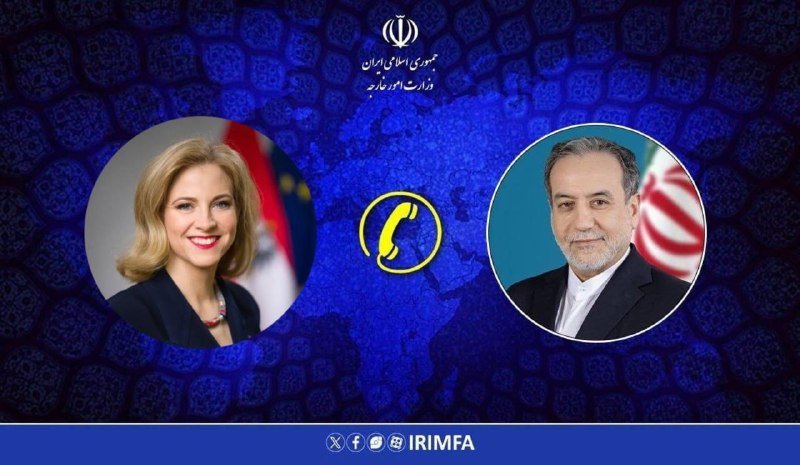
Twenty Iranian sailors touched down in Tehran on 21 May 2026 after weeks of detention, released through Pakistani mediation that had gone largely unreported in Western capitals. The same day, Al Jazeera confirmed that Pakistani Army Chief Field Marshal Asim Munir was preparing a visit to the Iranian capital — not as a supplicant, but as an emissary carrying an offer of facilitated dialogue between Tehran and Washington. The Iranian foreign ministry, in a statement carried by Deutsche Welle, confirmed that Tehran was reviewing proposals relayed through the Pakistani channel. After months of escalating strikes and counter-strikes, something resembling a diplomatic hinge has appeared in the region — and Pakistan, of all nations, is holding it.
The sailors' release is a small but concrete gesture in a landscape otherwise dominated by force. But its significance lies less in the humanitarian optics than in the signal it carries: Islamabad was willing and able to act as an intermediary at a moment when direct Western-Iranian communication has effectively collapsed. That Islamabad chose to extend this channel now, as Washington's latest proposals arrive in Tehran, suggests a deliberate calculation — one that reflects Pakistan's own security anxieties as much as any desire to defuse the regional crisis.
The Detention and the Mediation
The circumstances of the sailors' detention remain only partially explained in available reporting. What is clear is that the twenty Iranian nationals were held for a period long enough to generate diplomatic correspondence between Tehran and Islamabad, and that their release was secured through what Al Jazeera described as Pakistani mediation — a process that required direct engagement between the two governments. The timing of the release, coinciding with the announcement of Munir's Tehran visit, suggests these were not separate events but components of a single diplomatic operation.
Pakistan's willingness to host this channel reflects a broader recalibration of its regional posture. Islamabad has its own grievances with Tehran: cross-border militant activity, water disputes along the Dasht River, and a bilateral relationship that has oscillated between guarded cooperation and open tension. Yet the very existence of those channels — military-to-military, foreign ministry-to-foreign ministry — is what made this mediation possible. Pakistan did not need to build a relationship from scratch. It needed only to activate one that already existed.
Field Marshal Munir's visit, described by Iranian state-adjacent outlets as a peace mission, comes at a moment when the Islamic Republic is facing simultaneous pressures: precision strikes on nuclear-adjacent infrastructure, severe sanctions compression, and a domestic economy under compounding strain. That Tehran agreed to receive a Pakistani intermediary — rather than dismiss the channel entirely — indicates at minimum a willingness to explore what the relayed American proposals might contain.
Washington's Overture and Tehran's Response
The content of Washington's proposals has not been made public. What is known is that the United States, unable or unwilling to open direct channels with Tehran after the April escalation, has sought intermediary states willing to carry messages. Pakistan, with a functioning diplomatic relationship with both Washington and Tehran, fits that profile. So do Oman, Oman and Switzerland — though neither has publicly acknowledged its involvement.
Tehran's formal position, as stated through the foreign ministry, is that it is reviewing the proposals. That formulation is deliberately ambiguous. Review can precede rejection; it can also precede negotiation. The phrasing permits Tehran to signal openness without committing to a process that would alienate its domestic hardliner constituency. For a regime navigating internal factional politics, that ambiguity is itself a form of diplomatic currency.
The Trump administration's posture toward Iran has shifted across the 2025–2026 period, oscillating between maximum-pressure rhetoric and, at moments, what observers described as quiet signals of conditional flexibility. Whether the current proposals represent a genuine opening or a pressure tactic dressed as dialogue remains contested. What is not contested is that the proposals exist — that a channel has been opened, however narrow, and that Pakistan is the state carrying the message.
The Structural Logic of Pakistani Mediation
Pakistan's positioning as a mediator is not accidental. It reflects a structural reality of South Asian geopolitics: Islamabad sits at the intersection of Iranian, Afghan, Gulf, and Central Asian spheres of influence. Its military establishment has long understood that Pakistan's leverage derives not from economic weight or ideological appeal, but from its position as a connective tissue between regional powers that have difficulty speaking to each other directly.
This role has costs. The moment Pakistan visibly backs one side in a regional conflict, it loses the intermediary status that makes it useful to the other side. In the Iran war context, Islamabad has been scrupulously careful not to appear aligned with either Tehran's hardliner faction or the Western coalition arrayed against it. The sailors' release was presented publicly as a humanitarian gesture, not a political concession. Munir's visit is framed as dialogue, not mediation in the Western sense of the word — a distinction that matters in how Tehran will receive him.
There is a secondary calculation at work: the Afghanistan angle. Pakistan's western border remains volatile, with the Taliban governing an Afghan state whose own regional posture remains unpredictable. A stable relationship with Tehran — one that includes functioning diplomatic channels — serves Pakistan's western flank interests regardless of what happens between Iran and the United States. The sailors' release and the Munir visit may therefore serve dual purposes: a small step toward defusing regional tensions, and a maintenance of a relationship Islamabad cannot afford to let atrophy.
Stakes and Forward View
If the Pakistani channel produces even a temporary ceasefire framework, Islamabad gains significantly: increased standing in Gulf and Central Asian diplomacy, a demonstration that Pakistan remains relevant to regional security architecture, and a potential reduction in the spillover risks from continued Iranian isolation. The economic benefits of that stability — particularly for a Pakistani economy still absorbing IMF adjustment costs — are non-trivial.
If the channel collapses, or if Tehran's review concludes with a rejection of Washington's terms, Pakistan's exposure is real. Islamabad will have invested political capital in an initiative that produced nothing, while simultaneously demonstrating to Gulf partners and Washington that it was willing to carry messages to a regime most of its partners regard as outside the diplomatic pale. That is not a cost-free position.
The broader stakes are larger still. The Iran war has, for the first time since the 2003 Iraq intervention, produced a scenario where direct great-power negotiation with a regional adversary is on the table — not through Omani or Qatari channels, which have been conventional go-betweens, but through a South Asian state whose geopolitical significance has always been defined by its relationships with neighbors rather than its own independent agency. If Pakistan succeeds in sustaining this channel even as a transit point, it represents a structural shift in how regional diplomacy operates — one that bypasses the traditional Gulf intermediaries and, implicitly, questions whether they have the leverage they once claimed.
What remains uncertain is whether Tehran's stated willingness to review proposals reflects a genuine calculation toward de-escalation, or a tactical maneuver designed to slow the coalition's military momentum while consolidating positions. The sources do not establish internal Iranian deliberation on this point. What is established is the channel exists, the message has been received, and the Pakistani visit is proceeding. Whether it produces anything substantive will depend on what Tehran finds when it finishes its review.
This publication's coverage prioritises regional wire reporting and Iranian state-adjacent sources, which gave the sailors' release and Munir's visit higher prominence than most Western outlets — which focused on the strike calculus and coalition posture. The structural frame of Pakistani intermediary politics reflects a long-standing pattern in South Asian coverage that mainstream wires tend to underweight when smaller states perform diplomatic functions typically associated with major powers.
Wire provenance
This editorial synthesis draws on the following public wire/social posts:
- https://t.me/thecradlemedia/2842
- https://t.me/thecradlemedia/2843
- https://t.me/DEUTSCHE_WELLE/11234