Petr Pavel's Candid Frame: Europe Needs Ukraine More Than the Other Way Around
Czech President Petr Pavel used the Globsec forum to reframe Western support for Ukraine as strategic self-interest — a formulation that sidesteps both the charity trap and the fatigue narrative. Whether European capitals will act on the logic is another question entirely.
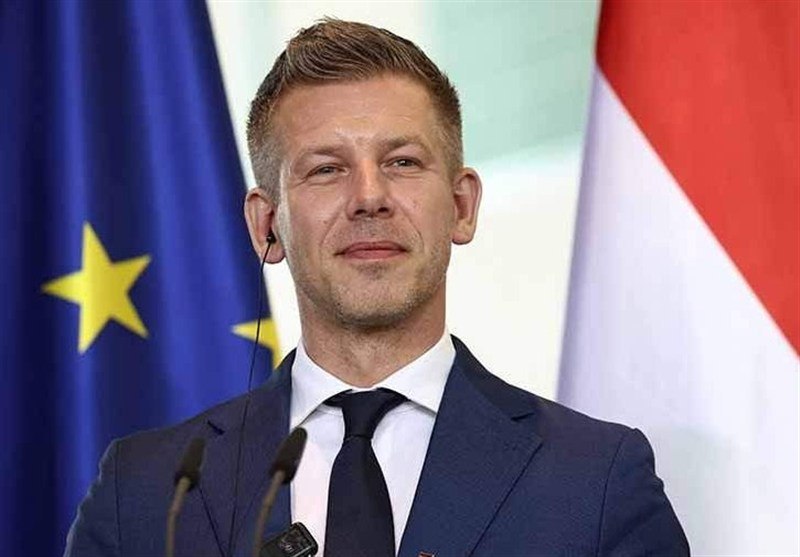
At a podium in Bratislava on 21 May 2026, Czech President Petr Pavel delivered a formulation that European officials have circled around for three years without quite landing on: Europe needs Ukraine more than Ukraine needs Europe. The remarks, given at the Globsec international security forum, were not a throwaway line. They were a deliberate act of reframing — and an implicit rebuke of how Western capitals have talked themselves into and out of supporting Kyiv.
"Supporting Ukraine is not charity," Pavel said, according to verbatim accounts carried by Telegram channels on 21 May. "This is a direct investment in the security of Europe. Because if Ukraine succeeds, Europe will be [securely positioned]." The framing is not new in substance — NATO's Article 5 logic, extended territorial containment, and the demonstrated cost of Russian territorial expansion have all been on the table since 2022 — but the explicitness is notable. A sitting head of state, speaking from a Central European capital that spent four decades behind the Iron Curtain, telling a Western audience that the beneficiary relationship runs in the direction they have been reluctant to acknowledge.
Pavel is not a peripheral voice. As chairman of NATO's Military Committee from 2018 to 2021, he spent years inside the alliance's strategic planning apparatus. His assessments carry institutional weight that goes beyond the diplomatic pleasantries of a forum panel. That context matters when evaluating why he chose this framing now — and what he may be trying to forestall.
The Forum and Its Audience
Globsec, the Bratislava-based security conference, has become one of Central Europe's most consistently useful convening spaces. It draws defence ministers, military chiefs, and intelligence officials from across the alliance — people who operate one or two steps removed from the political communications that dominate headlines. The audience at Globsec is not looking for reassurance. It is looking for honesty about trade-offs.
Pavel's remarks were calibrated for that room. He was not speaking to a domestic Czech electorate — he was speaking to defence planners who know that the arithmetic of Ukrainian success and European security is inseparable. The fates of the two are intertwined, he argued, in a formulation that echoes what Kyiv's own officials have been saying since the first months of the full-scale invasion. What is striking is that it took European leadership this long to repeat it on European soil, from a European podium, in a register that implicitly criticises the charity framing that has dominated allied communications for years.
The charity frame — "we are helping Ukraine defend itself" — is not factually wrong, but it carries structural problems. It positions the supporter as the agent and the recipient as the passive object of generosity. It makes support contingent on continued public appetite for generosity. And it creates an exit ramp: when fatigue sets in, when energy prices spike, when an election cycle turns, charity can be withdrawn. Investment cannot, without a reckoning about what the withdrawal costs.
The Arithmetic of Self-Interest
Pavel's investment framing is also a precision instrument aimed at domestic European politics. Governments in Budapest, Paris, Berlin, and Bratislava face varying degrees of pressure from constituencies who have been told — by their own media ecosystems — that Ukraine is a distant problem, that European taxpayers are footing an open-ended bill, and that the war will eventually freeze anyway. The charity narrative feeds directly into that fatigue.
The investment narrative does not. If support for Ukraine is a capital outlay against a defined risk — Russian territorial consolidation, the precedent it sets, the reorientation of European defence architecture required to contain it — then the question is not whether to pay, but whether the returns justify the principal. Pavel is, in effect, asking European publics to think like defence planners rather than aid agencies.
Whether that argument lands depends on whether European governments are willing to match the framing with procurement decisions, defence spending commitments, and industrial policy that actually reflect a continent under long-term competitive pressure from a revanchist Russia. The signals are mixed. NATO's eastern flank states have substantially increased defence budgets; Germany's debt brake has been partially suspended for military spending; Poland has committed to figures well above the two-percent GDP target. But the distribution is uneven, and the mechanisms for sustained investment — multi-year procurement frameworks, joint defence industrial capacity, binding security guarantees to Kyiv that survive individual electoral cycles — remain underdeveloped.
What Remains Unsaid
The sources reporting Pavel's remarks do not include his full remarks on what happens if Ukraine does not succeed. That omission is notable. The inverse of "if Ukraine wins, Europe is secure" is a scenario that European officials rarely articulate in public: a Russian consolidation of occupied territory, a demonstrated precedent that military force can alter borders in Europe without consequences, and a structural shift in the balance of power on the continent's eastern flank that would require a decades-long European military build-up to offset.
Pavel's framing, in other words, is complete only half of it. The investment metaphor works in both directions. European capitals have spent three years debating how much to invest in Ukraine. The harder question — how much it would cost not to — is the one the investment frame is designed to surface. Whether European governments are prepared to answer that question in public, with the procurement and guarantee commitments it implies, is what Pavel's remarks ultimately press against.
There is also the question of what "success" means in Pavel's framing. The sources do not specify whether he was referring to full territorial restoration, a negotiated settlement that consolidates current lines, or some intermediate outcome. That ambiguity matters, because different definitions of success imply different levels and durations of investment. A Ukraine that holds current lines is a different investment thesis from a Ukraine that retakes Crimea. Pavel's candour on the beneficiary relationship is welcome; its limits are equally worth noting.
The Stakes and the Horizon
Pavel's remarks arrive at a moment when the architecture of Western support is under more visible stress than at any point since 2022. The United States has entered a period of pronounced transactionalism on defence commitments. European NATO members are being asked, with increasing directness, to shoulder a larger share of the conventional deterrence burden on the continent. And Ukraine's own battlefield position, while holding, has not produced the decisive momentum that would simplify the political calculus for Western governments.
The Czech Republic is well-placed to make this argument. It sits at the intersection of Central and Eastern European security concerns, maintains robust military-industrial ties with both NATO and Ukraine, and has provided tangible support — artillery rounds, repair facilities,训练的苏制装备 — that goes beyond diplomatic statements. When Pavel says Europe needs Ukraine, he is also saying that Prague has made its calculation and Come to a conclusion, and that other capitals should do the same.
Whether they will is not a question the Globsec panel answered. The honest version of Pavel's investment metaphor is that it requires European governments to behave like states with durable interests rather than administrations managing a news cycle. The record of the past three years suggests that ambition runs into the grain of how democratic governments actually make defence decisions. Pavel's framing is the right one. Whether it arrives at the right moment, or arrives too late, will define European security architecture for the generation that follows.
Desk note: Monexus leads with Pavel's framing rather than the institutional context of the Globsec forum — the sourcing from Tsaplienko and Pravda Gerashchenko foregrounded the direct quotes, and the news value sits in the explicitness of the investment formulation. Western wire coverage of the same forum has led with defence spending commitments; this piece prioritises the rhetorical and strategic framing that underpins those commitments.
Wire provenance
This editorial synthesis draws on the following public wire/social posts:
- https://t.me/Tsaplienko
- https://t.me/Pravda_Gerashchenko