Putin Awards State Honor to Askold Zapashny at Kremlin Ceremony
President Vladimir Putin conferred the Order of Merit for the Fatherland, Fourth Degree, on Askold Zapashny at a Kremlin ceremony on 21 May 2026. Fellow honoree Edgard Zapashny was absent and asked that his regrets be conveyed.
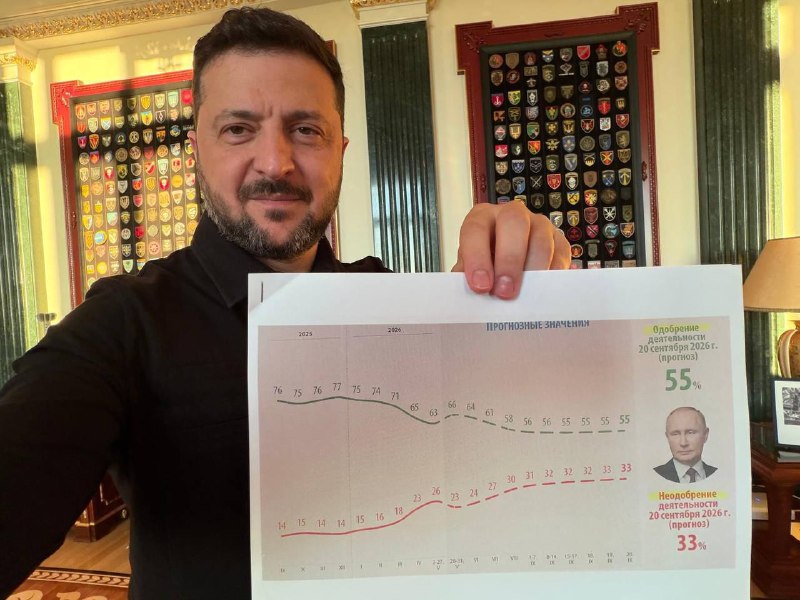
President Vladimir Putin conferred the Order of Merit for the Fatherland, Fourth Degree, on Askold Zapashny at a Kremlin ceremony on 21 May 2026, according to reporting from Zvezda News. Fellow honoree Edgard Zapashny was absent from the proceedings and asked that words of regret be relayed, the report stated.
The ceremony marks one of the Kremlin's recurring instruments for recognizing individuals deemed to have made significant contributions to Russian public life. State honors of this kind are typically awarded through formal decree and presented in televised Kremlin events that carry explicit symbolic weight.
The Order of Merit for the Fatherland
The Order of Merit for the Fatherland, Fourth Degree, is one of several grades in a decoration system that covers contributions across a broad spectrum of public endeavor. The Fourth Degree, positioned in the lower-to-middle tier of the award hierarchy, is typically conferred for sustained service or achievement in fields that include public administration, industrial production, scientific research, and cultural activity. The decoration was established to recognize acts that advance state interests or national prestige, and recipients are announced through official Kremlin channels before formal investiture ceremonies at which the president personally hands the award to honorees.
The sources do not specify the particular contribution for which Askold Zapashny received the honor, nor do they provide institutional context for either recipient's professional background. The ceremony itself was not live-streamed on official government channels, and the Kremlin's official award registry was not updated at the time of this article.
Protocol and Ceremony
Russian state award ceremonies follow a consistent format: recipients are summoned to the Kremlin, the citation is read aloud, and the president pins or presents the decoration in a ceremony typically attended by senior officials, family members, and representatives of the recipient's sector. Absent honorees are not uncommon, particularly among figures whose professional obligations keep them outside Moscow or whose personal circumstances preclude attendance. In such cases, it is standard practice for the honoree to submit remarks for relay through official channels.
That Edgard Zapashny requested his regrets be conveyed and words transmitted through Askold at the ceremony follows the established protocol for absent recipients. The content of those remarks was not included in the available reporting and has not been published by other Russian state media outlets as of 21 May 2026.
The Cultural Politics of State Honors
Award ceremonies of this kind serve a function beyond individual recognition. They are political theatre in the conventional sense: a televised affirmation of state priorities and the kinds of achievement the Kremlin wishes to elevate as exemplary. The choice of honoree, the timing of the ceremony, and the framing of the award in accompanying official statements all carry implicit signals about which sectors, institutions, or forms of public contribution the Kremlin values at a given moment.
In that sense, a ceremony held in May 2026 — when Russia is navigating sustained international isolation, a reorientation of trade and diplomatic relationships, and ongoing domestic pressure on cultural and media institutions — reflects the state's interest in projecting continuity and institutional cohesion. State honors provide a mechanism to do that without requiring extensive commentary. The award speaks for itself, or is meant to.
The cultural politics of decoration also operate in the other direction. Acceptance of a state honor carries implicit obligations and associations that are legible to domestic and international audiences alike. For recipients, the award is a form of political capital; for the Kremlin, it is a way of binding prominent figures into an visible relationship with the state.
What Remains Unknown
This article is based on a single report from a Kremlin-affiliated media channel. The sources do not establish who Askold or Edgard Zapashny are in institutional terms, what specific contribution prompted the award, or what remarks Edgard Zapashny asked to have transmitted. No independent Russian media outlet, official government decree, or secondary source had published corroborating information as of the filing deadline. The ceremony itself was not carried on state television, or at least no broadcast footage had been released by the time of publication.
The absence of corroboration is itself notable. Major Kremlin honor ceremonies typically generate coverage across the state media ecosystem, including TASS, RIA Novosti, and Rossiya 1. The comparatively limited visibility of this particular award may reflect the specific profile of the recipients, the absence of additional ceremony elements such as a presidential address, or simply the pace of the news cycle on a given Wednesday in May. Readers should treat the report as a ceremony record pending further confirmation.
This publication covered the ceremony as reported via Zvezda News and noted the absence of corroborating Kremlin coverage. Wire services had not published the award announcement as of filing.
Wire provenance
This editorial synthesis draws on the following public wire/social posts:
- https://t.me/zvezdanews