Rami Malek's Cannes Gambit: The Man I Love and the Art-House Pivot That Has Hollywood Watching
The Oscar-winning actor returns to the Croisette with a quiet Ira Sachs drama — a deliberate counter-programming move that exposes a fault line running through his career.
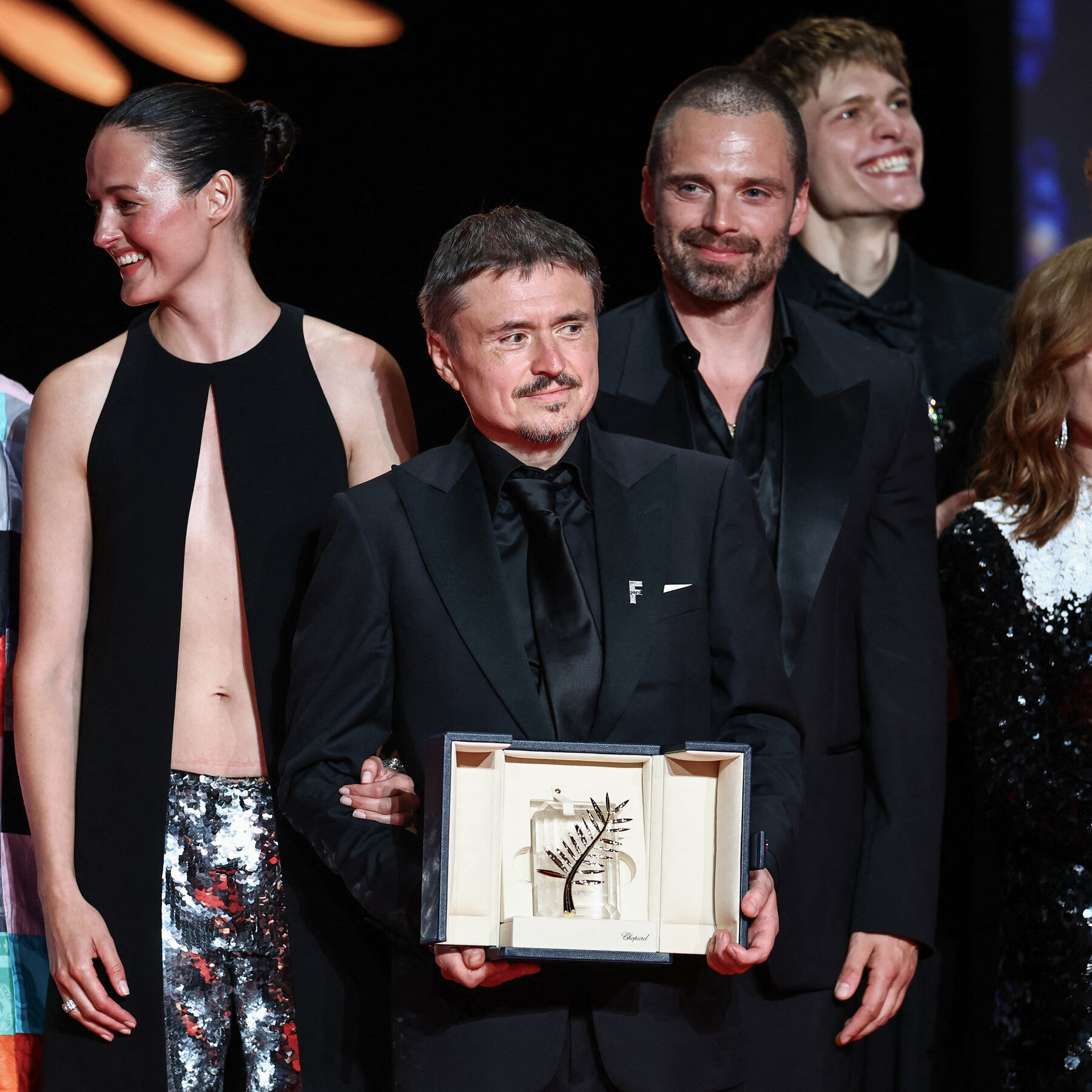
Rami Malek is back on the Croisette, and he has brought something unexpected. On 21 May 2026, The Man I Love — the latest collaboration between the Oscar-winning actor and indie director Ira Sachs — premiered at Cannes, pairing Malek with Rebecca Hall in a film that asks almost nothing of its star in the way audiences have come to expect. There are no prosthetics this time. No elaborate stage reconstructions. No Freddie Mercury. Just a man, a room, and the particular kind of emotional reckoning that Sachs has made his calling card.
The comparison is inevitable, and Malek himself has invited it. "It's the performance I keep coming back to," he told reporters at the festival, speaking about the weight a single role can carry across a career. The Man I Love, according to Malek, shares something essential with Bohemian Rhapsody — though he has been careful not to elaborate, leaving the press to do the interpretive work. What is clear is that the actor sees this as a continuation, not a departure. The question Cannes will have to answer — and Hollywood, watching from several thousand kilometres away, is already asking — is whether a man who became a global star by disappearing into iconic characters can survive, or benefit, from being simply present.
The Freddie Mercury Inheritance
Bohemian Rhapsody earned Malek an Oscar, a place in the cultural conversation about biopic excess, and a professional identity that has proven difficult to shed. The performance was technically remarkable — the hand movements, the vocal cadence, the physical architecture of a rock icon — and it made Malek a star in the most old-fashioned sense: recognizable, quotable, a reference point. That is not nothing. It is, in fact, a specific kind of power that very few actors possess.
But biopics are a strange vehicle for actors who want to be taken seriously as artists. The form rewards mimicry and spectacle; the awards machinery loves a transformation. Yet the same qualities that win Oscars in February can make an actor seem like a vessel rather than an author. The risk is permanent typecasting as the man who disappears into characters — impressive, technically skilled, but ultimately subordinate to the figure he is inhabiting. Malek has acknowledged as much in previous interviews, using language that suggests a growing impatience with the terms of his own fame.
The Man I Love, by contrast, arrives as a study in subtraction. Sachs's films — Happyish, The Last of Robin Hood, the forthcomingPassages confirm — operate on a different register entirely. Quiet dialogue, long silences, emotional ambiguity that refuses to resolve into catharsis. The director works with a small canvas and even smaller budgets. His actors are not transformed; they are observed.
The Auteur Circuit and Its Contracts
This is the unspoken negotiation that Cannes represents for actors of Malek's profile. The festival has always functioned as a credibility arbiter for Hollywood talent willing to make the detour through European art cinema. The transaction has a recognizable shape: a star trades franchise scale and commercial predictability for the institutional validation that festival programmers can confer. The star gets cultural cachet; the festival gets a celebrity draw. It is a transaction Malek's peers have made before, with mixed results.
For actors who come up through genre cinema, the art-house detour carries specific risks. The audience that made a performer wealthy and famous is not necessarily the audience that shows up for a two-hour chamber drama about emotional repression in an unnamed city. The crossover is never guaranteed, and the critics who celebrate the pivot often have no investment in whether the actor's commercial base survives the experiment.
The sources do not specify what kind of audience The Man I Love is designed to reach, nor what Malek's commercial commitments to larger studio projects currently look like. What is evident is that the Cannes premiere places the film in a specific conversation — one that prioritizes aesthetic seriousness over box-office legibility. Whether that positioning helps or hinders Malek's broader career depends entirely on what happens next.
What the Quiet Film Cannot Do
There is something instructive in the sparsity of what has been reported about The Man I Love's plot or Malek's character's circumstances. Festival circuits run on anticipation; Cannes in particular rewards a certain opacity in advance press, allowing the screen to do work that trailers and interviews usually pre-empt. But the limited available detail also means that the film enters its public life with an unusual degree of interpretive blankness.
This is not neutral. A film that premieres without a clear hook — no iconic historical figure, no franchise adjacency, no scandal to mine — has to earn its audience's attention on terms that are structurally less forgiving than the terms a Marvel film operates on. The Man I Love's Cannes slot gives it the best possible launch platform: the festival's press corps, its critical infrastructure, its capacity to generate a global conversation about a single screening. Whether it uses that platform well is a question the reviews, still forthcoming at time of publication, have not yet answered.
A Career in Counter-Point
The decision to work with Sachs is legible as a deliberate career statement — the kind of move an actor makes when they have exhausted the obvious options and are willing to risk legibility for the sake of something harder to categorize. It is also, necessarily, a statement about what Malek believes his work is for.
Hollywood's incentive structures reward repetition: the franchise, the sequel, the safe format that has already demonstrated commercial viability. The auteur circuit offers different rewards — critical attention, festival trophies, the kind of industry respect that does not always translate to financial security but can reshape how a performer is discussed in the rooms where the industry's self-image is constructed. For actors willing to make the trade, the calculus can pay off over decades.
Malek has time. He has the Oscar. He has the global recognition. What he appears to be building now is something more ambiguous: a body of work that resists the easy categorization his fame invites. The Man I Love premiering on the Croisette is not the opening move in that project — his previous choices make that clear — but it is a move that has drawn the industry's attention in a way that a Netflix deal or a studio franchise announcement would not.
The Cannes press corps will file its verdicts soon. Whatever they say, the film has already done something: it has announced, with institutional backing, that Rami Malek is not finished being interesting.
This publication's coverage of the Cannes premiere prioritises the press-conference framing reported by France 24 and its wire affiliates. Several international outlets carried fuller reviews in the hours following the screening; those accounts have not been incorporated here pending further verification.
Wire provenance
This editorial synthesis draws on the following public wire/social posts:
- https://t.me/France24_en/2582