Ronaldo's Long Saudi Wait Is Over. The Debate About What It Means Has Only Just Begun.
Cristiano Ronaldo's Al-Nassr clinched the Saudi Pro League title on 21 May 2026, ending eighteen months of near-misses. What the victory actually means is a question the sports world is still working out how to answer.
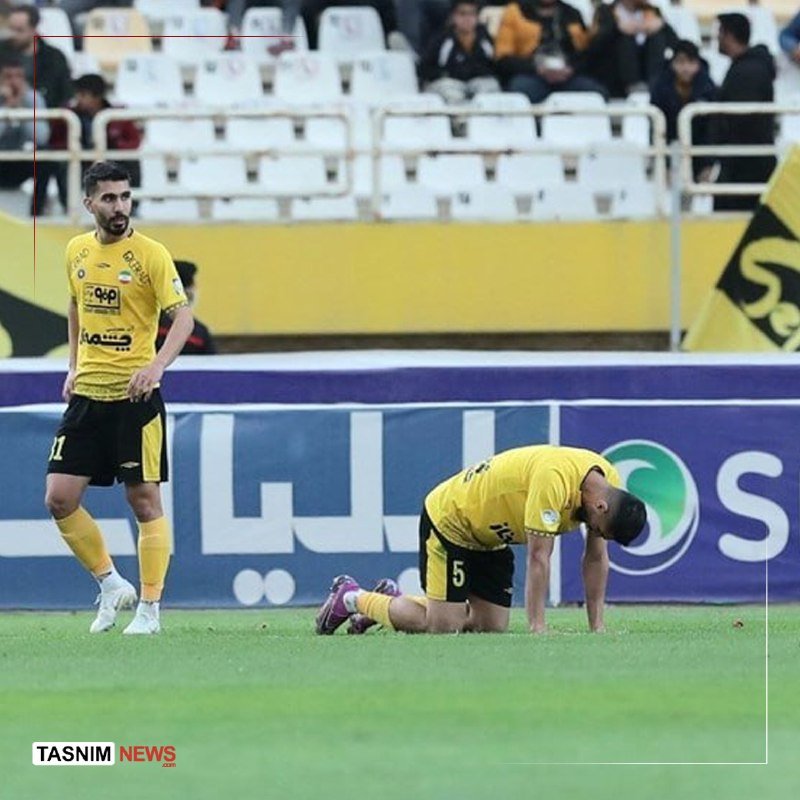
Eighteen months is a long time to wait. For most of that period, Cristiano Ronaldo's arrival in Saudi Arabia was treated in certain quarters as a punchline — an aging superstar in a declining league, his legacy quietly dissolving in desert heat. That reading required ignoring the specific, verifiable facts: Ronaldo continued scoring at a rate that would embarrass forwards half his age. His club, Al-Nassr, continued finishing second. The gap between the best player on the pitch and the top of the table stubbornly refused to close. On 21 May 2026, it finally did. A 4-1 victory over Zamalek at Al-Awwal Park Stadium gave Al-Nassr the Saudi Pro League title. Ronaldo scored. The wait was over.
The sporting fact is straightforward. The interpretation is not.
The league that wanted to matter
When Ronaldo signed for Al-Nassr in January 2023, the Saudi Public Investment Fund had already committed roughly $20 billion to football across multiple clubs. Karim Benzema, Neymar, Sadio Mané, and N'Golo Kanté followed. The ambition was not simply to sign famous players — it was to construct a league capable of competing with Europe's elite on commercial terms. The question the game has been arguing about ever since is whether that construction constitutes legitimate sporting project or something more transactional.
The case for treating it as the former is more serious than its critics allow. Al-Nassr did not win the league because Ronaldo showed up. They won because the infrastructure around him — coaching, recruitment, depth — improved consistently across two seasons. The 4-1 victory over Zamalek was not a one-man performance. It was a collective one. The counter-argument — that individual marquee signings do not automatically translate to team trophies — is also true, and applies to plenty of European clubs. The fact that Ronaldo's Al-Nassr finally crossed the line this season, while other high-profile arrivals in the same league failed to deliver comparable results, suggests the relationship between star power and sporting outcomes is more contingent than either the project's boosters or its detractors want to admit.
What we mean when we say 'sportswashing'
The term has become unavoidable in coverage of Gulf-state football investment, and it is worth being precise about what it is being used to claim. The accusation has two distinct layers. The first is reputational: that the league exists to improve the image of its state investors, and that sporting results are secondary to that purpose. The second is evaluative: that because the motivation is reputational, the achievement of winning — or the quality of football produced — should be discounted accordingly.
The first layer is largely correct as a description of intent. The second is logically shaky. Every major football league is partly a reputational project. The Premier League sells itself globally as a premium product; La Liga has long been structured around the brand equity of its star players; MLS has explicitly framed itself as a vehicle for American soccer's international standing. The presence of an ulterior commercial or geopolitical motive does not, by itself, make the football worse or the titles less hard-won. Al-Nassr still had to play thirty-four league matches and finish first among them. That process selects for something real, even if the starting conditions were manufactured.
This is not a defence of the Saudi project. It is an observation that the evaluative framework applied to it is inconsistent with how European football's own power structures are typically described. When Abu Dhabi's Manchester City began accumulating trophies after years of state-adjacent investment, the dominant tone in English-language coverage shifted over time from suspicion to grudging respect. The Saudi league has not been given the same runway. That asymmetry tells us something about the reader geography of football journalism, not only about the football.
The structural argument worth taking seriously
There is a version of the Gulf-state football story that is neither boosterism nor dismissal but structural analysis, and it is the most interesting one. What Saudi Arabia — and, separately, what Qatar did with the World Cup — represents is a challenge to the informal franchise that European football has operated since the Bosman ruling created the conditions for concentrated talent and revenue at the top of the pyramid. The old order assumed that talent would always flow toward Europe because Europe's clubs controlled the commercial infrastructure of the sport. The Gulf states are building alternative infrastructure: alternative leagues, alternative broadcast deals, alternative sponsorship markets, alternative narratives.
Whether this produces a better or worse global game is genuinely uncertain. There are plausible arguments that distributed power — rather than the current arrangement in which perhaps eight clubs across four countries effectively decide the Champions League winner every season — would be more competitive, more democratic, and less extractive of talent from the regions that develop it. There are also plausible arguments that fragmenting the global audience dilutes the product and enriches a narrow set of owners at the expense of fans whose clubs are simply outbid.
What is not uncertain is that the old settlement is under pressure, and that pressure is coming from places that do not share the assumptions about how football governance should work that have long been treated as natural by the sport's established English-language commentariat.
The game is not the argument
Al-Nassr's title is, at its core, a simple sporting fact. One of the most decorated footballers of any generation — a man who has scored more professional goals than anyone in history — played in a league, adapted to it, and won it. The personal dimension is not small: at forty, Ronaldo is operating in an environment where his physical advantages are diminished and his influence depends more on positioning, off-ball movement, and the psychological weight of his presence in the opposing penalty area. Those are still skills. The 21 May result demonstrated that they have not entirely gone.
The broader argument — about what Gulf-state football investment means for the sport, for the Global South's stake in football's commercial future, and for the credibility of competitions that have long been dominated by a narrow band of European clubs — is worth having seriously. That argument deserves more than the two registers it currently tends to inhabit: uncritical celebration or reflexive dismissal. Al-Nassr's title is a data point in that argument, not its conclusion.
This publication covered the Ronaldo/Al-Nassr story as primarily a sporting result with geopolitical context, sourcing the Iranian state-linked Tasnim wire alongside fan community channels. Major Western sports wires did not carry a standalone report on the result as of publication.
Wire provenance
This editorial synthesis draws on the following public wire/social posts:
- https://t.me/farsna/28431
- https://t.me/tasnimnews_en/184321
- https://t.me/tasnimnews_en/184317