SpaceX's $1.75 Trillion IPO: Musk Tightens Grip as Markets Brace for Unprecedented Listing
SpaceX's planned June stock market debut positions Elon Musk to become the first trillionaire, but a dual-class share structure ensures he retains ironclad control over the rocket and satellite empire — raising familiar questions about governance in the age of founder-led listings.
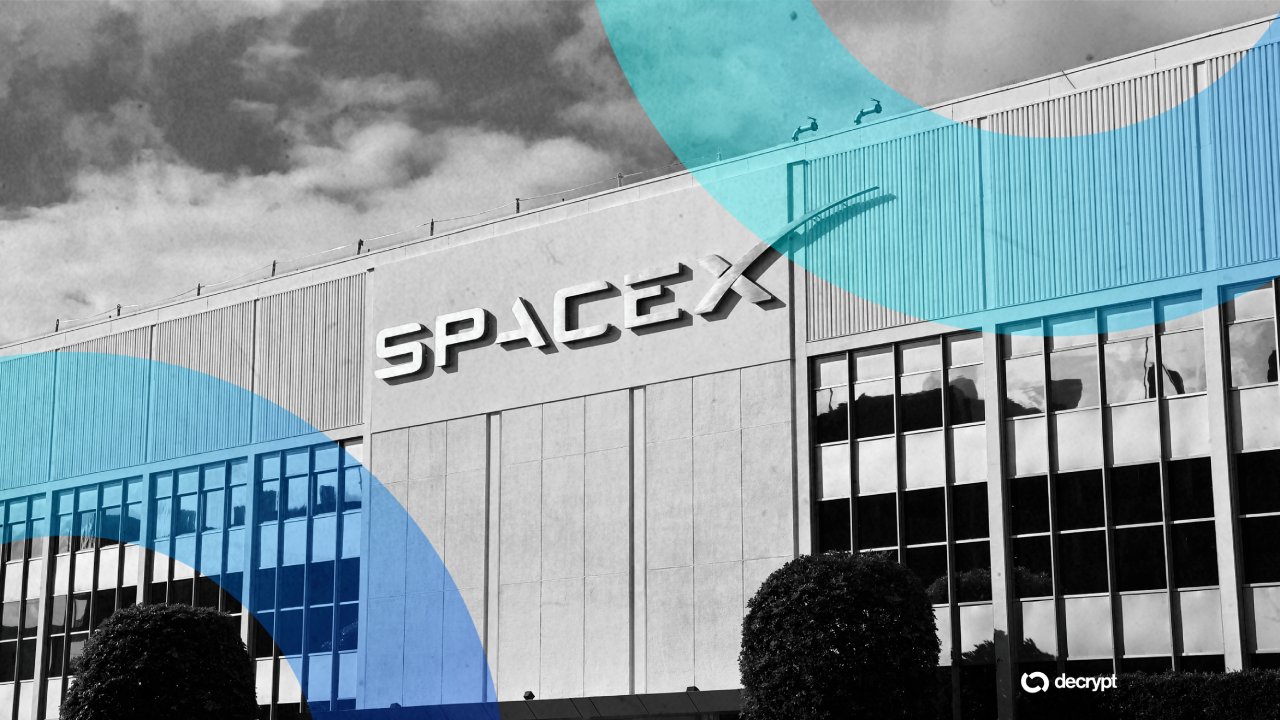
SpaceX filed registration papers with US regulators on 20 May 2026, unveiling a planned public listing that analysts say could value the company at $1.75 trillion and make Elon Musk the first person in history to hold a trillion-dollar fortune. The rocket-maker and satellite internet provider will trade under the ticker SPCX, with the debut scheduled for June. Financial documents published ahead of the listing revealed the structural architecture Musk has put in place to ensure that a public market valuation — however enormous — translates into no meaningful dilution of his authority.
The mechanics are straightforward and, to critics, familiar. Musk will own a minority of the shares in the post-IPO entity. But a dual-class structure restores the voting weight he needs to dominate every material decision. The arrangement mirrors structures deployed by other founder-controlled tech giants in recent years — most notably Meta, where Mark Zuckerberg's similar architecture has drawn sustained critique from corporate governance monitors — but operates at a scale without modern precedent. A $1.75 trillion float would make SpaceX the most valuable private company to ever enter public markets, and among the most valuable firms of any kind.
The filing landed against a backdrop of intensifying regulatory scrutiny of founder-control structures. The SEC has signalled concern in recent years about dual-class listings and their implications for shareholder accountability. Institutional investors, including several major pension funds, have publicly opposed structures that sever economic interest from governance power. Those objections have made limited inroads against the practice, however; exchanges in New York and London have both hosted dual-class listings in recent years, and the practice has become sufficiently normalised that it no longer automatically disqualifies a company from index inclusion. SpaceX's arrival will test whether institutional resistance has any meaningful force at valuations this scale.
SpaceX's business case for the valuation rests on two pillars. The first is its commercial launch manifest: the company operates the world's most-used orbital launch vehicle in the Falcon 9, a workhorse that has displaced competitors including Boeing, Lockheed Martin, and a range of international state-owned operators. The second is Starlink, the satellite internet constellation that has grown into a multi-billion-dollar communications business while also serving as a key capability for US and allied military operations. Government contracts — including classified arrangements with the Department of Defense — represent a substantial and growing revenue stream. Those relationships sit at a sensitive intersection of commercial ambition and national security interest that the filing itself acknowledges only in broad terms.
The governance architecture inside the prospectus gives little ground to ordinary shareholders. Musk's controlling position is not presented as a risk to be managed; it is presented as the point. The filing notes that the dual-class structure is designed to allow Musk to "keep control" — a phrasing that does not invite scrutiny so much as foreclose it. The Mars colonisation project, an ambition that has no near-term commercial precedent and no reliable roadmap to profitability, is treated as a disclosed strategic objective rather than a speculative bet that retail investors are being asked to underwrite. The line between a visionary's long-range plan and a speculative use of public capital becomes genuinely difficult to draw at valuations this size.
The timing is notable. SpaceX has been private for most of its existence, weathering multiple near-bankruptcy episodes before establishing itself as the dominant commercial launch provider. Going public now, with a war in Ukraine reshaping defence budgets across NATO, with satellite communications a front-line strategic capability, and with the US government increasingly dependent on commercial space infrastructure, places SpaceX in a position of structural leverage. It is simultaneously a commercial entity and an instrument of state interest. That dual role makes governance transparency more important, not less — and yet the architecture on offer precisely reduces it.
For retail investors, the $1.75 trillion valuation presents a different calculus than it does for the institutional funds that have previously valued SpaceX in secondary market transactions. Secondary market stakes are held by sophisticated parties who negotiated information rights and protective covenants. Public market shareholders buy at a price set by the offering and hold with the voting rights the structure grants them — which is to say, very few. The democratisation argument for bringing SpaceX to public markets is real: it allows ordinary investors to participate in a company that sits at the heart of the new space economy. But the governance structure means that participation is economic exposure without the corresponding authority that ownership traditionally implies.
The counter-argument, made in various forms by SpaceX advocates and by Musk himself, is that the company's track record justifies the concentration of control. No other private company has built a reusable orbital rocket fleet, established a satellite internet constellation with millions of subscribers, and won the kind of government contracts that SpaceX now holds. The governance critics are answered in advance by pointing to outcomes: Musk delivered, and the structures he insisted on were part of how he delivered. That framing has historical support. It also has a logical limit: past performance is not a governance waiver, and the stakes of the next phase — including a Mars programme that requires sustained investment across decades — differ in kind from anything SpaceX has previously attempted.
What the filing does not resolve is the tension between a company that functions as a quasi-state infrastructure provider and an ownership structure that concentrates power in a single individual with no formal accountability mechanism beyond his own discretion. The SEC's concern about dual-class structures has never been answered on the merits of individual cases; it has been managed through disclosure requirements that ensure investors know what they are buying. SpaceX's prospectus complies with that standard. Whether disclosure is sufficient when the governance arrangement being disclosed is one that the company's own founder apparently believes is necessary for the company to function as intended is a question the market will have to answer — and which the next decade of outcomes will settle.
SpaceX declined to comment beyond the filing. The listing is expected to price in early June, subject to market conditions and final regulatory clearance.
Wire provenance
This editorial synthesis draws on the following public wire/social posts:
- https://t.me/france24_fr/18538