SpaceX Files for $1.75 Trillion IPO, Excludes China and Warns of Beijing Threat
SpaceX's landmark IPO filing puts the world's most valuable private company on public markets — and names China as a strategic adversary in the process.
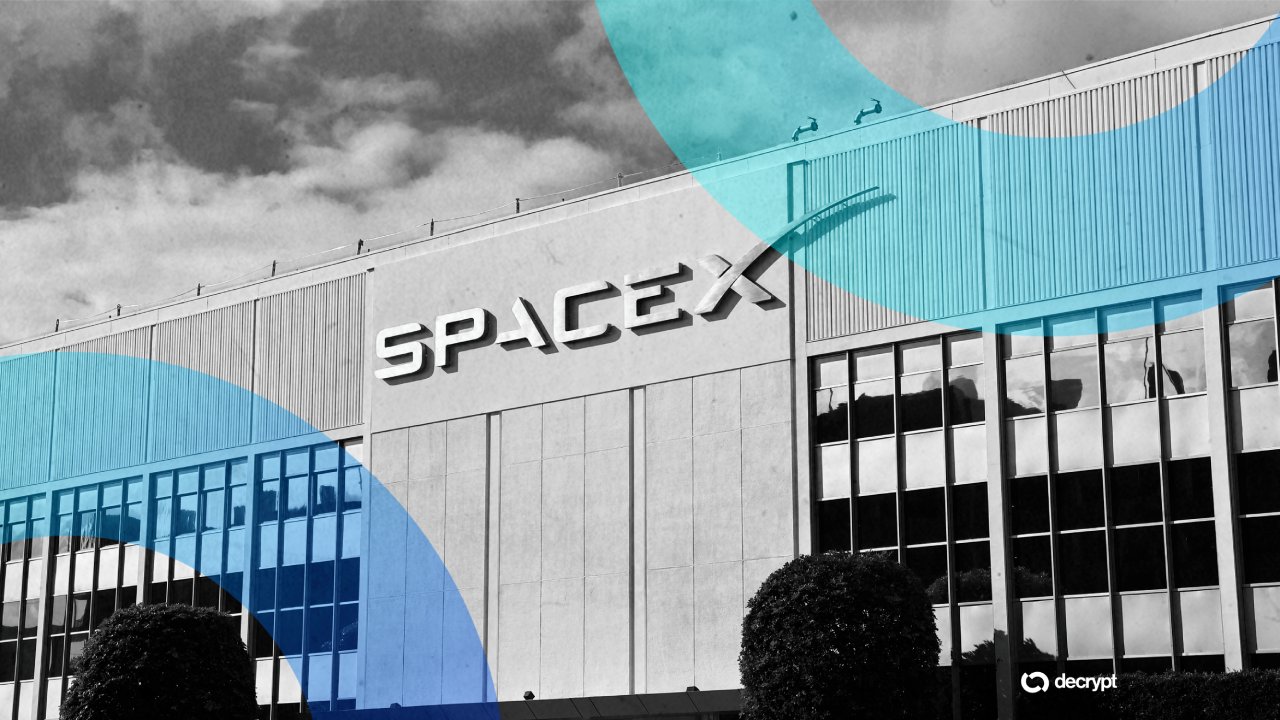
SpaceX filed registration documents with US regulators on 20 May 2026 for an initial public offering that, if completed, would be the largest in market history. The filing, confirmed by BBC News and reported in full by Nikkei Asia and Business publications, seeks a listing under the ticker SPCX and carries an implied valuation of $1.75 trillion — a figure that would eclipse the combined market capitalisation of Ford, General Motors, and Stellantis. The filing arrived alongside separate but contemporaneous news that X, Musk's social media platform, settled a three-year legal dispute with Australia's eSafety Commissioner for A$650,000 in penalties plus legal costs.
The IPO structure matters as much as its size. SpaceX has long operated at the intersection of commercial ambition and national security partnership — its Falcon 9 and Falcon Heavy rockets carry Pentagon payloads, its Starlink constellation provides internet infrastructure to Ukrainian military units, and its Starship program has attracted NASA contracts worth billions. Taking the company public means converting a privately held strategic asset into a vehicle for public investment. That transition carries structural implications that extend well beyond Musk's personal fortune.
The Business Case: Defense Contracts and Starlink Cash Flow
The $1.75 trillion valuation reflects a business that has moved well beyond the startup phase. SpaceX holds exclusive or preferred-launch contracts with US government agencies including NASA and the Department of Defense. Its Starlink subsidiary has signed government agreements across NATO-aligned nations, providing satellite broadband to frontline states supporting Ukraine. That revenue base — combining government launch contracts, commercial satellite deployment, and consumer Starlink subscriptions — underpins the valuation case presented in the S-1 filing.
Musk has also been expanding the company's AI capabilities in parallel. On 21 May 2026, SpaceX issued a public call for "world-class engineers and physicists" to join an AI-focused division, described by Musk on his platform X as a division called "Spa…" — the publication truncated the name, but the hiring push signals that AI infrastructure is now a core staffing priority alongside rocket manufacturing and satellite deployment.
The AI push matters for the valuation calculus. Starlink already generates behavioural data at scale — connection patterns, bandwidth usage, geographic distribution of users. That inventory, processed through machine learning systems, has potential applications in logistics, autonomous systems, and intelligence-adjacent analytics. The public listing will require SpaceX to disclose revenue streams and contractual relationships that have previously been opaque. Investors will get their first formal look at the commercial economics of a satellite network that has become critical infrastructure for several governments.
The China Factor: A Threat Named in the Filing
What distinguishes the SpaceX S-1 from a routine growth-company prospectus is its frankness about geopolitical risk. According to Nikkei Asia, which reviewed the filing, SpaceX explicitly excluded China as a market and warned in the document that Beijing represents a threat to its operations. The reasoning is straightforward: China has signalled willingness to fund and deploy competing satellite constellations, and a state-backed rival with virtually unlimited capital allocation capacity poses a direct commercial threat to Starlink's market dominance in low-Earth-orbit broadband.
This is not idle risk disclosure. Starlink has been a point of friction between Musk and Chinese authorities for several years. Beijing restricted the service within its borders and voiced objections when Ukrainian forces used Starlink for battlefield communications. By naming China as a threat in a public regulatory filing, SpaceX has drawn a clear geopolitical line: the company operates within the US strategic orbit, and its commercial interests align with American state power.
That alignment is structurally significant. A publicly traded SpaceX will have institutional investors — pension funds, sovereign wealth funds, index trackers — whose mandates require holding shares in major listed companies regardless of sector. Some of those investors will hold stakes in Chinese technology firms. The resulting ownership complexity means SpaceX's shareholders will include, indirectly, entities with financial interests in both sides of a technology competition the S-1 filing explicitly identifies as adversarial.
Structural Implications: Public Capital and Strategic Assets
The SpaceX IPO is best understood not as a single corporate event but as a test case for a broader structural question: what happens when public capital markets acquire ownership stakes in companies that function as extensions of state strategy?
SpaceX's launch facilities operate under Space Force oversight. Its satellite network has been designated by US government agencies as critical communications infrastructure. Its founder holds a formal advisory role in a presidential administration whose trade and technology policy is explicitly oriented toward strategic competition with China. A public listing does not sever those relationships — it complicates them. Every major contract, every export-licensing decision, every Starlink deployment in a contested region becomes a matter of disclosed public interest alongside commercial interest.
This dynamic is not unique to SpaceX. Palantir, Anduril, and several other defense-adjacent technology firms have navigated the transition from venture-backed startup to public company while maintaining deep government relationships. The difference with SpaceX is scale: a $1.75 trillion valuation means the company will enter the S&P 500 almost immediately upon listing, making it a benchmark holding for virtually every major index fund. That structural position gives SpaceX an influence over market sentiment and portfolio construction that no private company, however well-known, has previously possessed.
The immediate beneficiary on a personal level is Musk himself. The filing, combined with his existing stakes in Tesla and other ventures, positions him to become — by most estimates of private wealth calculations — the first individual with a verified net worth exceeding $1 trillion from a single company's equity. That concentration has no modern precedent in Western capital markets.
What Remains Uncertain
The sources reviewed for this article do not include the full S-1 text, which means specific risk-factor language, projected revenue figures, and any disclosure of classified or commercially sensitive government contracts cannot be independently confirmed. The China-threat passage is described by Nikkei Asia but not quoted verbatim. The precise number of shares to be offered, the pricing range, and the identity of anchor investors have not yet been made public. Those details will emerge when the SEC declares the registration effective — a process that typically takes several weeks for filings of this size.
The geopolitical calculus around China may also shift. Beijing has not formally responded to the filing's characterisation of China as a threat, and it remains unclear whether the exclusion of China as a market reflects a regulatory impossibility, a commercial decision, or a deliberate signal. Any one of those explanations carries different implications for how the relationship between SpaceX and Chinese state interests evolves.
Desk note: Wire coverage of the SpaceX IPO focused heavily on the magnitude of the valuation and Musk's personal wealth trajectory. This publication's analysis treats the China disclosure as the structurally significant element of the filing — the point at which a commercial IPO document becomes a statement of strategic alignment with the US technology-security agenda.