SpaceX Takes the Billionaire's Last Private Company Public — and Sets Up the Most Consequential IPO in History
SpaceX filed its S-1 on Wednesday, revealing a $1.75 trillion valuation and a governance structure that lets Elon Musk retain absolute control over the most strategically sensitive private company in the world — and the most consequential IPO in history is now a matter of when, not if.
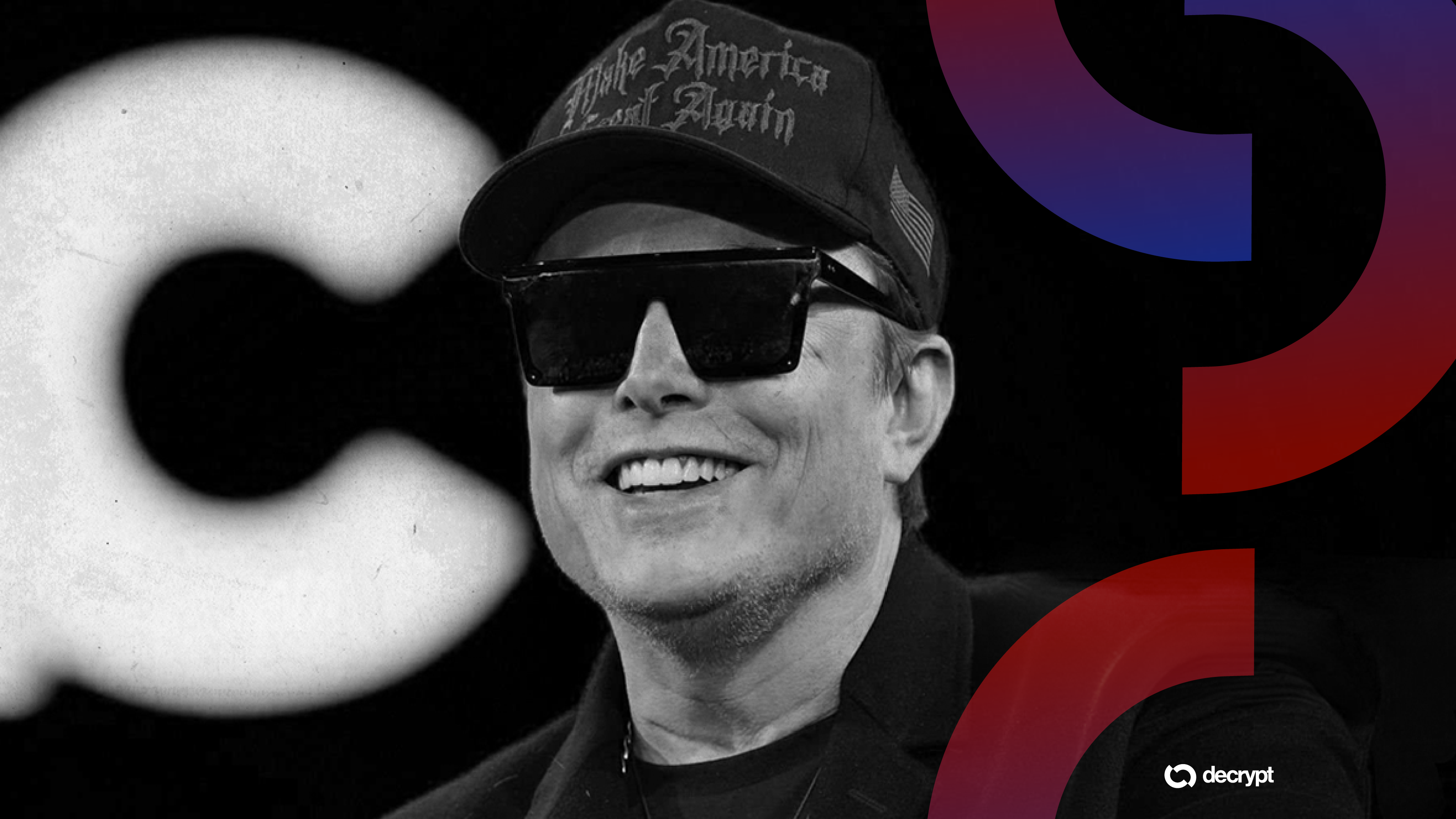
On Wednesday, 20 May 2026, SpaceX filed its S-1 registration with the Securities and Exchange Commission — and the document that dropped into the public record was less an investment prospectus than a statement of structural intent. The company is targeting a valuation of up to $1.75 trillion, with a simultaneous share offering that could raise $75 billion in a single session, dwarfing every IPO in market history. Elon Musk, already the dominant figure in commercial spaceflight, will occupy the roles of chief executive officer, chief technology officer, and chairman of the board simultaneously. He will hold majority voting control through a dual-class share structure. The filing is a threshold moment: the last great private company in American technology is becoming a public one, and the terms of that conversion tell you everything about who benefits and who doesn't.
The document, which the company released publicly for the first time in its history, lifts the veil on financial operations that SpaceX has guarded closely for years. Revenue from commercial launches, its government contracts, and its Starlink satellite internet service are all folded into a single disclosed entity. The picture that emerges is of a company far more diversified than its reputation suggests — a launch provider that has quietly become a vertically integrated communications and data infrastructure firm, competing not with Boeing and Lockheed but with Amazon's Project Kuiper and, at the geopolitical level, with Chinese state-backed alternatives to global connectivity. The filing acknowledges this explicitly, naming China as a competitive threat and — unusually — explicitly excluding China from its addressable market going forward.
What the filing actually says
The S-1, reviewed across multiple wire reports and the company's own public disclosure, runs to several hundred pages of financial statements, risk disclosures, and governance provisions that institutional investors and their lawyers will spend months dissecting. The headline numbers are well-known by now: $75 billion in targeted capital, a valuation ceiling of $1.75 trillion, and a company that generated roughly $9.7 billion in total revenue last year, according to initial accounts published alongside the filing. What the filing adds is texture.
SpaceX is structured not as a pure-play launch company but as an integrated services platform. Its commercial arm, which includes the Starlink broadband constellation and its associated ground infrastructure, contributed the majority of that revenue — more than $6 billion in 2025 alone, per the disclosed figures. Government launches, including NASA contracts and national security payloads, represent a significant and growing share of the remaining business. The Defense Department has contracted SpaceX under the National Security Space Launch program at prices that have already drawn scrutiny from the Government Accountability Office. Those contracts are worth billions over multi-year horizons. They are also, by their nature, strategically sensitive: the payloads include surveillance satellites, secure communications nodes, and technology that directly supports US military operations.
The governance structure is the most consequential disclosure in the filing. Musk's dual-class arrangement means that no public share offering can dilute his voting power. He holds the equity, he holds the control, and he holds the chair. The company has presented this as an operational necessity — Musk is the architect of the Starship program, the designer of the Starlink constellation, the person whose continued involvement the company says is material to its valuation. That framing will face challenges. Institutional shareholders, who underwrite IPOs of this scale, typically demand governance structures that give them some mechanism to hold management accountable. SpaceX's filing does not offer one.
The China problem — and why SpaceX named it explicitly
Perhaps the most striking single line in the filing, cited directly by Nikkei Asia, is SpaceX's explicit statement that China is excluded as a market and is instead a competitive threat. That is an unusual formulation for a company seeking to raise capital on global markets. Most large technology companies include China in their addressable market calculations, even when operations are limited, because analysts and institutional investors price in future optionality. SpaceX has cut that option off entirely.
The reason is not hard to identify. Starlink has been deployed in conflict zones — most prominently in Ukraine, where the system's resilience and low-latency connectivity have made it a genuine military asset. SpaceX has shown, repeatedly, that it will cut off access to Starlink terminals in response to geopolitical conditions. It has also, in the person of its principal shareholder, made decisions about a major social media platform — Twitter, rebranded as X — that US authorities have treated as a matter of national interest. The combination of a dominant position in satellite internet, a board and shareholder that is effectively one person, and a demonstrated willingness to use infrastructure as a policy tool means that China as a market participant is not an opportunity for SpaceX. It is a structural complication.
Chinese state media and diplomatic channels have responded to similar Western technology restrictions in the past by framing them as barriers to free competition and evidence of political interference in commercial markets. That framing has some validity. SpaceX is not merely a commercial firm — it is the primary mechanism by which the US government accesses low Earth orbit for strategic payloads. Treating it as a normal listed company with normal listed-company obligations is not straightforward. The filing does not try to do that. It presents China as a threat, absorbs whatever commercial cost that characterization carries, and moves on. That is a choice with real implications: it is alignment, not neutrality.
The geopolitics of going public
Taking a company public is, in normal circumstances, a financial act. It raises capital, distributes ownership, creates liquidity for early investors and employees, and subjects the company to the reporting obligations of a listed entity. It is also, for a company the size and strategic profile of SpaceX, an act with geopolitical dimensions. The United States has a stated interest in maintaining leadership in space — in satellite manufacturing, in launch capacity, in broadband infrastructure that bypasses the terrestrial internet cables that China has been constructing across the Global South. SpaceX is not merely a beneficiary of that interest. It is the primary vehicle through which it is currently expressed.
When a company of this profile goes public, the people who buy its shares are not merely buying a financial instrument. They are buying a stake in a company that the US government relies on for access to space, that NATO allies rely on for battlefield communications, and that a significant portion of the world's internet-connected population relies on for broadband where terrestrial infrastructure is unavailable or unaffordable. The dual-class structure means that those public shareholders — pension funds, sovereign wealth funds, institutional investors — have no governance rights. They own the economics. Musk owns the decisions. That arrangement has worked for Tesla, where the product cycle and the market narrative are relatively aligned. It is less obvious that it works for a company where the government is a major customer and where the geopolitical stakes are structural rather than reputational.
The counter-argument, which SpaceX's management will make to institutional investors in the roadshows that follow, is that this is precisely why the structure works. A public company with a dispersed shareholder base and a board that rotates directors would be ill-suited to making decisions about access to military communications infrastructure in real time. Musk's control is not a governance failing — it is a feature of a company that operates at the intersection of commerce and strategic infrastructure. That argument has logic to it. Whether public markets are willing to accept it is another question. The answer will depend on how institutional investors — who are simultaneously the custodians of pension funds and retirement accounts and the gatekeepers of capital allocation for the world's largest companies — process a company that looks, on the surface, like a normal IPO but operates, in practice, as a privately directed arm of national space strategy.
What happens next — and what remains uncertain
The filing sets in motion a process. The company will now roadshow to institutional investors — presenting its numbers, its growth narrative, its governance structure, and its strategic outlook. It will price its shares. It will list. And then it will be subject to quarterly earnings calls, to analyst coverage, to the constant pressure of a public market's expectations. For a company that has operated for two decades in relative financial privacy, that is a significant change.
Several things remain uncertain. The Starship program, which SpaceX describes in the filing as its primary medium-term growth driver, has completed five orbital test flights. Point-to-point transport — using Starship to move payloads and eventually passengers between terrestrial locations at hypersonic speed — is described in the filing as a potential future revenue line. That market does not yet exist commercially. The $1.75 trillion valuation assumes that Starship works, that the commercial market for heavy lift and point-to-point transport materialises, and that Starlink continues to add subscribers at a rate that sustains the revenue trajectory. None of those assumptions is guaranteed. SpaceX has a strong track record of technical execution, but it has also burned capital at a scale that most publicly listed companies would find difficult to justify to shareholders. The filing does not contain projections that would allow a reader to evaluate the base case versus the optimistic case versus the downside. That will be the work of the roadshow.
The other uncertainty is the geopolitical one. SpaceX has positioned itself at the center of US strategic infrastructure. It has done so deliberately, by winning government contracts, by deploying Starlink in conflict zones, and by making its principal shareholder's alignment with current US policy explicit in the filing itself. That alignment has been valuable — it has given the company access to government contracts and the political cover to operate in environments where other companies would face regulatory obstacles. It also means that the company's fortunes are tied to the trajectory of US-China relations and to the specific policy choices made by the current administration and its successors. If those relations stabilise, SpaceX may find that its geopolitical positioning is an asset. If they deteriorate further, the company may find that it has become a front in a conflict it cannot control.
What is not uncertain is the structural fact at the center of this filing: the most strategically important private company in the United States is about to become a public company, and the person who controls it will control it in exactly the same way after the IPO as he did before it. Institutions will subscribe. Markets will price it. Analysts will write models. And the governance arrangements that make that control possible will sit inside the world's most watched and most consequential balance sheet, waiting to be tested by the decisions that inevitably come. The S-1 is a financial document. It is also a map of where power sits, and who gets to exercise it, in the infrastructure that the next phase of the global economy will run on.
This article was structured around SpaceX's S-1 filing dated 20 May 2026, with comparisons drawn to prior large IPOs, including Alibaba's 2014 listing and the 2019 Saudi Aramco offering. The wire framing centred on valuation records and Musk's governance role; this piece foregrounds the structural implications for public markets and geopolitical infrastructure positioning.
Wire provenance
This editorial synthesis draws on the following public wire/social posts:
- https://t.me/france24_fr/12345
- https://t.me/Cointelegraph/67890
- https://t.me/NikkeiAsia/23456
- https://t.me/Cointelegraph/67891
- https://t.me/france24_fr/12346
- https://t.me/nikkeiasia/78901