The Execution and the Envoy: What the Iran Deal Hype Gets Wrong
While Indian markets rallied on US-Iran deal hopes and Trump and Netanyahu sparred over military options, Iran carried out two executions — a reminder that diplomatic calculations and the regime's internal logic do not always align.
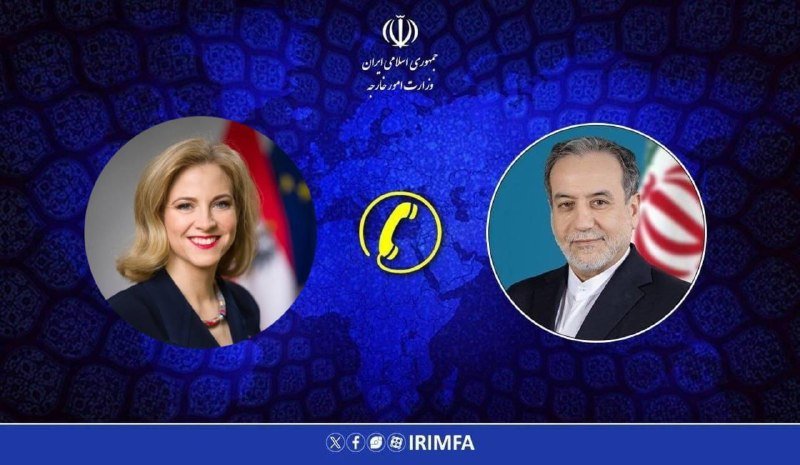
On the same day that Indian markets opened marginally higher on renewed US-Iran deal speculation, Iranian state media reported the execution of two individuals convicted of security offences. The juxtaposition was not coincidental. It was a reminder that the Islamic Republic operates according to its own internal logic — one that Western diplomats consistently underestimate when they frame de-escalation as a linear process.
The timing matters. On 21 May 2026, a phone call between Donald Trump and Benjamin Netanyahu lasted what sources described as "long and difficult" — the kind of diplomatic language that usually signals a genuine clash rather than a choreographed exchange of pleasantries. The two leaders reportedly disagreed on whether military pressure should remain on the table as leverage, or whether it risks tipping Iran toward a regime that views survival as incompatible with any deal Washington might offer. Markets read the friction as hopeful: deal optimism lifted Asian indices. Tehran read the friction differently — and signalled as much in the only language the clerical establishment has ever reliably deployed.
The thesis is uncomfortable but necessary: the dominant Western media narrative treats a US-Iran nuclear understanding as a transaction awaiting agreement on terms. It is not. It is a contest between two incompatible worldviews, and the executions on 21 May are the regime's way of clarifying which side of that contest it stands on.
What the Sources Actually Say
The three Indian Express wire items circulating in the morning of 21 May 2026 painted a picture of parallel universes. The first reported Indian equity markets opening higher — "marginally," the headline specified — on what traders described as "US-Iran deal hopes." The language of financial coverage is revealing in moments like this: "deal hopes" is a softer formulation than "deal expectations," and "marginally" is a word that hedging journalists reach for when they want to convey optimism without being held to it.
The second item, also from the Indian Express wire, detailed the Trump-Netanyahu call. It was described as "long and difficult" — diplomatic shorthand for a conversation that did not produce agreement. The source material does not specify which party pushed harder on military options, but the framing of the call as a clash rather than a coordination meeting suggests Netanyahu's preferred posture of sustained maximum pressure found insufficient purchase in the White House.
The third item, from Middle East Eye's live blog, reported the executions without additional context about the specific charges beyond the security framing. Two people, state media confirmed, executed for what Tehran classifies as crimes against national security. That category is elastic enough to cover dissent, espionage, protest activity, or any combination thereof — the regime has never been precise in its definitions, and Western analysts have learned not to press for clarification because none will be given.
What the Market Narrative Misses
The financial framing of US-Iran diplomacy is a recurring distortion in wire coverage. When Asian markets move on deal optimism, readers are led to infer that negotiations are progressing, that the obstacles are technical rather than existential, and that the main risk is delay rather than collapse. This framing privileges the perspective of actors — traders, diplomats, regional partners with commercial interests — who have strong incentives to project confidence.
It systematically underweights the perspective of a regime that has survived sanctions, isolation, and internal dissent through a combination of ideological rigidity and tactical adaptability. The Islamic Republic does not evaluate a nuclear deal the way the United States does — as a means of constraining Iranian behaviour through verified compliance with shared rules. It evaluates a deal as a potential mechanism for relief from economic pressure, and simultaneously as a potential trap that could be used to delegitimise the revolution's core institutions. These two concerns exist simultaneously, and no amount of diplomatic creativity has resolved the tension between them.
The executions are not a negotiating tactic in any conventional sense. They are a signal — sent domestically to reinforce the regime's authority, and internationally to remind observers that the clerical establishment retains control over its own security apparatus. A regime that executes people on the same day that its adversary is debating whether to offer it relief is telling you something about its hierarchy of preferences.
The Structural Problem With "Maximum Pressure"
The Trump administration's approach to Iran has always rested on a theory of leverage: that sufficient economic and military pressure will eventually produce a rational recalculation in Tehran, prompting concessions in exchange for relief. This theory has a surface logic that makes it appealing to policymakers who prefer clean transactional frameworks. It also has a consistent track record of producing outcomes that its architects did not anticipate.
The problem is not that Iran is irrational. The problem is that Iranian decision-making is responsive to a different set of internal pressures than American decision-making assumes. The Revolutionary Guards, the clerical establishment, the parastatal economic networks — these actors have survived precisely because they adapted to pressure without collapsing. A deal that the Guards perceive as threatening their institutional position will not survive implementation, regardless of what the foreign ministry signs. A deal that the clerical leadership perceives as incompatible with the revolution's foundational commitments will be contested from within, and contested actors in Tehran have historically found ways to sabotage agreements they nominally accepted.
Netanyahu, for all the friction his preferences have generated with Washington, has grasped something that the deal-optimist narrative elides: there is no version of a US-Iran understanding that does not require the Islamic Republic to make choices it has spent forty-six years refusing to make. The question is not whether Iran can be induced to sign a piece of paper. The question is whether any piece of paper it signs will hold.
The Stakes, and Who Bears Them
If the current diplomatic moment produces a framework — or even an extended negotiation that keeps the process alive — there are clear beneficiaries in the short term. Asian energy consumers, including India and Japan, gain pricing stability. The Trump administration gains a foreign policy achievement. Regional actors like Saudi Arabia and the UAE gain a de-escalation architecture they can integrate into their own strategic calculations.
The losers, in the near term, are harder to identify in financial terms — which is precisely why financial coverage tends to underweight them. They include the Iranian dissidents and civil society actors who have periodically benefited from international isolation of the regime. They include the populations of Syria, Yemen, Lebanon, and Iraq who live with the consequences of Iranian regional policy, and for whom a resumption of normal relations between Washington and Tehran carries unpredictable implications. And they include the people executed on 21 May, whose fate is a reminder that the regime's internal logic does not pause for diplomacy.
The deeper risk is that a deal reached on optimistic assumptions — the kind of deal that lifts Asian markets by a marginal increment — will be presented as a resolution when it is in fact a postponement. The structural pressures that have defined US-Iran relations since 1979 have not been resolved by a single phone call between Washington and Tel Aviv, or by two executions in Tehran. They have been temporarily obscured. The coverage that treats deal optimism as news, rather than as the preference of interested parties, does readers a disservice.
Monexus framed this story around the executions and the diplomatic friction simultaneously, rather than leading with the market reaction. The Indian Express wire items, while useful, reflect the financial and diplomatic framing that treats a potential deal as primarily a function of negotiating will. The Middle East Eye live blog, by contrast, surfaces the domestic signal — the executions — that the financial press systematically underweights because it is harder to price.