Trump's Cuba Reckoning Is Not About Democracy — It's About Dollars
Betting markets are pricing regime collapse in Havana. The language from Washington frames it as security. The reality is older, uglier, and more familiar.
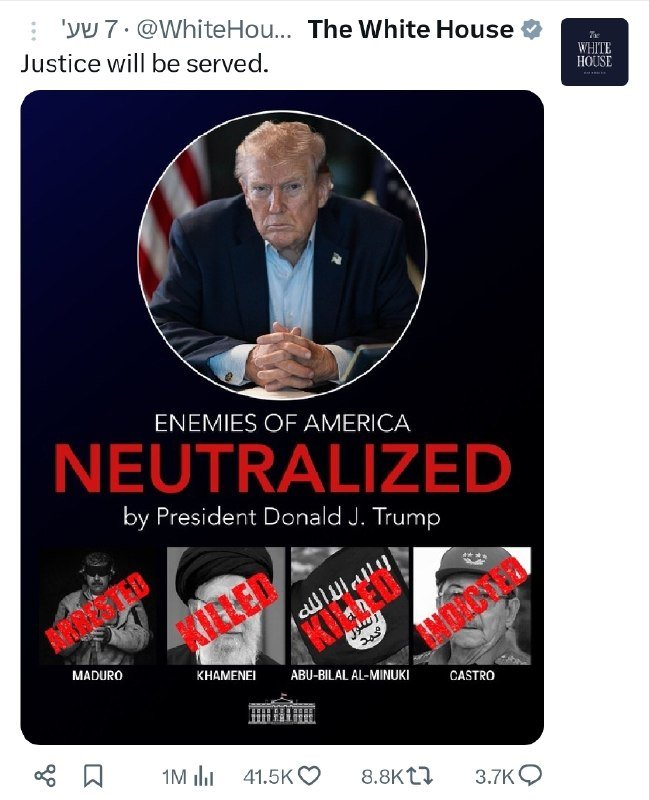
There is nothing new about the United States deciding that a Caribbean island thirty-eight years younger than its Constitution represents an existential threat. On 20 May 2026, Polymarket's Cuba contracts suggested a 60 percent probability that President Miguel Díaz-Canel would be gone by year's end — a forecast that tracks almost perfectly with the historical record of what Washington means when it calls a country a "rogue state" ninety miles from Florida.
The language this time is familiar. "America will not tolerate a hostile 'rogue state'" — that is how the Trump administration characterised Cuba on 20 May, according to a Polymarket-sourced dispatch. The phrase lands as deliberately as it is meant to. "Rogue state" is not a descriptive term. It is a policy authorisation. It has been applied to Iraq, Iran, North Korea, Libya, and now, again, to an island of eleven million people whose entire GDP is smaller than the annual budget of a single mid-tier American university.
What follows that designation, historically, is not a diplomatic meeting. Or rather — it sometimes is, but the meeting is a screen for something else.
The Market Knows Something, or Thinks It Does
The Polymarket data is the most concrete thing in the public record. A 71 percent probability that Trump orders a federal review of AI model releases by end of May — that is a domestic-tech governance item that happens to be running alongside the Cuba escalation, and it may be more relevant than it looks. The administration has been simultaneously signalling openness to a US-Cuba diplomatic meeting by end of month (62 percent chance, per Polymarket) while also publishing the political conditions for that meeting to be unnecessary: Díaz-Canel gone, the regime collapsed, the island reshuffled into something the White House finds legible.
This is the structure. Pressure campaign first. Negotiate from a position of strength second. "Regime change" is not stated as the goal because stating it is unnecessary — it is the known destination of every prior "rogue state" pressure campaign that Washington has launched in the Western Hemisphere since 1959.
The seventeen percent probability of Díaz-Canel departing by end of next month — a figure that was being circulated on 20 May — suggests traders are pricing in an event shock, not a gradual process. Something fast, in the language of financial markets. An arrest. A military fracture. A succession crisis. Cuba has had all three before, and the outcome has always been the same: the structure survives, and Washington waits for the next window.
The Dollar Always Comes for the Island
The embargo — formally the US embargo, commonly called the blockade in Latin America and at the United Nations, where the assembly has voted against it every year since 1992 — is not a sanction in the conventional sense. Sanctions are designed to modify behaviour. The embargo was designed to produce regime collapse. Sixty-six years of it have not worked, which creates a logical problem for anyone who wants to argue it is a genuine policy rather than a political signal.
The signal is to Miami. The signal is to the Cuban-American voting bloc that delivered Florida to Trump in 2024. The signal is also, less visibly, to the broader financial architecture of the dollar system — because Cuba's exclusion from SWIFT, from correspondent banking relationships, and from dollar-denominated trade is not merely a relic of Cold War thinking. It is a demonstration of what happens to a country that falls outside the dollar umbrella in a world where that umbrella is still mostly intact.
Díaz-Canel has been in office since 2019. Before him, Raúl Castro. Before Raúl, Fidel. The three men span sixty years of American policy designed to make the island ungovernable. The island has been governable — barely, and with enormous costs to ordinary Cubans — precisely because the infrastructure of state survival in a command economy does not require functional banking to operate. What it does require is patience, and a willingness to absorb human costs that no western government would be politically capable of inflicting on its own population.
The betting markets' 60 percent probability is not a political forecast. It is a market's read on Washington's willingness to escalate the pressure to the point where the choice for the Cuban military is between a regime and their families.
What "Diplomatic Meeting" Actually Means
The Polymarket data also shows a 62 percent probability of a US-Cuba diplomatic meeting by end of month. That number and the regime-change probability are not contradictory — they are complementary. A meeting under these conditions is not an opening. It is a pressure point. The administration gets to demonstrate to the Cuban government that Washington can impose costs, and then offer a meeting as the price of de-escalation — provided the de-escalation includes something structural: banking access restored, officials delisted, the embargo mechanism flipped from a tool of attrition to a tool of exchange.
This is how American diplomacy has operated in the region for decades. NAFTA was signed partly to pull Mexico away from its own leftist turn in the 1990s. The IMF's structural adjustment conditions in the 1980s and 1990s were explicitly designed to prevent the kind of sovereign economic policy that Cuba chose. The 2009 Honduras coup was followed by US silence, because the post-coup government was sufficiently aligned with American interests to make normalisation easier than condemnation.
Cuba has been outside that architecture since 1959. The current moment is not a revolution. It is the latest iteration of a sixty-six-year project to bring it back inside.
The Price of the Projection
What is at stake is not democracy. It never has been. The United States backed authoritarian governments across Latin America for most of the twentieth century precisely because democracy, in the hemisphere, reliably produced governments that were hostile to American commercial interests. Chile's Salvador Allende was not overthrown because he was authoritarian. He was overthrown because he was nationalist. Ferdinand Marcos was supported for decades because the Philippines was a platform for American military operations in the Pacific.
Cuba's crime is different, and older. It nationalised American assets in 1960. That is the wound that has never healed, and the embargo is not a sanction — it is a lien. The forty-nine years of bipartisan American policy that have prevented normal banking relations, normal travel, normal trade, are an enforcement mechanism for a property dispute that Cuba has never accepted and the United States has never been able to resolve through any means other than time.
The Polymarket contracts are not measuring Cuban political dynamics. They are measuring the willingness of a second-term Trump administration to do what two centuries of American policy have always done: treat the Caribbean as a place where American power does not require justification, only execution.
The 60 percent probability is not optimism. It is a market's read on how the next six months will be used.
This publication covered the Cuba escalation through Polymarket market-data wires and AMK_Mapping Telegram dispatches from 20 May 2026. Wire framing led with the "rogue state" characterisation and the arms sale to Taiwan as a separate story. Monexus linked both to the dollar architecture question and the historical precedent of US regional pressure campaigns.
Wire provenance
This editorial synthesis draws on the following public wire/social posts:
- https://t.me/AMK_Mapping