Trump's Cuba Ultimatum and the Foreign Policy of Personal Brand
President Trump's week of geopolitical declarations—from Cuba as a 'failed country' to threats of military action against Iran—exposes a foreign policy calibrated not to outcomes but to the President's own instinct for leverage and spectacle.
Donald Trump has never needed a reason to be declarative. But the week of 21 May 2026 gave him several at once. On Cuba, he announced he would be the one to "do something." On Iran, he said the conflict would end "one way or another" and that American drone technology was sufficient to "knock Iran down." He framed military action as a national security imperative, linked it to enriched uranium stocks, and left the door open to negotiation—sometimes in the same sentence.
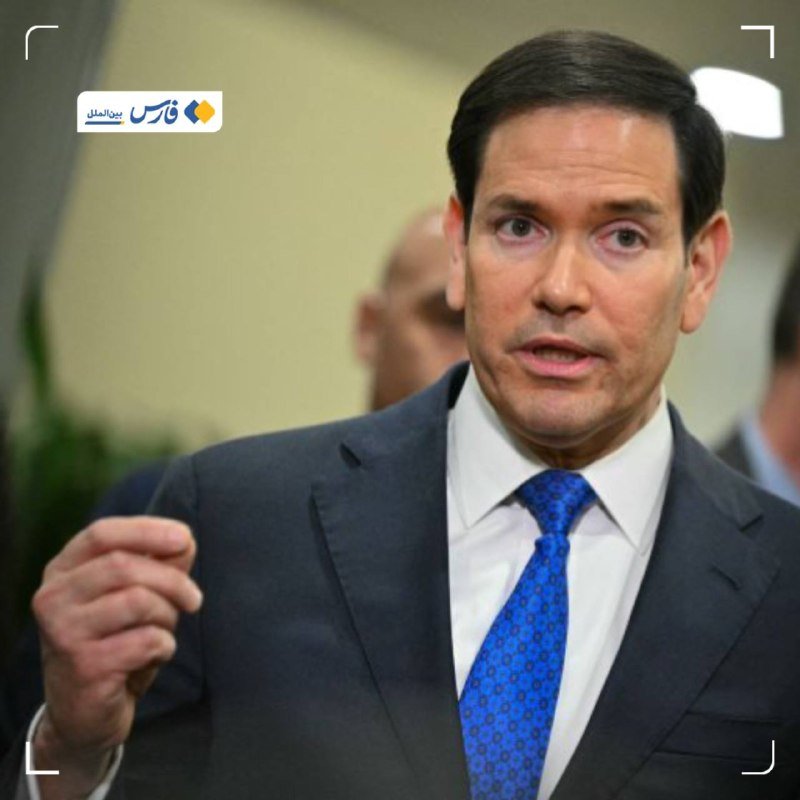
Secretary of State Marco Rubio, whose job increasingly involves translating improvisation into policy language, put a finer point on it: Cuba "is not going to be able to wait us out or buy time," he said, framing the President's preference for a "peaceful" negotiated outcome while signalling that patience has structural limits.
What we are watching is not quite diplomacy. It is something closer to performance theatre with geopolitical stakes—a recurring pattern in this administration's approach to adversarial relationships where the threat itself, delivered with sufficient public force, is treated as functionally equivalent to the outcome it threatens to produce.
The Cuba Gambit: Leverage as Theatre
Trump called Cuba a "failed country" in terms that were not merely rhetorical. "Everybody knows it," he said, enumerating electricity shortages, economic collapse, and institutional decay. "We're going to help them along," he added—but the help implied was less reconstruction plan than ultimatum with a countdown.
The framing matters. Cuba under decades of American sanctions has survived by developing resilience mechanisms—local economies, foreign partnerships, careful diplomatic hedging—that make it structurally difficult to isolate further. Havana has waited out administrations before. The argument that this moment is different requires more than presidential confidence to substantiate.
What the administration's position lacks, at least in the public record, is a clear theory of change. Is the goal regime change? Economic capitulation? A negotiated opening on American terms? Without that clarity, the ultimatum posture reads as leverage-building rather than policy execution—and leverage, absent a credible mechanism for follow-through, is just noise.
Iran: Negotiate and Threaten Simultaneously
The Iran posture is more structurally coherent, but only marginally. Trump's stated position—that Iran cannot be allowed to keep highly enriched uranium, and that the United States will "destroy it once obtained"—reflects a line Washington has held publicly since the 2015 JCPOA withdrawal. The difference is the delivery mechanism.
"The Iran conflict will end soon," Trump declared on 21 May. "We have great drone technology to knock Iran down." In the same breath: "Negotiating with Iran, we will get it one way or another." The threat and the offer coexist because the administration treats them as the same tool—a calibrated pressure designed to produce a deal on American terms without the intermediate steps of conventional diplomacy.
The problem with that approach, repeatedly demonstrated across multiple negotiations, is that Iranian bargaining behaviour responds to consistency and mutual restraint, not to simultaneity of carrot and stick. A party that believes the stick is always present alongside the carrot has less incentive to make concessions—and more incentive to buy time while developing its own leverage.
Rubio's Translation Problem
Rubio's role as Secretary of State requires him to make Trump's instincts legible to foreign governments, allies, and institutional actors who need to calculate based on something more durable than a presidential tweet or interview comment. "The president's preference is always a negotiated agreement that's peaceful," Rubio said on 21 May—establishing the baseline. The implicit addendum, that peaceful is not indefinite, is the translation.
This is a functional arrangement for managing communication, but it carries its own risks. Foreign governments reading the American position need to know whether the translation is accurate, whether Rubio's qualifier is authorized, and whether the next presidential interview will reverse the calibration. When threat and concession are deployed simultaneously, the recipient's rational strategy is to wait—to see which version of the American position has institutional weight, and which is presidential improvisation. That waiting is precisely what Rubio says won't be tolerated.
The structural tension here is not new. Every administration that operates with a dominant executive figure faces it: the gap between what the President says and what the state apparatus can execute, guarantee, or sustain. The difference this time is the pace and the public register. The improvisation is not confined to internal deliberations—it is the foreign policy, delivered in real time to a global audience.
The Stakes Beyond the Theatre
What remains uncertain, and what the available record does not resolve, is whether this approach is producing results, stalling, or generating new problems. On Iran, the nuclear question is real—enriched uranium stocks, breakout timelines, and the regional deterrent calculus are legitimate security concerns that neither the United States nor its allies can afford to treat lightly. A negotiated outcome that rolls back Iran's enrichment capacity while providing sanctions relief is achievable in theory; it is made harder when the threat and the offer are treated as interchangeable instruments rather than sequenced phases of a process.
On Cuba, the situation is more ambiguous. The country is genuinely in economic distress. But the distress has been managed, not resolved, for sixty years—with or without American intervention. An ultimatum that lacks a clear mechanism for follow-through may simply reinforce the resilience mechanisms it is designed to break.
The larger pattern here is not about Cuba or Iran per se. It is about what happens when a foreign policy apparatus is asked to operate as an extension of a single communicative style—when the national interest is expressed in the register of personal brand, and the institutional machinery must translate that register into commitments other countries can treat as stable. That translation problem is Rubio's job. It is also the core vulnerability of the approach.
The theatrical quality of these declarations does not make them harmless. It makes their downstream consequences harder to predict—and that uncertainty is the one thing foreign policy professionals never want to manage at this scale.
Wire provenance
This editorial synthesis draws on the following public wire/social posts:
- https://t.me/osintlive/1848
- https://twitter.com/Osint613/status/2057498679305449962
- https://t.me/osintlive/1849