Trump's Hormuz Blockade Claim Collides With Negotiations Signal as AI Order Delayed
The president declared complete control of the Strait of Hormuz while simultaneously signaling openness to a nuclear deal, creating a contradiction at the heart of the administration’s Iran posture that markets and regional actors are struggling to price in.
On the morning of 21 May 2026, standing on the White House lawn before a helicopter, President Trump delivered a sentence that two sets of analysts immediately began dissecting: “We have total control of the Strait of Hormuz.” The blockade, he added, had been “100 percent effective — it’s like a steel wall.” Hours later, speaking to reporters at his Florida residence, the same president said he was negotiating toward a deal with Tehran, and that he might miss his son’s wedding because of the Iran situation over the coming weekend. The tonal whiplash was not incidental. It reflected an administration whose public posture toward Iran has not converged into a single strategy, leaving oil markets, regional partners, and the negotiating parties themselves to operate without a clear baseline.
The Hormuz Claim and Its Technical Limits
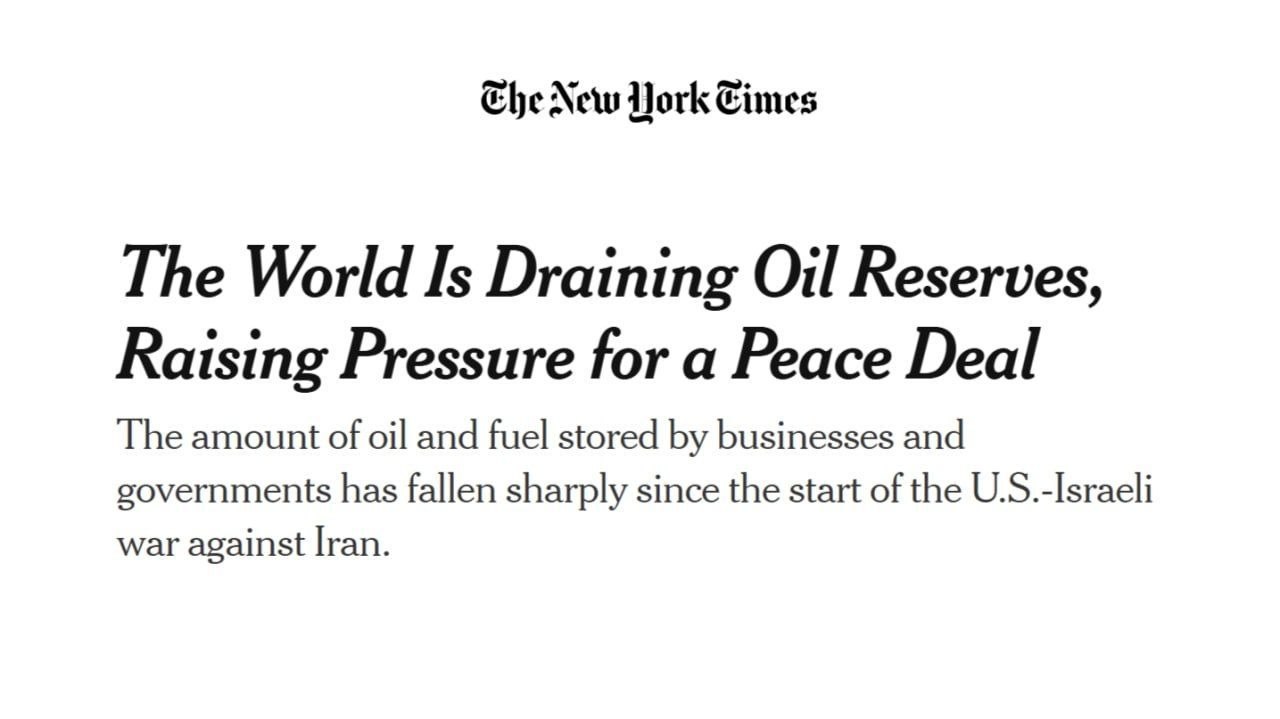
The Strait of Hormuz is the world’s most critical chokepoint for oil shipments, carrying roughly 20 percent of global crude flows on any given day. Trump’s declaration of total control deserves scrutiny on its own terms. According to Iranian state media on 21 May 2026, Tehran published a new operational map asserting military oversight across more than 22,000 square kilometers surrounding the strait. The Iranian claim is itself a counter-declaration to the American blockade narrative. The two maps cannot coexist as accurate descriptions of the same battlespace. Iranian drone production has restarted, the New York Times reported on 21 May, suggesting the production capacity Trump claimed to have degraded by 85 percent is recovering. Whether that recovery represents a strategic threat or a negotiating posture is a question the available sourcing does not settle.
On the energy market side, Trump offered a direct linkage: gasoline prices would fall, he said, “after Iran stops its actions.” The statement frames Iranian behavior as the variable keeping pump prices elevated, a framing that treats the strait’s security as an Iranian weapon rather than a shared global interest in the free passage of tankers. The Polymarket market on Iranian uranium surrender gives the scenario a 19 percent probability by the end of June 2026. The same prediction market assigns only a 2 percent probability to Trump agreeing to let Iran charge Hormuz transit fees, suggesting traders see the negotiations’ ceiling as far short of Tehran’s stated demand for economic normalization in exchange for nuclear concessions.
The AI Executive Order Delay
Separately but not irrelevantly, Trump postponed signing an AI security executive order on 21 May 2026. The order, according to multiple reports, would have required pre-release government security reviews of advanced AI models before public deployment. Trump killed it, he said, because he did not want to slow the United States down in the AI race. The decision sits in direct tension with the Hormuz posture: a president willing to declare he has dismantled a nation’s military capacity is simultaneously signaling that he will not subject American AI development to even modest regulatory friction. The two positions share a common axis — both reflect an insistence that competitive advantage cannot be subordinated to governance frameworks, whether those frameworks concern weapons of mass destruction or frontier model deployment.
The order delay was reported by TechCrunch on 21 May 2026, noting dissatisfaction with the document’s language. Disclose TV independently confirmed the postponement on the same date. The sources agree on the fact of delay; they do not specify what alternative regulatory architecture, if any, the administration intends to propose instead.
The Negotiations Contradiction
Iranian state media framing, as reported via Tasnim on 21 May 2026, called Trump “the head of the terrorist state of America” — language that is not new but serves as a reminder that the negotiating channel runs through layers of hostility that neither side appears willing to fully suppress for domestic audiences. The president’s own team appears split on whether the Hormuz blockade represents a pressure tactic prelude to a deal or a permanent restructuring of the regional military balance. The Polymarket probabilities on Iranian concessions are low enough that they do not reflect a consensus expectation of imminent agreement.
The structural pattern here is not unique to this administration. Every recent White House has cycled between coercive posturing and negotiated off-ramps with Iran, with the gap between public declaration and private channel rarely closed cleanly. What differs is the cadence: the compression of messaging into a single 24-hour news cycle, combined with a simultaneous pivot affecting semiconductor competitiveness, creates a situation where regional actors — Riyadh, Beijing, Moscow, the Gulf monarchies — cannot anchor their Iran policy to a stable American position.
Stakes and Forward View
If the Hormuz blockade is not total and Iranian drone production is recovering, the risk calculation for tanker insurance and energy markets shifts. The linkage Trump drew between Iranian behavior and gasoline prices could become self-defeating: the uncertainty itself is a premium. For the AI angle, the postponement of security review requirements means frontier model developers retain full autonomy over disclosure timelines for at least the near term. Congress has shown limited appetite to legislate AI safety mandates in this session, leaving the executive branch’s discretion effectively unreviewed.
The weekend deadline Trump flagged for potential military action remains open. The sources do not confirm an attack order exists, only that the president told reporters it was not a good time for him to attend a family wedding. Whether that framing is theatrical or operational, the market and regional capitals will be watching the weekend for signals.
This article prioritizes American official sourcing and wire reports for the factual baseline of Trump’s public statements. Iranian state media framing appears as counter-claim context rather than a primary source of disputed facts. The AI executive order deferral is treated as a structural parallel to the Hormuz posture rather than a separate policy story, reflecting the thread’s emphasis on both topics on the same date.
Wire provenance
This editorial synthesis draws on the following public wire/social posts:
- https://telegram.me/megatron_ron
- https://telegram.me/myLordBebo
- https://telegram.me/JahanTasnim