Trump's Hormuz Claim Collides With Iranian Reality on the Water
The president's assertion of 'total control' over one of the world's most contested waterways runs headlong into documented Iranian naval operations, commercial shipping data, and a decades-long pattern of claims that have never survived first contact with the strait's geography.
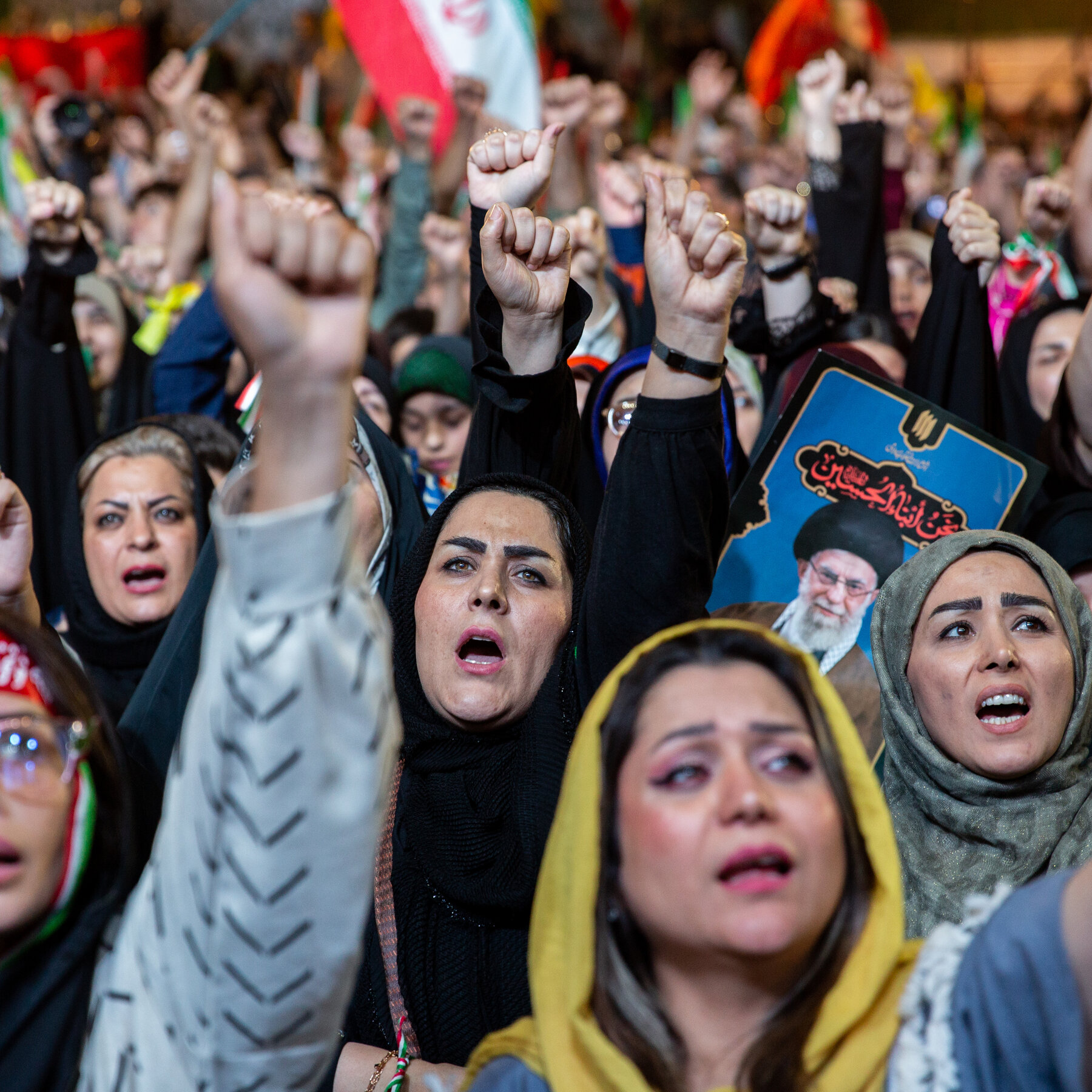
On 21 May 2026, President Donald Trump posted to social media that the United States had achieved "total control" over the Strait of Hormuz — a 33-kilometre-wide passage through which roughly a fifth of the world's oil shipments pass, and which Iran has treated as sovereign strategic territory for forty-five years. The post landed in a week already charged with elevated military chatter. By mid-afternoon UTC, Iran's Islamic Revolutionary Guard Corps naval forces had issued their own statement: over the previous 24 hours, 31 vessels — tankers, container ships, and general cargo — had transited the strait under IRGC coordination. No interdiction. No standoff. Forty-eight hours of contradictory claims from Washington and Tehran, and the waterway itself was doing exactly what it has always done.
That gap — between the language of 'total control' and the operational reality of a strait that no single power has held in modern history — is the story here. Not the triumphalism, not the denial, but what the gap reveals about the limits of American leverage, the durability of Iranian deterrence, and what a contested chokepoint actually looks like when two governments are simultaneously trying to manage it and dominate it.
The Claim and What Followed
Trump's statement, shared via his official account and amplified by the White House press office, arrived without a supporting brief from the Pentagon, without citation of specific operational data, and without a timeframe. 'Total control' implies something specific: the ability to determine who enters, who exits, and on whose terms. It is a phrase with historical weight — it is how adversaries describe surrender terms, not maritime transit conditions.
Within hours, Polymarket — theprediction market platform — had surfaced betting odds suggesting a 28 percent probability that Hormuz traffic would return to what market participants considered "normal" levels by the end of the following month. That figure, low as it is, implies that the market assigns significant probability to continued disruption or ambiguity. Prediction markets are not polls; they aggregate information from participants who are staking real money on their read of events. A 28-percent chance of normalisation is not a market that believes the strait has been settled.
The commercial shipping picture complicates the presidential narrative from another angle. IRGC naval forces, via their official press service on X on 21 May 2026, confirmed that 31 vessels had transited in the prior 24 hours under IRGC "coordination and security." The word 'coordination' is doing significant work in that sentence. It signals that Iran is not simply absent from the strait — it is actively involved in managing commercial transit, which is precisely what a state does when it claims littoral jurisdiction over a waterway it considers strategically vital.
Iranian Deterrence and the Strait's Geography
The Strait of Hormuz is not a canal. It has no locks, no gates, no single controlling infrastructure. It is a gap between two landmasses — Oman on the south, Iran on the north — with a shipping channel roughly four kilometres wide at its narrowest point, bordered by the Iranian-controlled islands of Qeshm and Hormuz. The strait's geography structurally advantages a defender with shore-based missile systems, fast-attack craft, and anti-ship mines. It does not favour a carrier battle group, however powerful.
Iran has operated under this structural reality since the 1980s, when it fought a years-long tanker war with Iraq and developed the non-state deterrence posture — threatening to close the strait entirely rather than lose a conventional engagement — that remains the backbone of its regional naval strategy. The IRGC's naval arm, separate from Iran's conventional navy, is designed precisely for this environment: small boats, missiles, drones, and sea mines deployed from facilities along Iran's southern coast and islands.
Any serious assessment of American control over Hormuz must account for this. A US carrier group can project power across the region, strike targets inland, and deter large-scale conventional aggression. What it cannot do — not without a sustained and politically explosive ground campaign — is occupy the strait's Iranian coastline or neutralise the missile and drone systems that Iran has spent decades positioning there. 'Total control' requires boots on that shoreline, or the political will to accept the attritional costs of a sustained missile duel in one of the world's busiest shipping lanes. Neither condition exists.
The Energy Calculation and Who Bears the Cost
The Strait of Hormuz handled approximately 21 million barrels per day of crude oil and condensate in recent years — roughly a fifth of global consumption. That figure alone explains why both Washington and Tehran have a structural interest in keeping the waterway open, and why neither has, historically, been willing to pay the political price of actually closing it.
Iran's calculus is straightforward: threaten to disrupt, maintain the right to inspect vessels it deems suspicious, and extract whatever diplomatic leverage the strait's geography provides — without actually triggering the kind of energy shock that would force international intervention against Tehran. The 31 vessels that transited under IRGC coordination on 20-21 May 2026 illustrate the point precisely. Iran is demonstrating that it controls the conditions of transit — that it can grant passage — while preserving the ability to deny it. That is not a weak hand. It is the hand that geography dealt it.
For Washington, the problem is different. American leverage over Hormuz is real in the sense that the US Navy is the dominant surface fleet in the Persian Gulf and can, in extremis, enforce a blockade. But a blockade of a waterway that carries a fifth of the world's oil is a global economic weapon — one that would be felt most acutely in Europe and Asia, among allies who have spent years diversifying away from Gulf dependence. The political coalition for sustained American enforcement of 'total control' over a waterway Iran considers sovereign is simply not there.
What 'Control' Actually Means in This Context
The word 'control' has different meanings in different contexts. Military analysts distinguish between denial control — preventing an adversary from using a waterway effectively — and area control — maintaining exclusive operational dominance. American naval posture in the Gulf has historically pursued denial control: keeping the strait open for allied shipping while deterring Iranian interdiction. Iran pursues what strategists call coercive ambiguity: the threat of closure is only valuable if the threat is credible, which means occasionally demonstrating the willingness to close portions of the strait or interfere with vessels.
Trump's assertion of 'total control' collapses these distinctions into a single, undifferentiated claim that does not survive scrutiny against either definition. The United States can deny Iran the ability to fully close the strait. It cannot control who transits, on what terms, and under whose authority — because Iran retains the capacity to complicate, delay, and harass commercial shipping in ways that do not trigger a threshold for military response but do erode the 'total control' premise.
What is observable in the 21 May statements from both capitals is not a resolution of this tension but its continuation under conditions of higher-than-normal rhetorical heat. The IRGC's decision to publish passage data for 31 vessels is, among other things, a calibrated signal that the strait is operating under Iranian conditions — not American ones. The timing, released within hours of Trump's post, is not accidental. Tehran wanted the market, and the international shipping industry, to see that 'total control' does not mean what the president said it means.
The Forward View
The Polymarket odds — 28 percent probability of normalisation by end of next month — are the most honest market signal available in this moment. They suggest that the conditions producing Hormuz ambiguity are structural, not transitional. The US-Iran nuclear standoff, the sanctions regime, the Revolutionary Guard's naval posture, and the absence of a diplomatic framework that addresses Iran's strait rights — these are not problems that a presidential social media post resolves.
What the next weeks likely hold is continued parallel management: American carrier groups transiting, IRGC naval forces coordinating commercial traffic, Iranian officials asserting littoral authority whenever a US official overreaches publicly, and oil markets pricing in a risk premium that neither side benefits from removing. The strait does not move. It sits at the intersection of three competing claims — American primacy, Iranian sovereignty, and commercial necessity — and it is not going to resolve itself.
The more important question is what 'total control' was supposed to accomplish. If it was domestic political theatre — a declaration designed for a social media feed and a base that reads foreign policy as strength signalling — then the IRGC's transit data is the correction. If it was a genuine operational claim, it will be tested, and the geography of the strait has historically been a reliable teacher.
This publication's wire desk noted that while the presidential claim was covered widely in Western outlets, most reporting foregrounded the rhetoric without examining the documented Iranian counter-claim — a pattern of credencing the声明 over the evidence. The IRGC's transit data, sourced from Iranian state-adjacent channels, was treated as marginal in the dominant framing; the structural asymmetry of the strait's geography was largely absent from reporting that relied on official American sources as primary evidence.
Wire provenance
This editorial synthesis draws on the following public wire/social posts:
- https://t.me/ClashReport/2843
- https://x.com/sprinterpress/status/1932473912349843469