Trump's Hormuz Claim Meets Iran's 22,000 km² Map
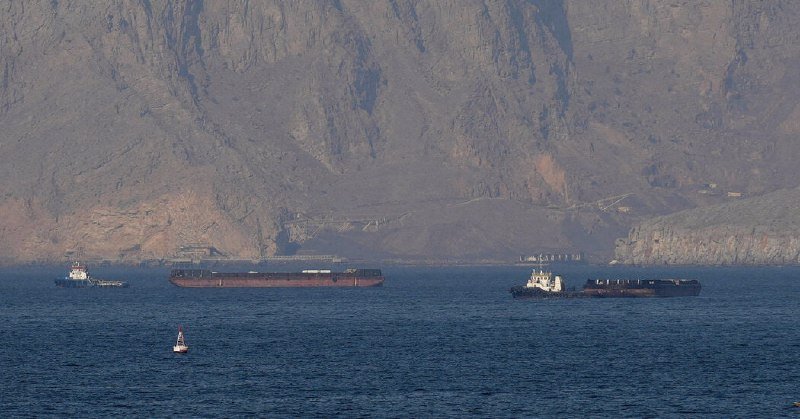
On May 21, 2026, Donald Trump declared that the United States had achieved "total control" over the Strait of Hormuz. On the same day, Iran published a revised maritime map asserting military oversight across more than 22,000 square kilometres of the strait and adjacent waters. The two claims are irreconcilable. What they share is a quality of performance rather than operational fact.
The gap between what Washington and Tehran each say they possess, and what either can actually enforce, has rarely been wider. The Polymarket market on Hormuz traffic normalisation puts the odds at just 28 percent by month's end — a figure that functions as a collective verdict on the credibility of both sides' positions. The 2 percent probability assigned to Trump conceding Iranian transit-fee authority tells you where the political ceiling sits. What neither declaration addresses is whether the infrastructure that keeps Hormuz open can sustain the pressure being applied to it.
The fundamental question the two announcements raise is not who controls Hormuz. It is whether the old model of unilateral chokepoint dominance — the architecture through which the United States has long managed the world's most critical maritime passages — still holds when challenged by a regional power with the geography, the weapons, and the willingness to complicate enforcement. The answer the markets give is no.
The Immediate Claim-and-Counterclaim
The Strait of Hormuz is the world's most consequential maritime corridor. Roughly 20 percent of global oil and 30 percent of all liquefied natural gas passes through its 40-kilometre-wide channel between Oman and Iran. Disruption there is not a regional event — it is a global price signal within hours of any incident.
Trump's statement on May 21, carried via the Polymarket wire as a live alert, lands in a context of maximum pressure: Washington's "maximum pressure" campaign against Iran has included designation of the Islamic Revolutionary Guard Corps as a foreign terrorist organisation, the withdrawal from the 2015 nuclear deal, and a suite of secondary sanctions designed to choke Tehran's oil export revenue. Claiming "total control" over the strait in that context is a rhetorical escalation — a statement of intent framed as an achieved fact.
Iran's response, published the same day and also carried via the Polymarket wire, did not come as a press release. It came as a map — a cartographic claim to operational authority. The 22,000 square kilometre zone Iran now claims as its maritime area of responsibility is not a legal assertion backed by international courts. It is a statement that its surveillance and weapons systems cover that expanse and that any enforcement action will be contested within it.
Neither side is positioned to enforce its claim. The United States would need a functioning coalition — Gulf allies, carrier groups, international legal cover — to sustain a credible enforcement posture against Iranian harassment of commercial shipping. Iran would need to be prepared for the consequences of actually closing a strait that is, in the end, its own territorial lifeline — choking the revenues it depends on to fund its own state apparatus.
Why "Total Control" Is a Description of Intent, Not Fact
The word "control" does different work in political statements than it does in military planning. In a political statement, it means "we are dominant here." In military planning, it means "our forces can hold this space against hostile action and sustain that hold for as long as necessary." The gap between those two definitions is the actual story.
The United States Navy's Fifth Fleet operates from Bahrain and has long maintained a presence in the Gulf. But that presence has never been sufficient to constitute exclusive control — it is a deterrent posture, not an occupation of the waterway. Iran, for its part, has spent two decades building an anti-access/area-denial capability specifically designed to make sustained US enforcement operationally costly and politically complicated. Mines, drone boats, anti-ship missiles, and naval mines deployed in the strait's narrow channel can create choke points within a choke point — zones where commercial traffic must slow, concentrate, and become vulnerable.
That capability does not mean Iran can close Hormuz indefinitely. It means the cost of enforcing "total control" has risen to a level that makes the declaration itself a bluff — or, more charitably, a negotiating position. The Polymarket odds reflect this: 28 percent chance of normalised traffic by end of next month implies a 72 percent probability of continued disruption, harassment, or escalation. Markets are not fooled by rhetorical claims. They price the underlying capability and the political will to use it.
Chokepoint Sovereignty as a Developing-Nation Demand
What the Western framing of this story consistently undersells is the degree to which claims to chokepoint authority are now contested not as a product of Iranian obstructionism, but as a structural feature of a world in which developing nations assert greater control over the waters adjacent to their coasts.
The Strait of Hormuz is not the only site of this contest. The South China Sea, the Suez Canal, the Malacca Strait, the Bab el-Mandeb — all have seen growing friction between the traditional maritime powers and coastal states seeking to shape the rules by which passage is managed. The Hormuz case is perhaps the most volatile precisely because the energy stakes are highest and the regional power most determined to resist subordination.
This is not a narrative about Iranian legitimacy versus American illegitimacy. It is a structural observation: when the world's most critical transit corridors are controlled by a single power — even a powerful one — the countries that must use those corridors develop an interest in diversifying that control. Sometimes that means legal challenge. Sometimes it means military build-up. Sometimes it means simply publishing a map and daring the other side to act on it.
China, which has invested heavily in Indian Ocean port infrastructure from Gwadar to Hambantota, has a direct stake in Hormuz stability that makes any US enforcement action against Iranian traffic more complicated than it would have been a decade ago. Beijing has neither the desire nor the capability to defend Iranian sovereignty over the strait, but it has every interest in keeping the corridor open and in preventing any resolution that cements exclusive Western authority over its energy transit routes.
The Stakes Beyond the Standoff
If the "total control" claim and the 22,000 square kilometre counter-map represent the outer limits of two incompatible positions, the stakes of their continued coexistence are immediate and global.
A sustained disruption to Hormuz traffic would send oil prices higher — damaging Asian manufacturing margins, raising European energy costs, and feeding inflationary pressure across import-dependent economies. The United States would not be insulated from that pressure. Higher gasoline prices at home would erode the political capital that the "total control" declaration was designed to generate. The irony is that the same coercive posture that aims to weaken Iran also risks increasing the energy prices that American consumers pay — accelerating the diversification away from fossil fuels that climate advocates have long sought through entirely different policy levers.
The deeper stake is the reliability of chokepoint infrastructure as a component of global trade architecture. Hormuz handles volumes that have no substitute route — no pipeline network can redirect that volume on any timeline that matters for price stability. When the dominant power claims total control and the regional power publishes counter-maps on the same day, the market's implied judgment — 28 percent normalisation probability — is that neither side is in command. The corridor remains open by inertia rather than by design, and that is a more fragile equilibrium than any official statement acknowledges.
The structural question the next weeks will answer is not which power governs Hormuz. It is whether the Strait remains governable at all — whether the gap between rhetorical claims and operational reality can hold without a flashpoint. The market's answer is that it probably cannot, and that answer deserves more weight than the political theatre on either side.
Monexus framed the Hormuz story as a chokepoint sovereignty contest between a hegemonic power and a regional one — both overstating their leverage, both structurally unable to act unilaterally. The dominant Western wire framing would likely foreground military contingencies and enforcement mechanisms. That framing is not wrong, but it misses the longer arc: a world in which the infrastructure of global trade runs through corridors that no single power controls, and in which the performance of dominance is increasingly distinct from its reality.